Microcamper - How much Camper do you really need?
The benefits and trade-offs of travelling and sleeping in an everyday car

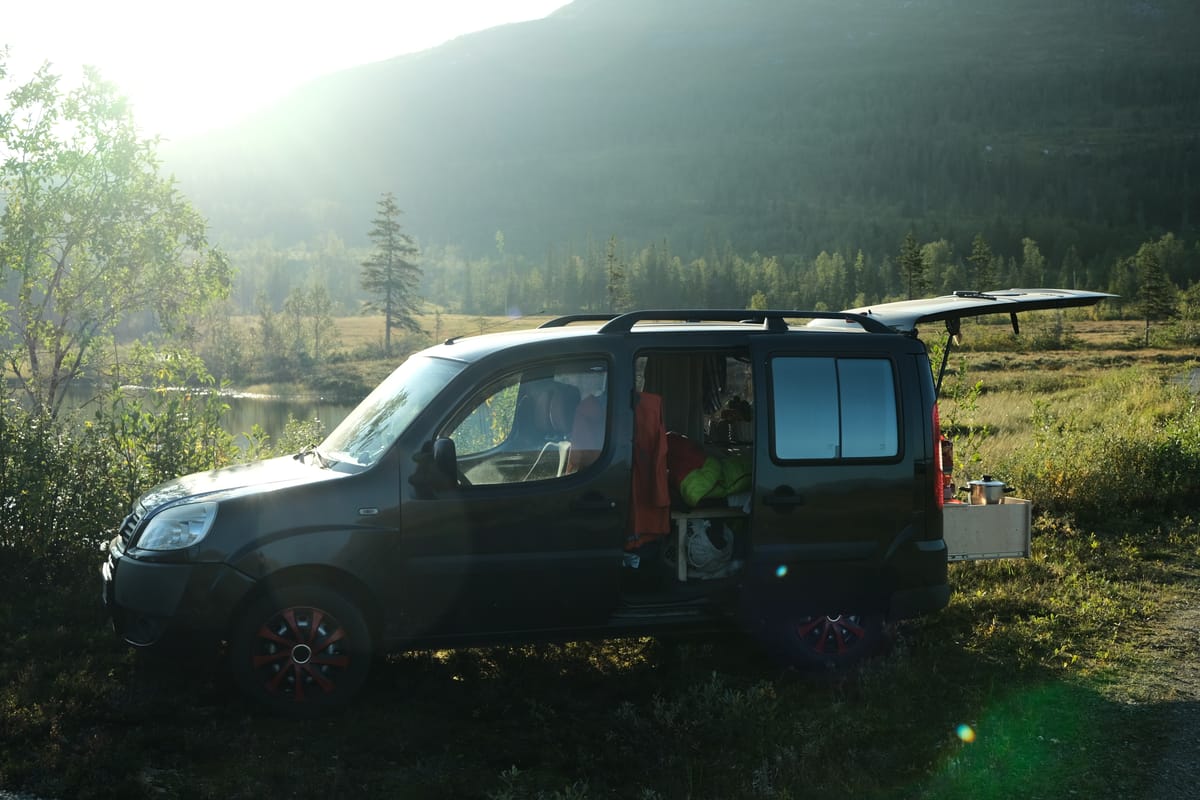
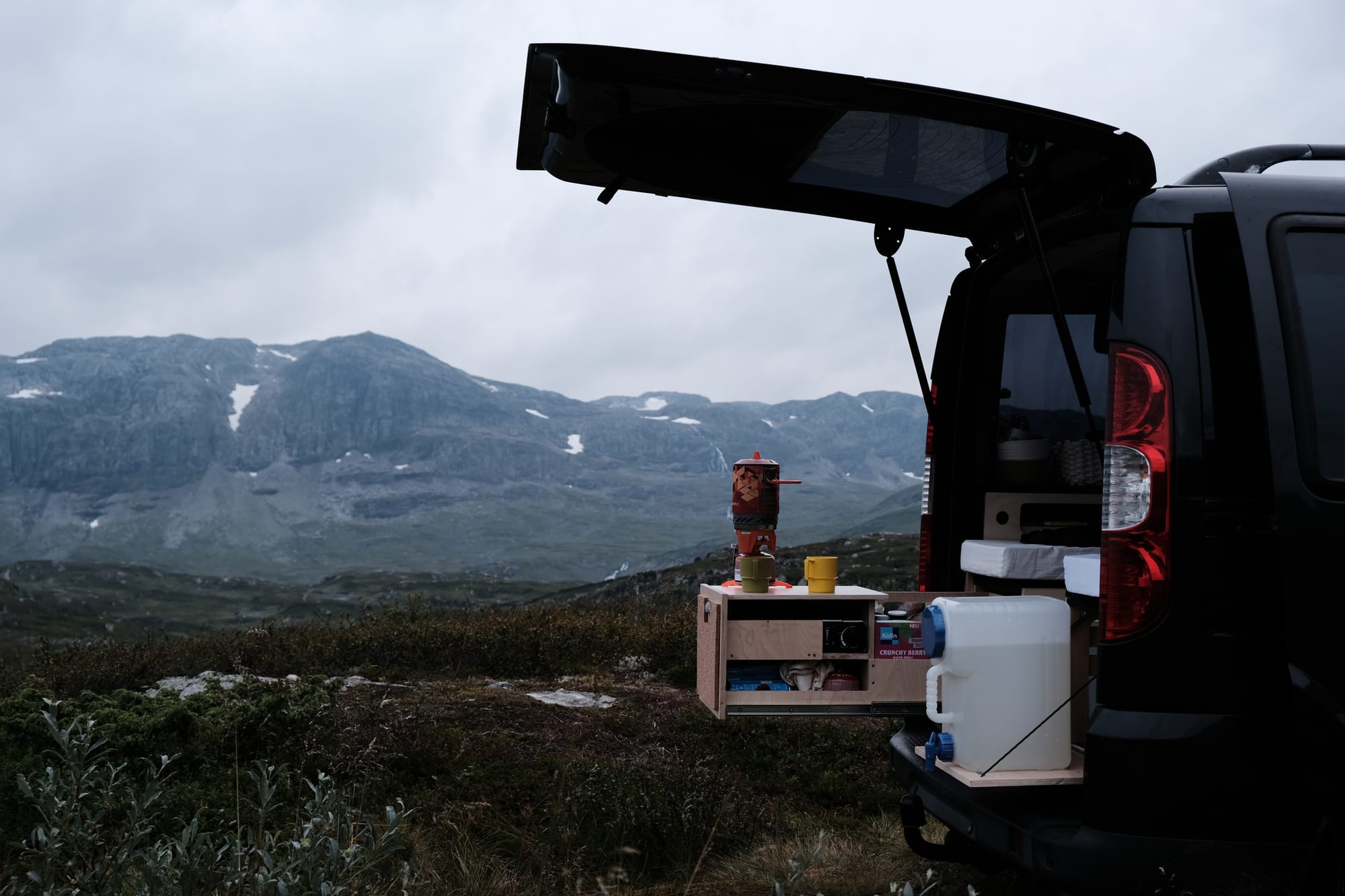
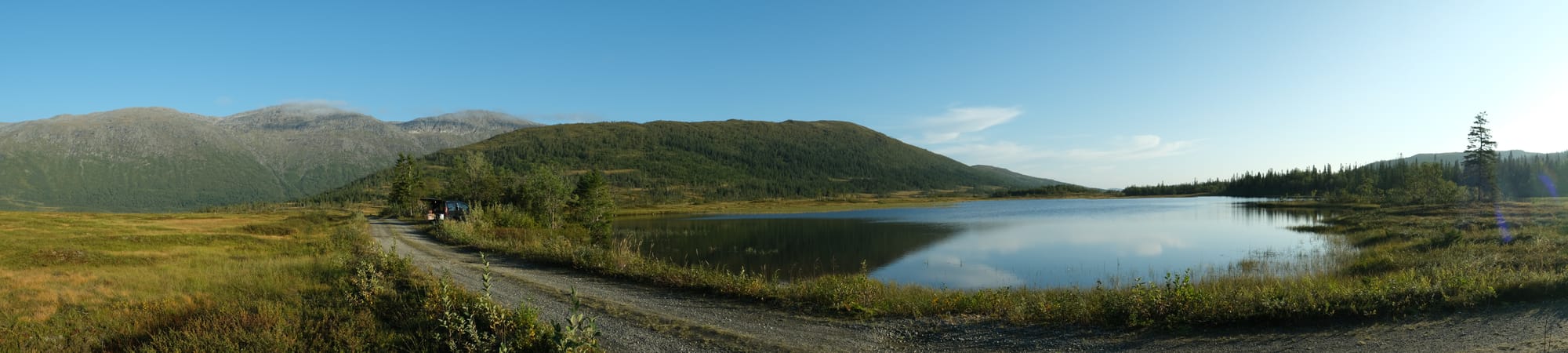
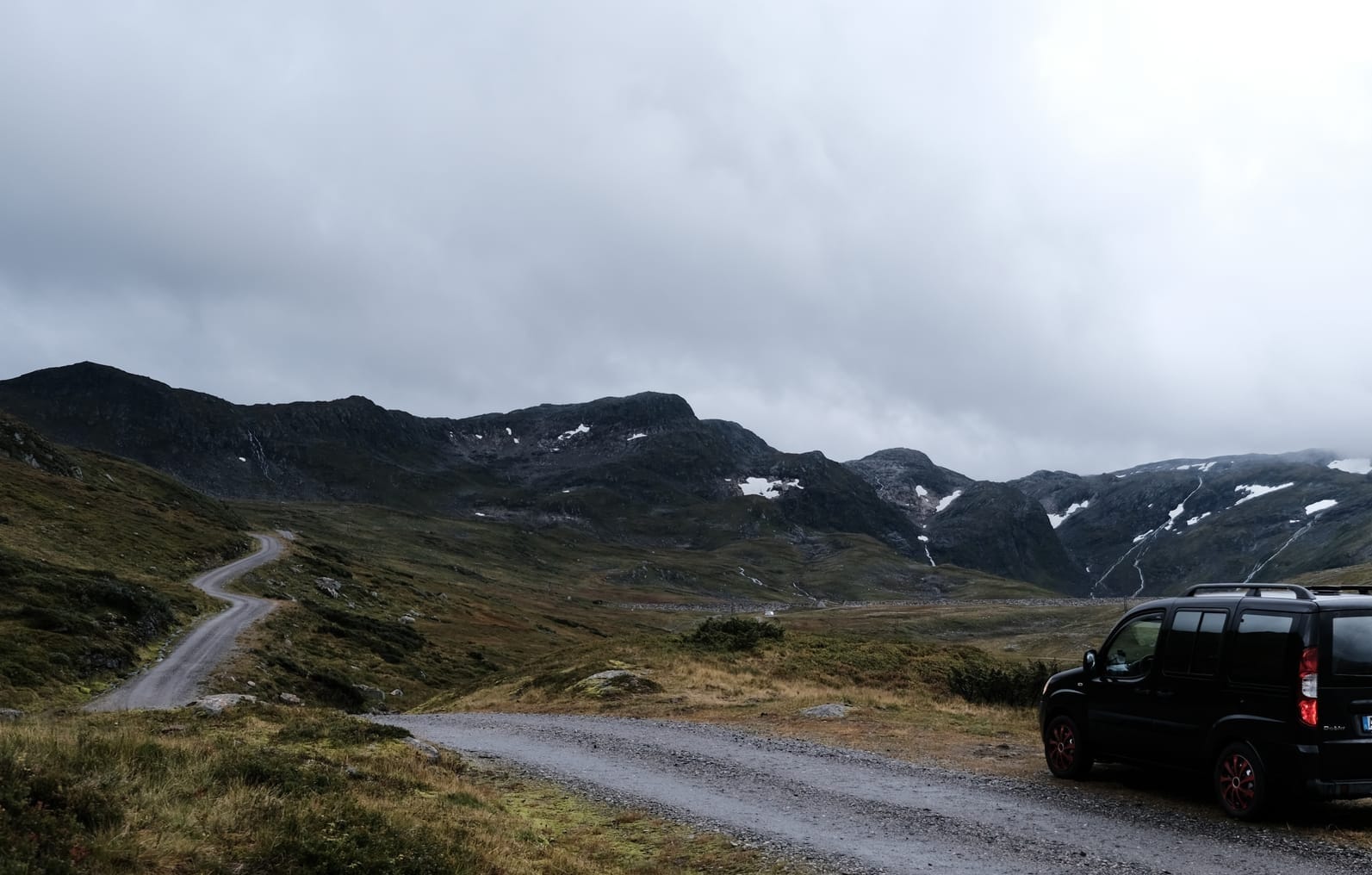
Somewhere on a plateau in Norway, we pull off a gravel track onto a patch of flat ground beside a quiet lake we found by accident - no campsite, no booking, no other people. Just us, the stillness, and a landscape that looks like a painting.
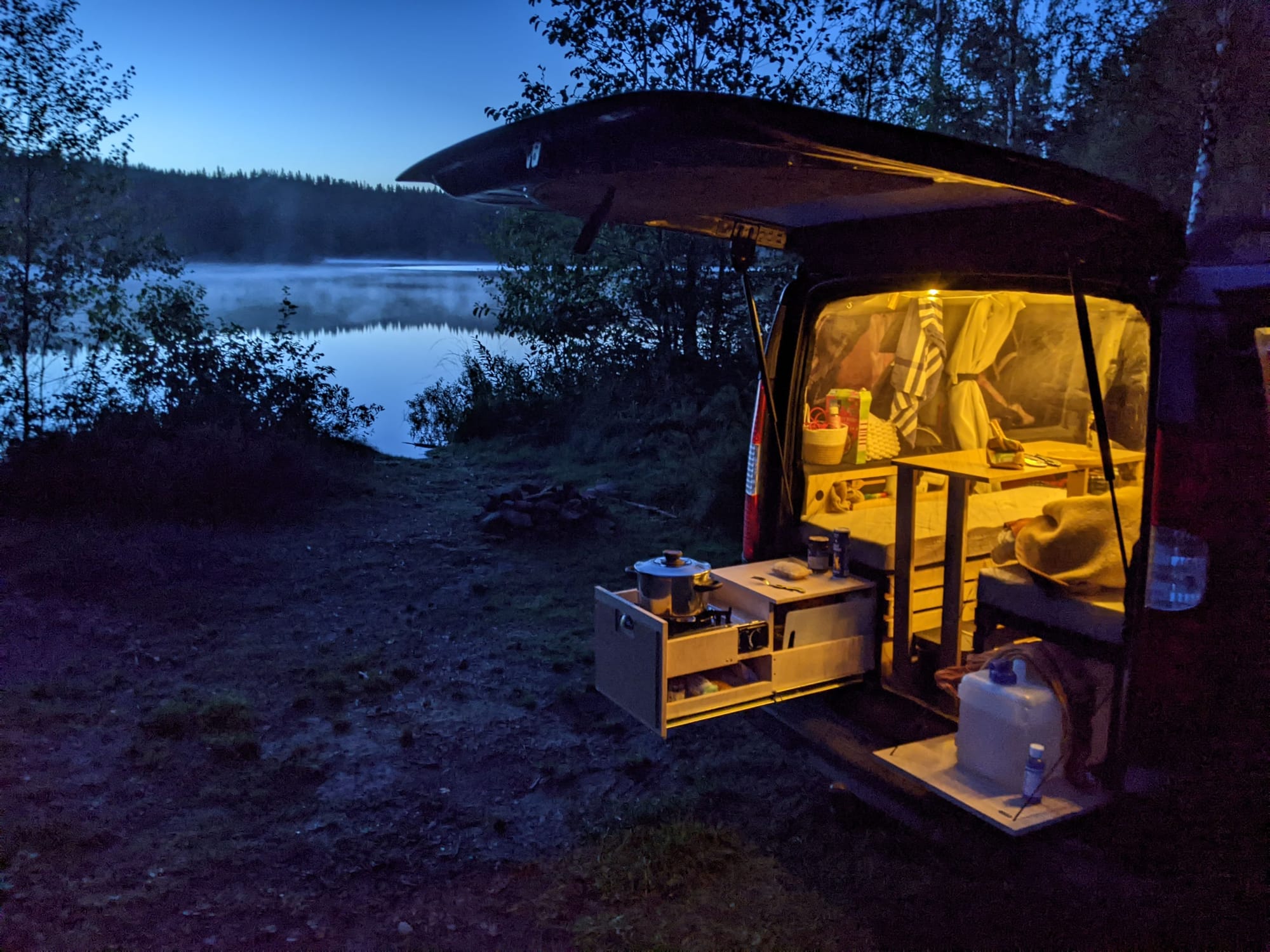
We arrange the cushions, pull out our kitchen drawer, and prepare dinner underneath the tailgate of our car, while watching the sun set behind the peaks in the distance.
No fancy oak interior. No hidden shower. No expensive electricity setup. Just a converted everyday car, a fold-out table, and a view that would've cost a fortune at a hotel.
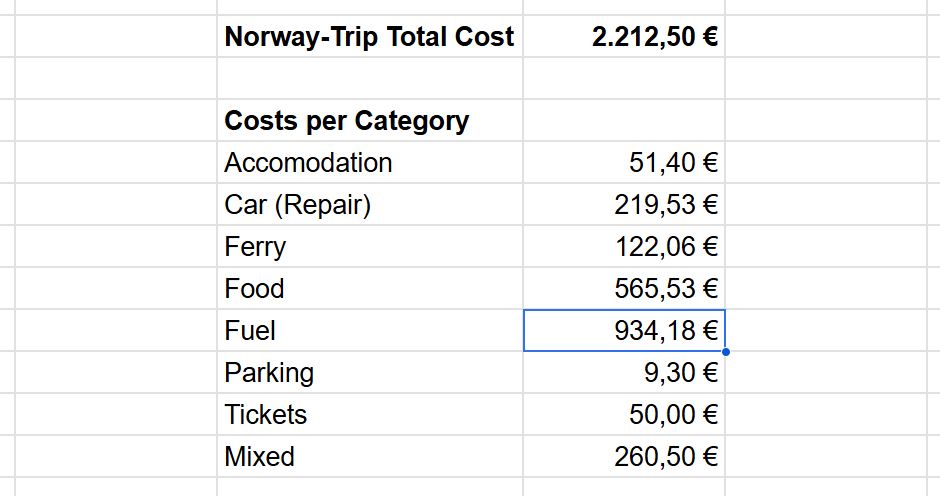
Instead, we drove three weeks across Norway and spent a total of 51,40€ on accommodation. No prebooked destinations. No fixed itinerary. Complete freedom - and all of that based on the car we already owned.
That's our microcamper pitch.
What is a Microcamper?
"A Microcamper is a compact camping vehicle designed to provide the essential comforts needed for travel while maintaining a small, efficient footprint. Unlike traditional RVs or large [...] campervans, micro campers focus on functionality, efficiency, and everyday usability rather than size or luxury." DLM Distribution
Basically, a microcamper is just a regular small-to-medium-sized car that has been modified to serve as a basic mobile home. And while this might sound uncomfortable to you, it doesn't have to be, and it also comes with a surprising number of advantages!
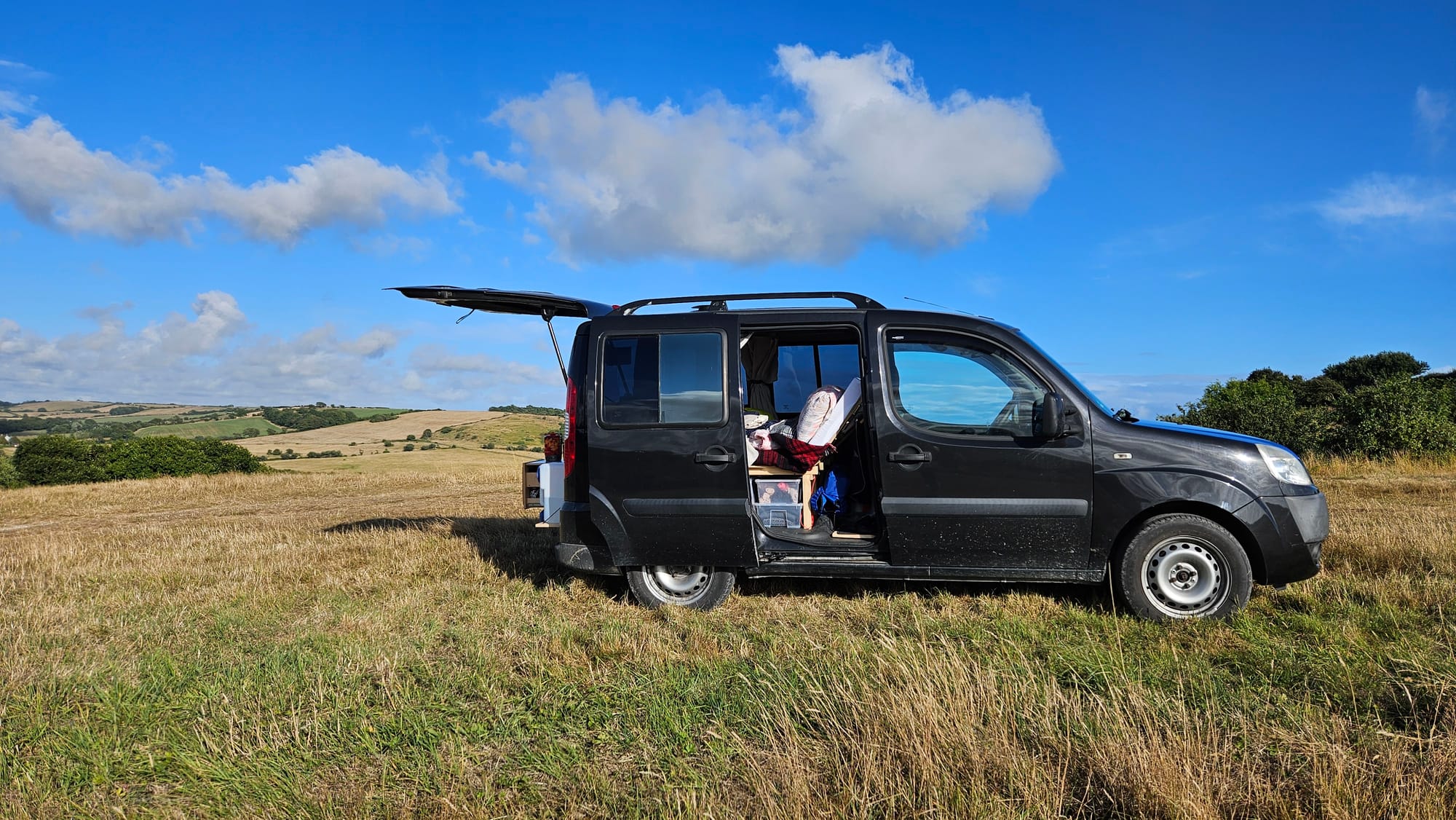
Meet "Lotte", our (second) microcamper, and the vehicle behind some of our favorite trips, from the English coast all the way to northern Norway. I’ll go into the full story behind Lotte in a separate article (this will become a proper Microcamper-Series), but for now, I want to answer a bigger question:
Why should anyone interested in “Van Life” or camping road trips consider a microcamper instead of a full-blown camper van conversion?
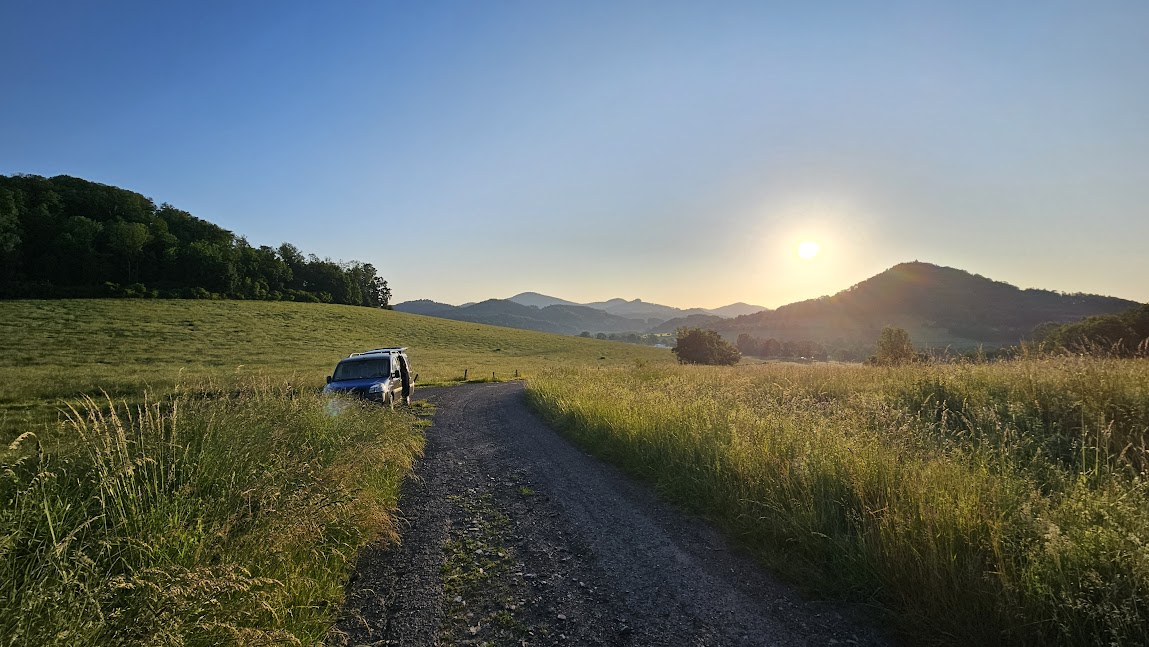
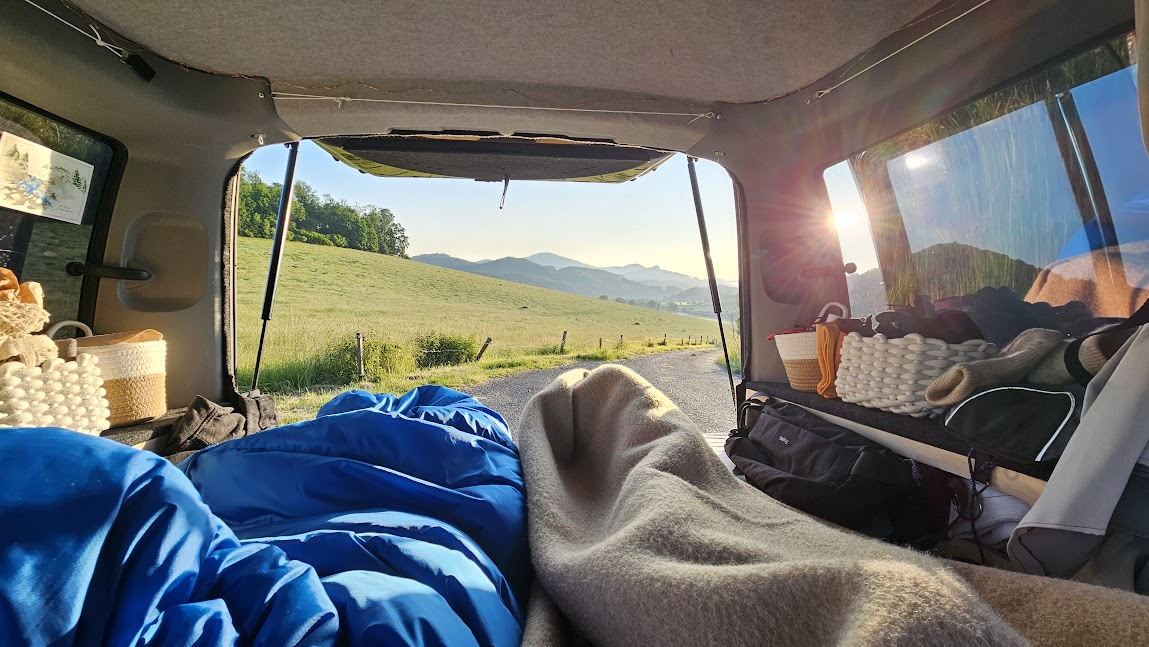
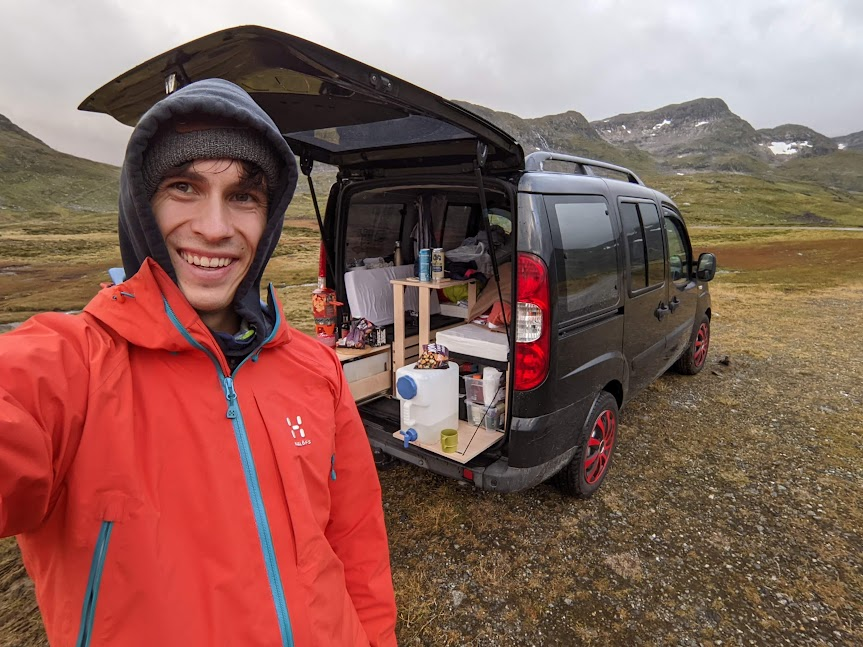
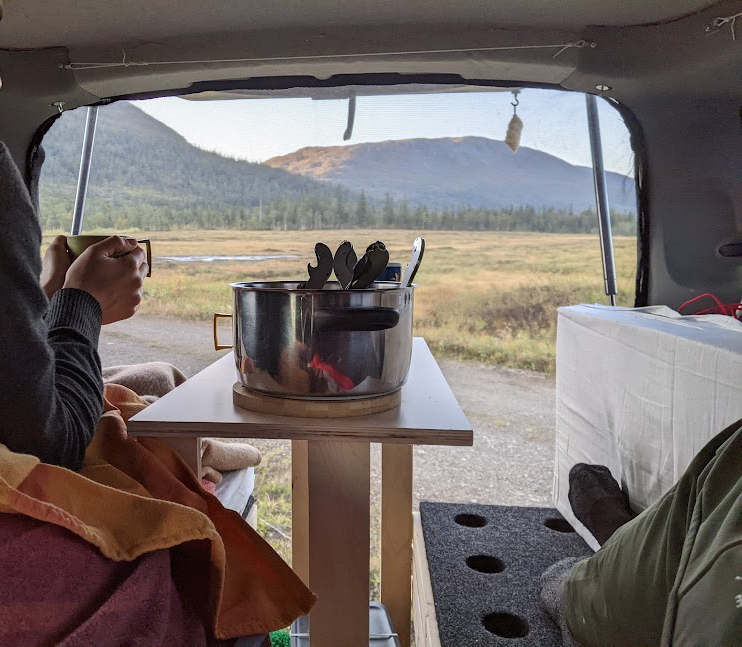
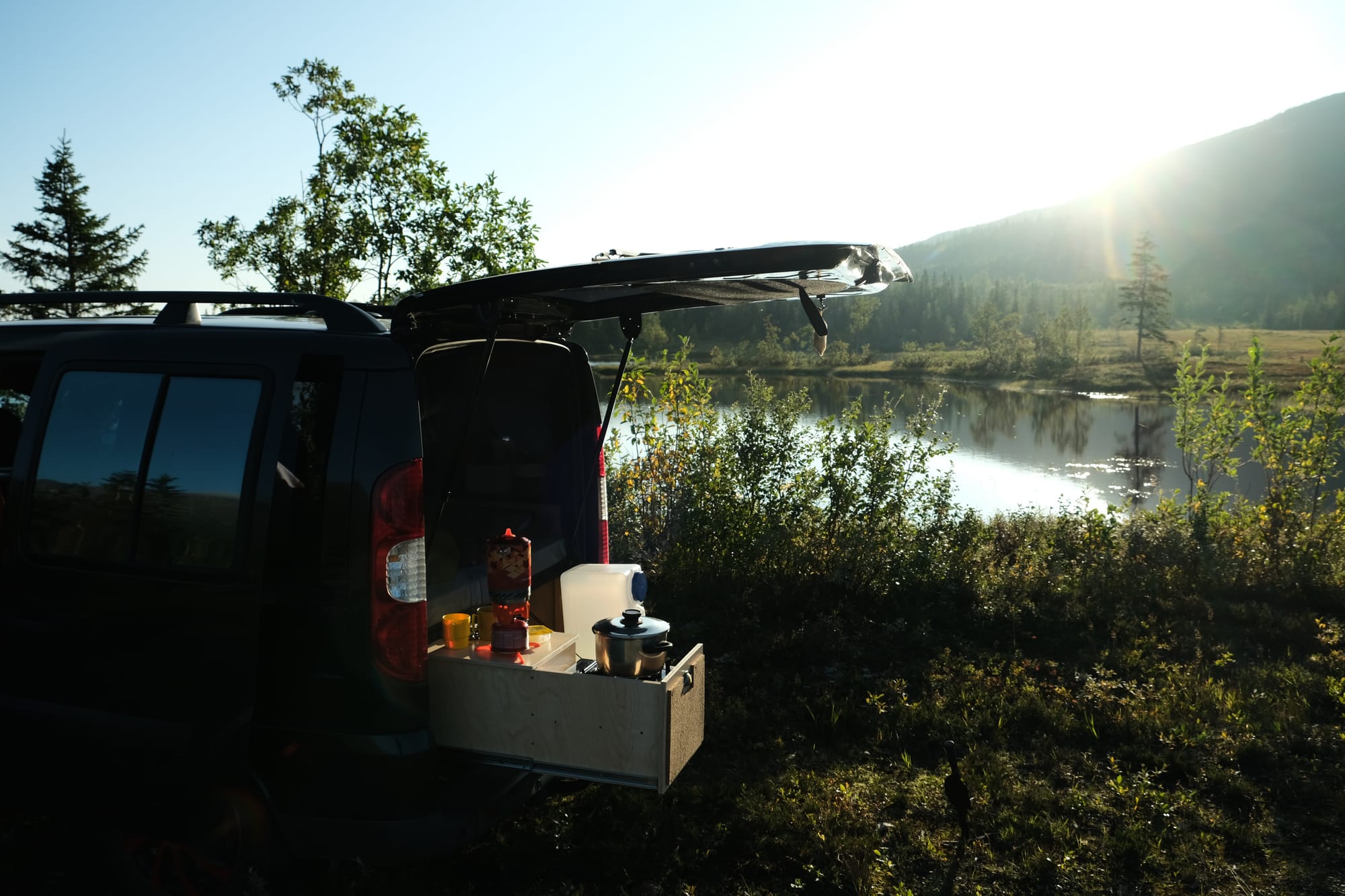
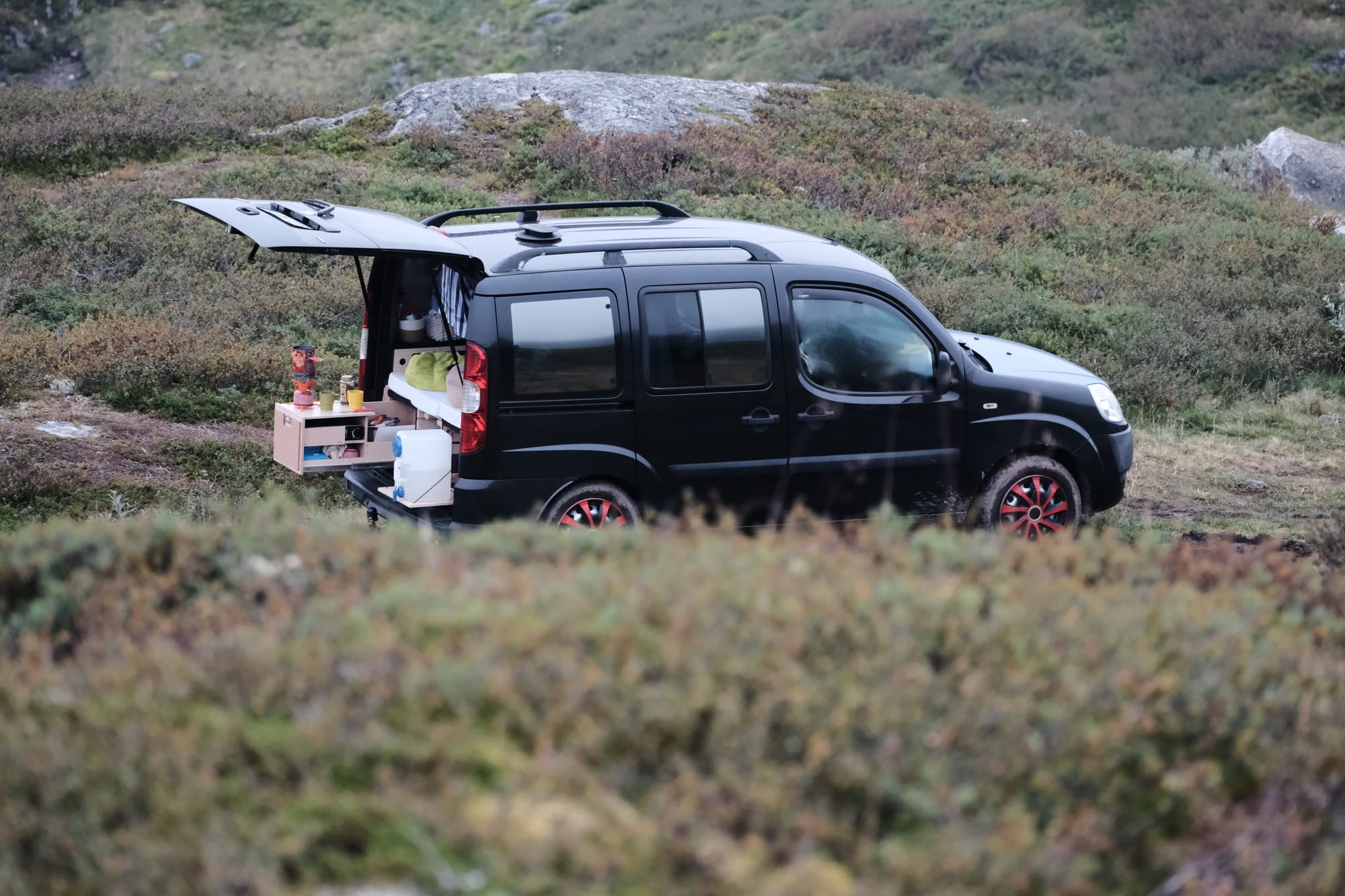
Some impressions of our Microcamper Lotte - out in the wild
Why a Microcamper?
So why should you travel (and sleep) in a microcamper when there are much bigger, more luxurious, and more comfortable mobile homes out there? Well, because sometimes "small" does have real advantages. Let me explain.
Affordability (Price)
Let’s start with the elephant in the room: money.
A microcamper will save you real money (compared to a more traditional camper van) in almost every aspect.
- Vehicle costs: Best case? You already own a car that you can somehow fit your sleeping length in (e.g., by moving the front seats all the way forward). Done. If not, a "normal" used car - ideally a station wagon (bonus points for a high roof) - is still dramatically cheaper than vans have been in recent years
- Conversion Costs: By keeping things simple and practical, a DIY conversion can easily be done for a few hundred euros (often using equipment you already own), or you can get a ready-made camping box for ~1000 €, which is still quite affordable
- Maintenance Costs: Since a microcamper is "just" a regular car, the usual maintenance costs for repairs, insurance, and taxes also stay quite manageable
- Driving Costs: A small car tends to consume less fuel, saving you money for every kilometer travelled compared to a bigger motorhome
- Other Costs: The small footprint of a microcamper also means you typically spend less on parking, ferry, and campsite fees.
And then there’s something less measurable: (financial) peace of mind.
Driving a used, affordable vehicle is simply less stressful for me. I worry less about scratches. Less about thieves. Less about destroying something that costs as much as an apartment down payment.
Additionally, a microcamper is also a fantastic way to try this whole “traveling with a camper" thing without financial self-destruction. You quickly learn what you actually need - and what YouTube told you you need. It's a cheap way to find out what works for you without spending a ton of money upfront!
Having a small camper now beats waiting five years for the “perfect” big one. In the end, having one is better than having none. And isn’t the point to get out there and travel?
Driving Experience
This is an underrated one. Having a big van with all the luxuries is nice, but people tend to forget that you actually have to drive the thing (unless you want to spend your time parked at one stop all the time), and a small car:
- Is just easier to handle on adventurous single-track roads or in crowded city traffic
- Fits in normal parking spaces
- Can enter parking garages (even those with height limits)
- Handles narrow turns better
- Handles wind better and is less affected by crosswinds (big vans can feel genuinely scary on exposed highways)
- Boards smaller ferries
- Fits through small tunnels
- Is often straight up more comfortable to drive in (seats, steering, etc.)
There's also just the joy of the drive itself. Long stretches of Norwegian road, audiobooks, music, conversation, and landscape rolling past the windows. The microcamper doesn't need a destination. Sometimes the driving is the point. And to me, it's more fun in a small vehicle.
Freedom from the Itinerary
Here's something nobody tells you about travelling with a large campervan: despite the flexibility they promise, you still end up planning like crazy. Campsites with hookups need to be booked. The toilet needs to be emptied at special dumping spots. Height restrictions rule out entire parking areas. Narrow mountain roads become a genuine logistical problem.
With Lotte, we don't really have an itinerary. We have a rough direction.
In Norway, we'd often just drive until something caught our eye - a gravel road disappearing into the hills, a lake reflecting the mountains, a valley that looked too quiet to pass up. We'd follow it. If the spot was good, we'd stay. If the weather turned somewhere we'd planned to spend time, we'd just... leave. No cancellation fees. No wasted bookings.
We drove roads that are genuinely not recommended for larger RVs - too steep, too narrow, too unforgiving on tight switchbacks. We just drove them. In Scotland and England, we slipped under height barriers that stopped full-size campervans in their tracks, accessing parking spots and viewpoints that were simply off-limits to anything bigger.
Small means access. And access, often, means a better view or a free spot.
Versatility (Multi-Purpose)
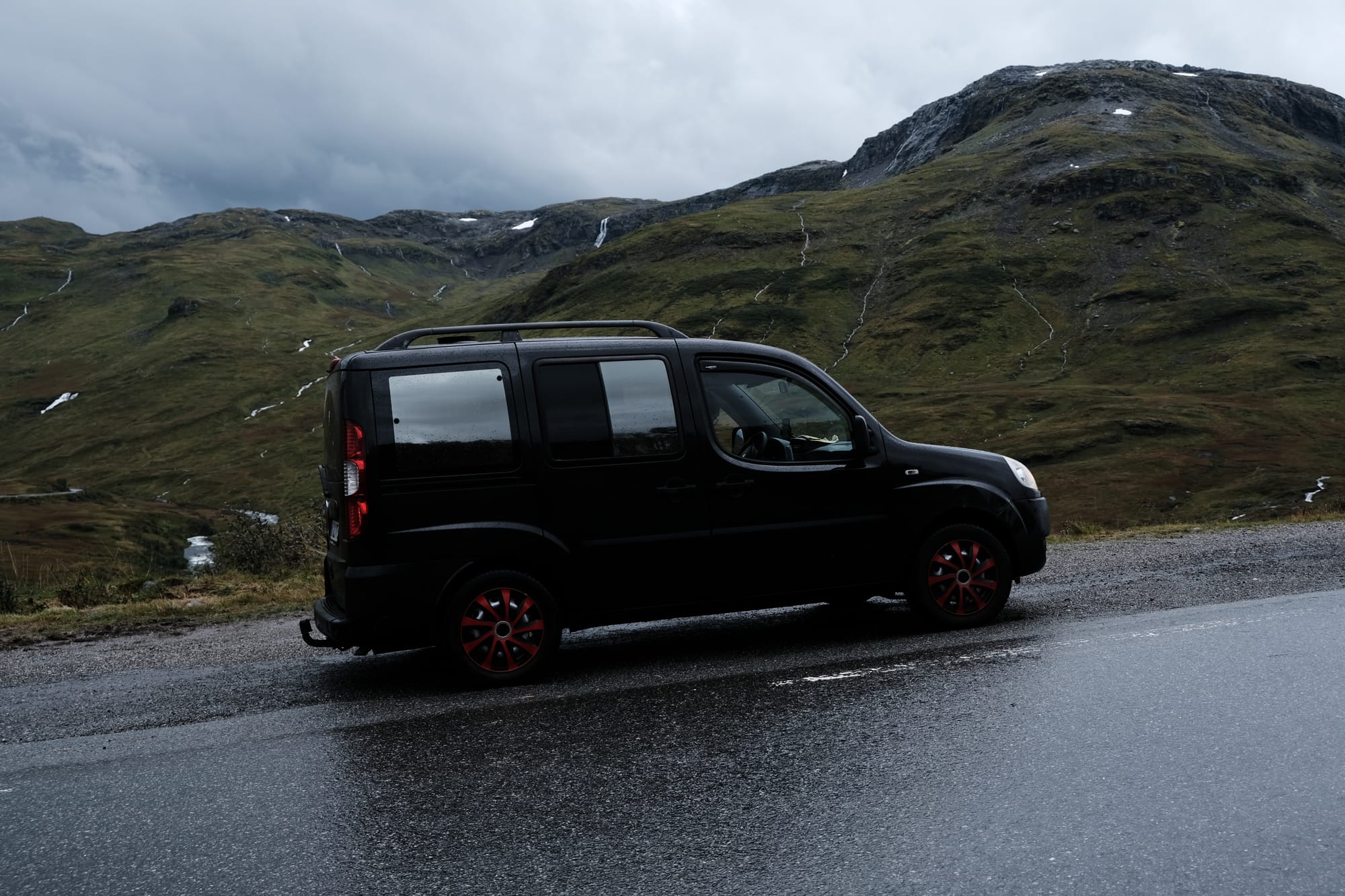
A common advantage is versatility. Many microcamper owners use their microcamper as both a daily vehicle and a travel vehicle, increasing its overall usefulness.
One vehicle instead of two. And if you are smart about your conversion, your microcamper will handle grocery runs and furniture moving just as well as weekend getaways and multi-week road trips.
More flexibility. Less cost. More justification.
A microcamper integrates into everyday life instead of becoming a very expensive driveway decoration that's used once every other year.
Simplicity (Minimalism)
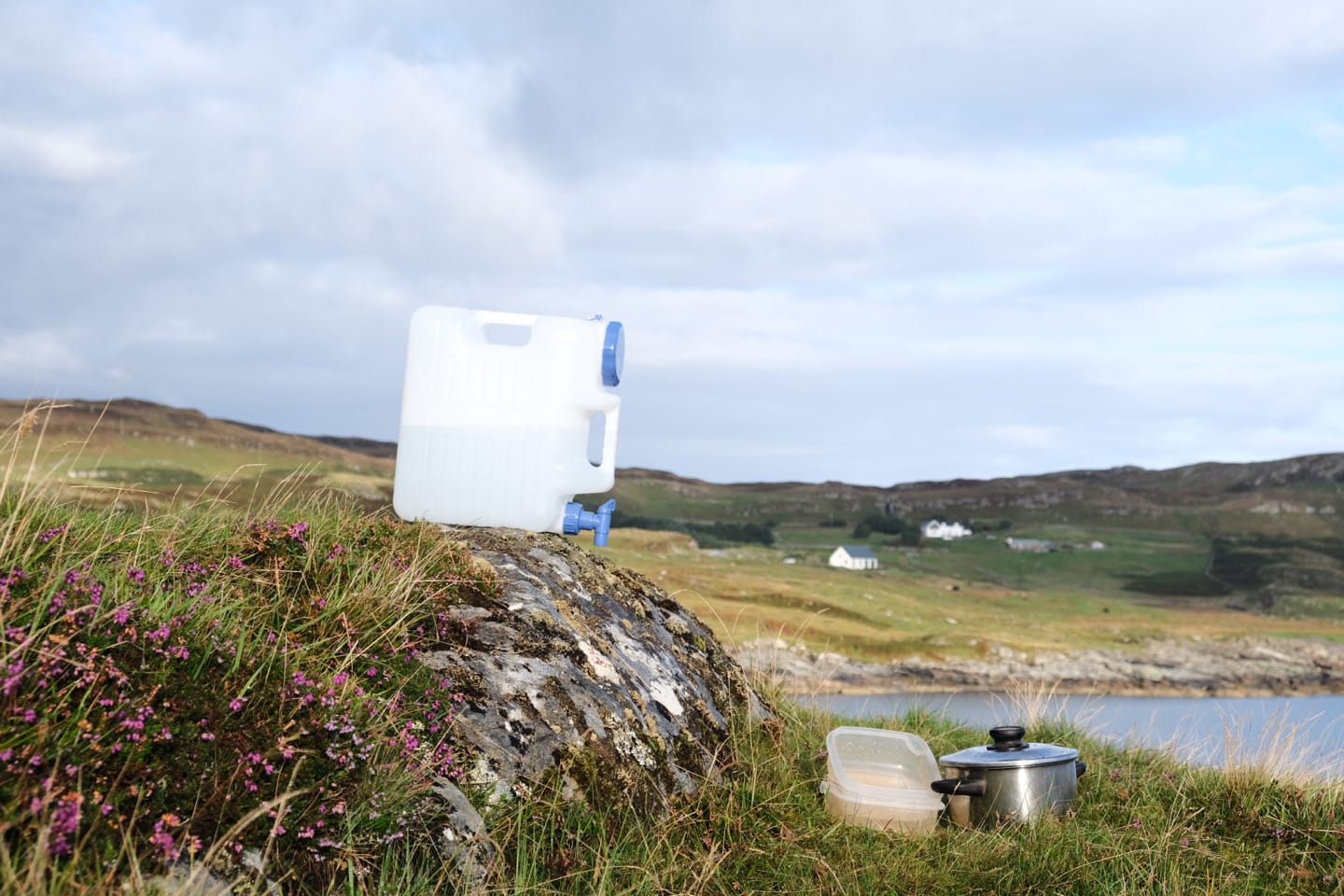
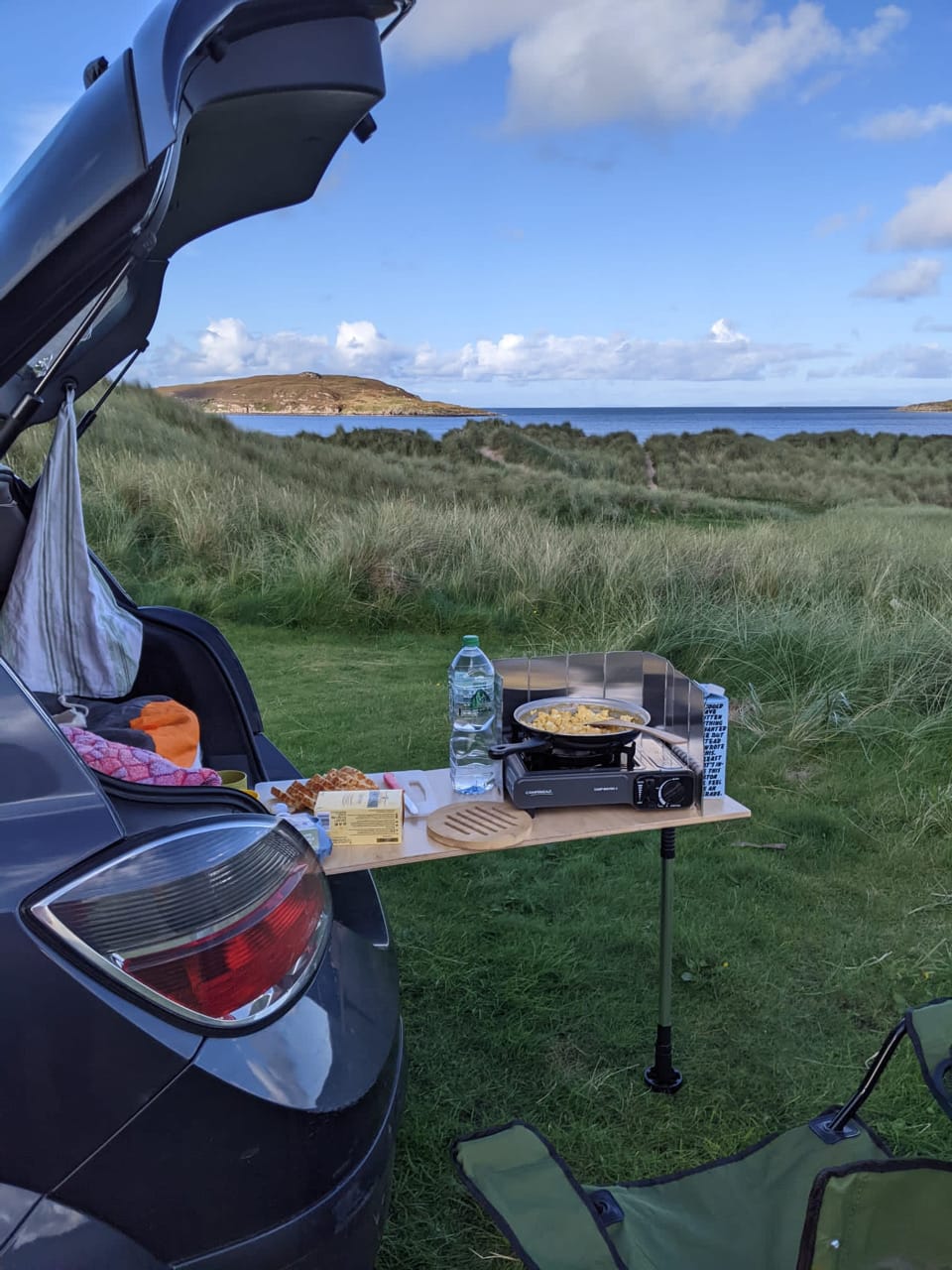
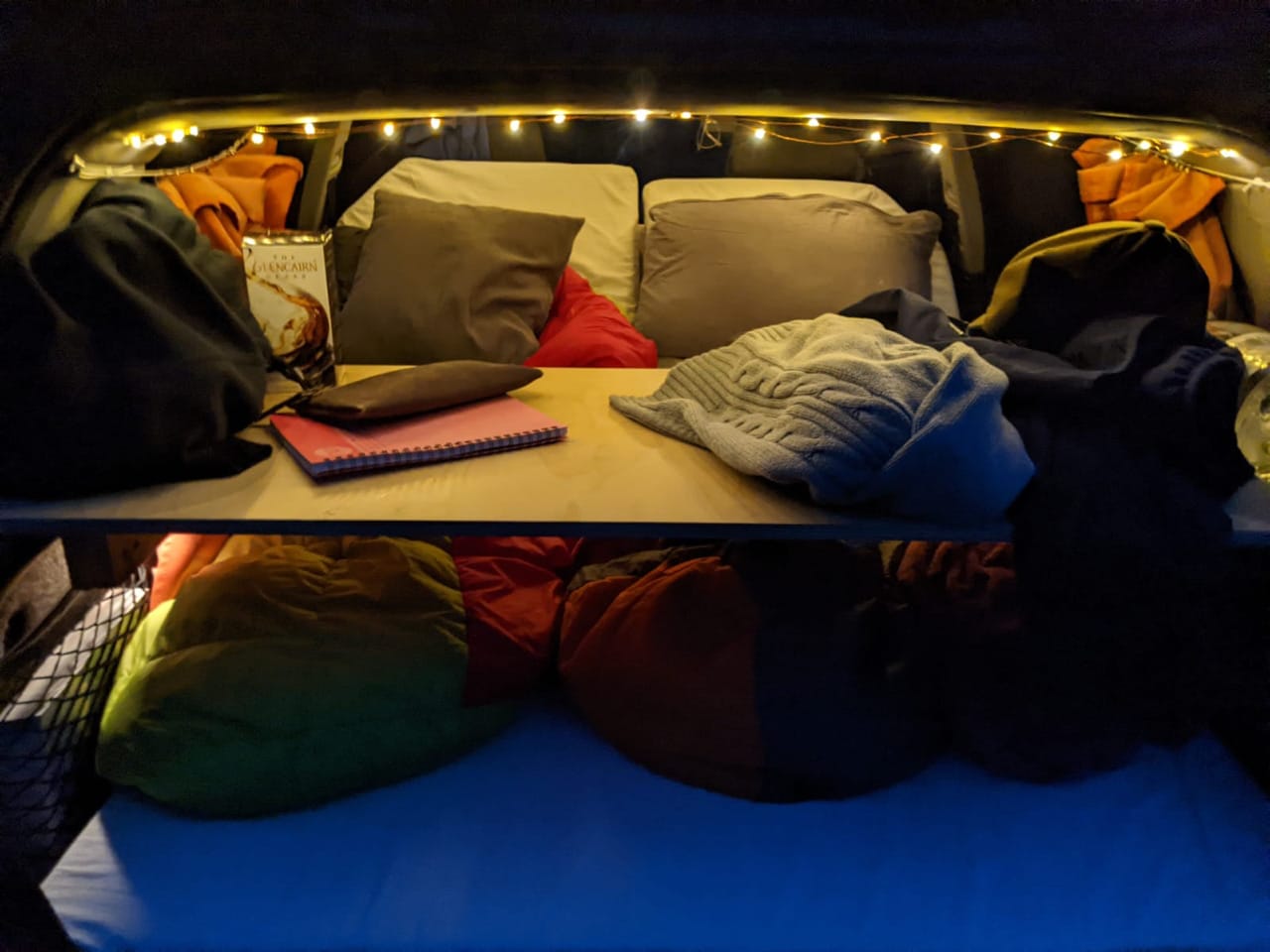
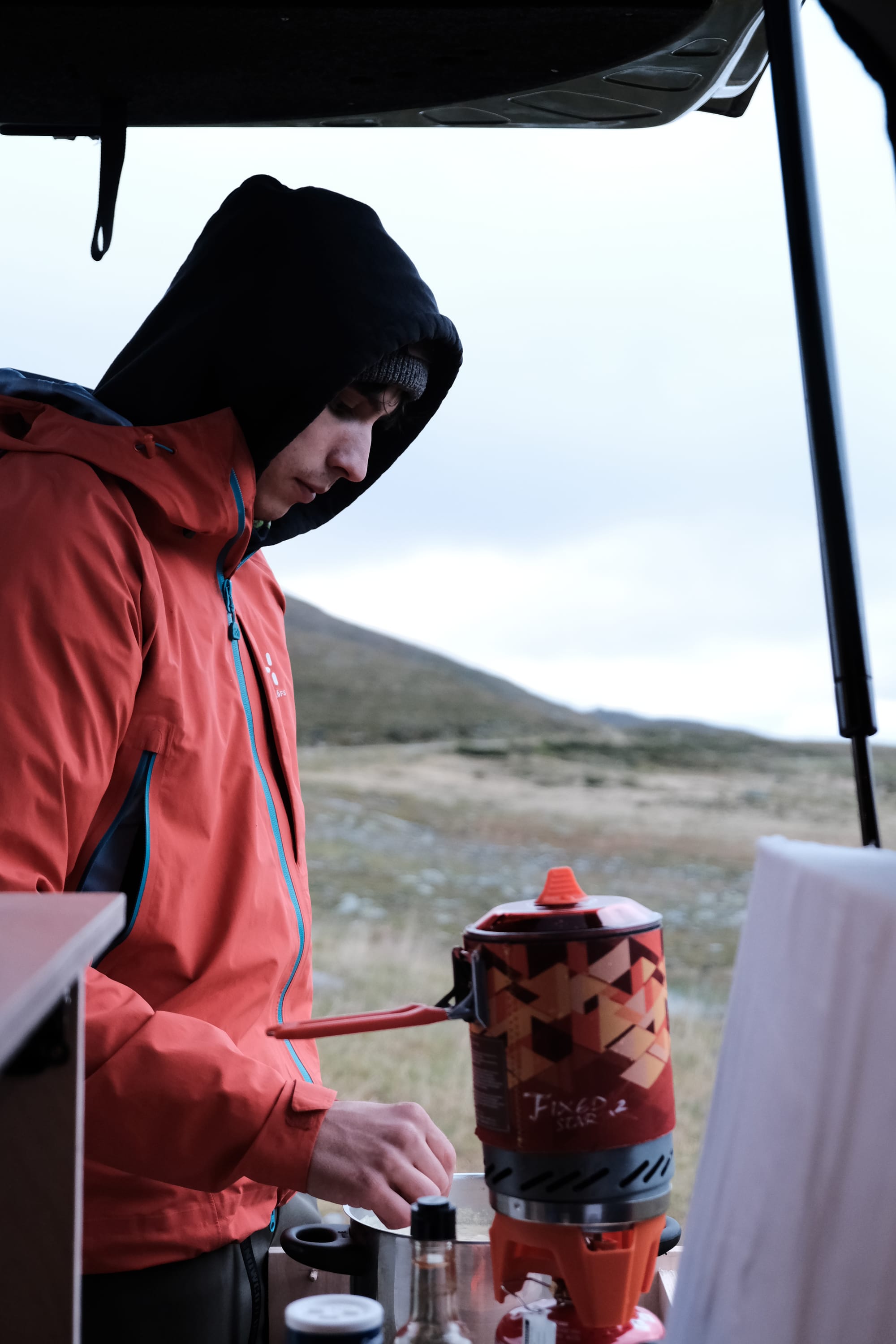
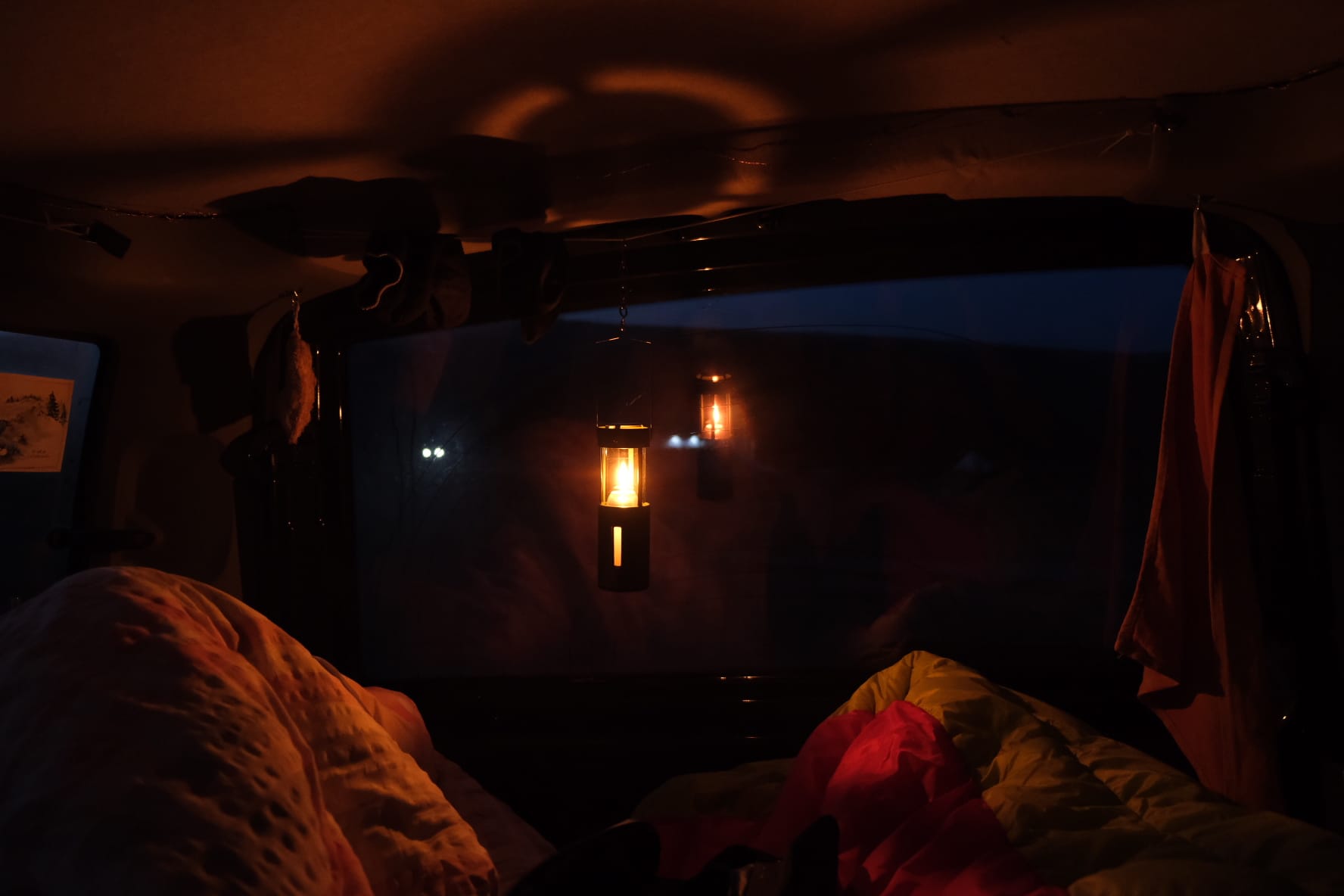
Some impressions of the simplicity of travelling with a microcamper
A microcamper forces you to focus on essentials and define your personal "enough". You only really have space for what you really need and maybe a tiny bit more. Less stuff means:
- Less that can break
- Less to maintain
- Less to repair
- Less to clean
You have to pack lighter and leave behind the daily excess of your home. And honestly, to me, it feels more like camping. It's small, it's cozy, and it encourages you to go outside and explore your surroundings.
It does not offer the same comfort as your home, and, through that, it shifts the focus to the Journey and its daily adventures. It breaks the normal daily routines and places the trip in the spotlight instead of a fancy interior.
Environmental Impact
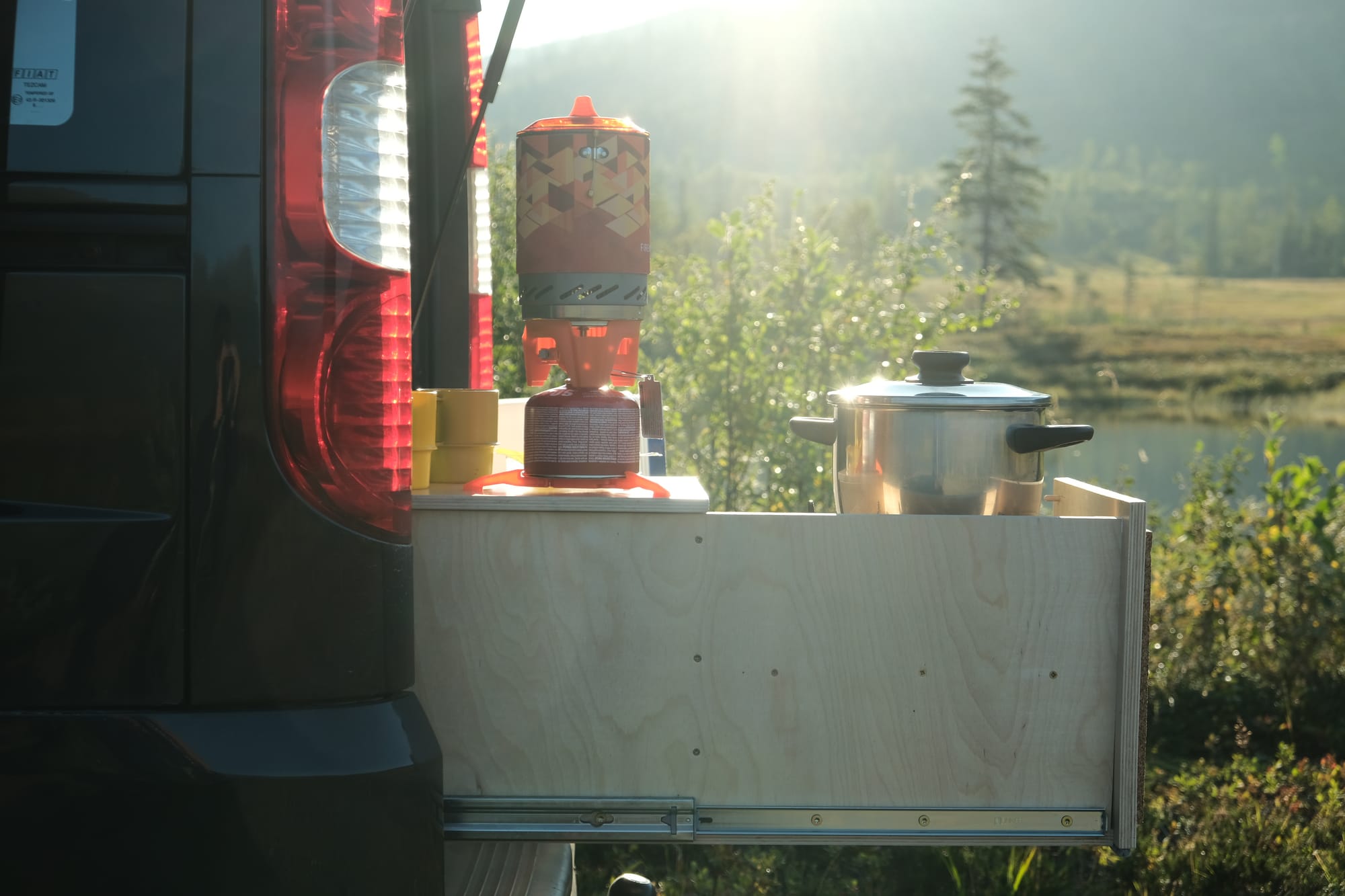
As campers, we should care about the environment. It's only fair that we try to protect the very nature that we seek whenever we are free from our daily obligations.
And, while a microcamper is not perfect in that regard - travelling by train, bike, or foot is obviously still better, it is a step in the right direction:
- Smaller vehicle
- Better fuel efficiency
- Fewer materials are used for the build
- Multi-purpose use (not just as a camper)
It’s not zero impact (nothing involving driving is), but compared to larger RVs, it’s a more resource-conscious option.
Stealthy (Ninja Mode)
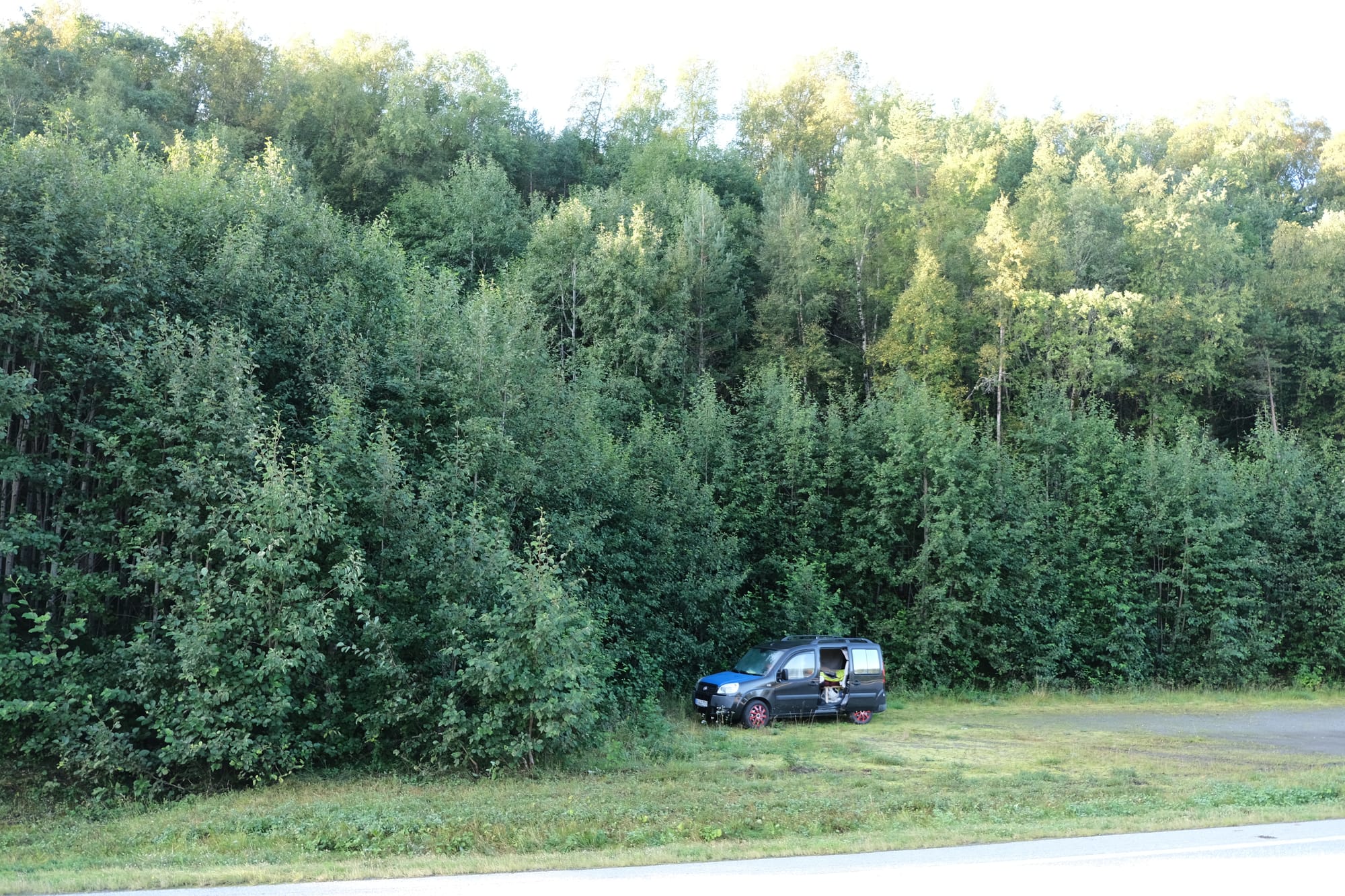
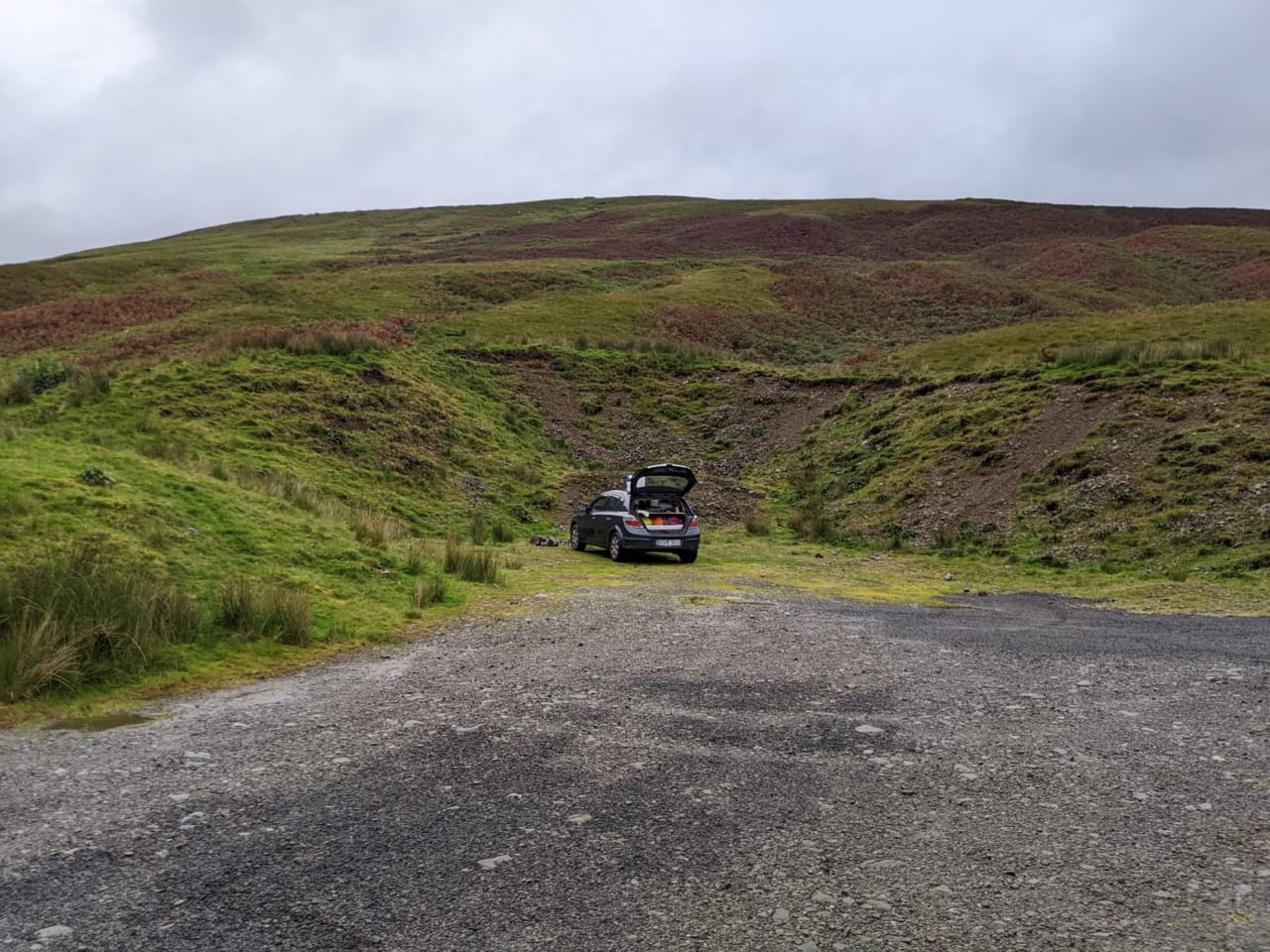
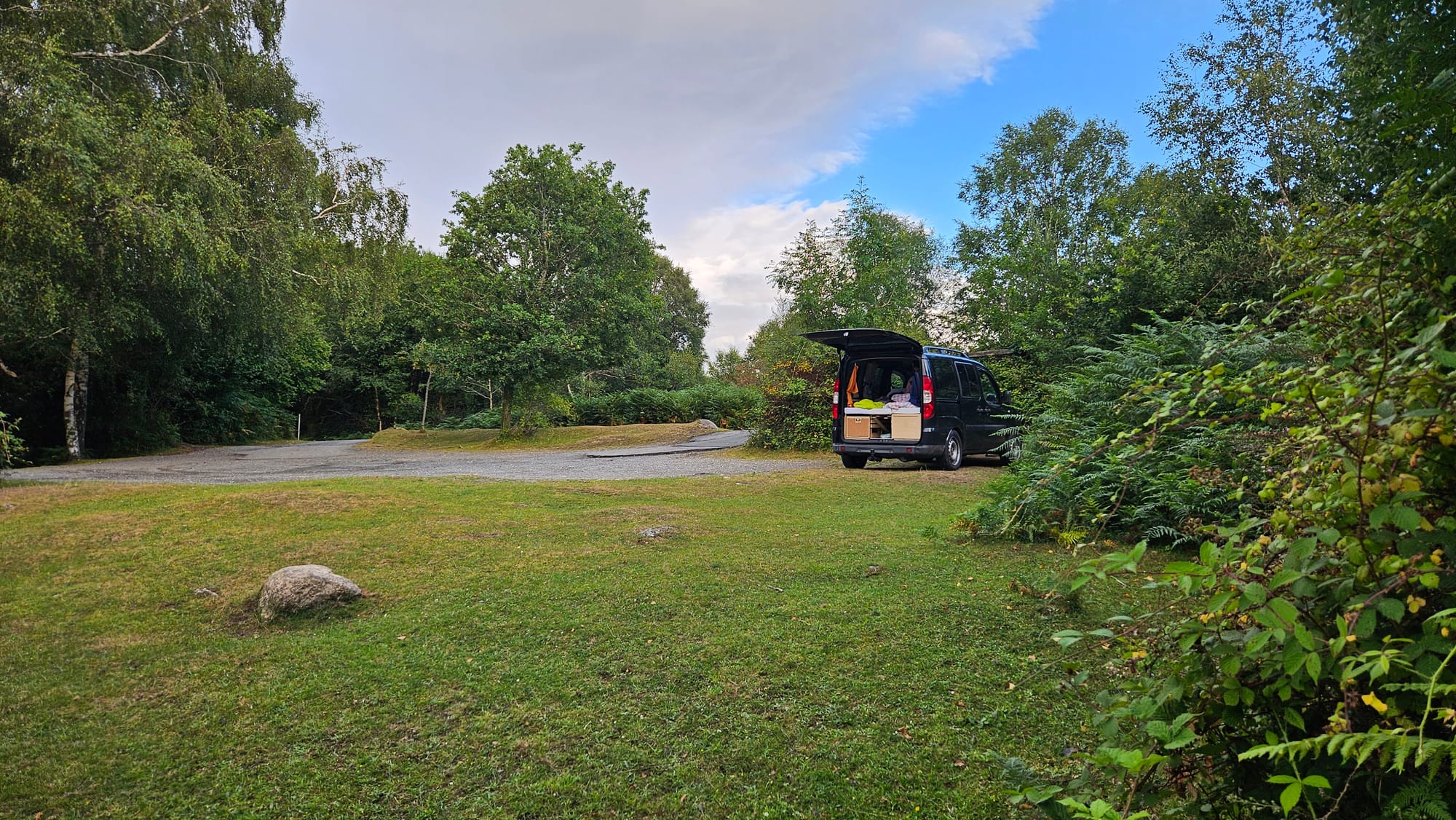
Some of the campspots where a microcamper might look less "suspicious"
Amicrocampersmall car, doesn’t scream “I am camping here!”, which can be helpful.
Something we love about travelling with "Lotte" is that we don't really have to plan for every day (and night). Sometimes we just find a spot we like and decide to stay for another day. Sometimes we don't make it to a campsite in time. Sometimes we decided to drive further than originally planned, because we didn't like a region.
No matter where we are, we always know we will have a roof over our head, some food in our bellies, and a cozy bed to sleep in for the night. And sometimes that is not at an official campsite. Maybe it's at a beautiful location. Maybe we are just parked on the side of a road or staying at the start of a hiking route, and we want to start early the next morning.
That flexibility and spontaneity are part of the appeal of a camper to us, and it also means that sometimes we spend the night at a spot that does not really "allow" camping. And in those cases, the stealth factor of a microcamper does come in handy. If we don't pull out our chairs, sunscreen, and cooking equipment, it does not really look like anyone is camping. It is just a normal car parked somewhere.
Of course, wild camping does come with a code of conduct, in my opinion. You have to be respectful, leave no trace, and (mostly) follow local laws. You should always be friendly and polite with people, even when they are telling you to leave. This matters more than ever - camper travel has gotten a bad reputation in some places as it's grown more popular, and good behavior from each of us helps push back against that. So please, let's all do our part!
Image (Sympathy Points)
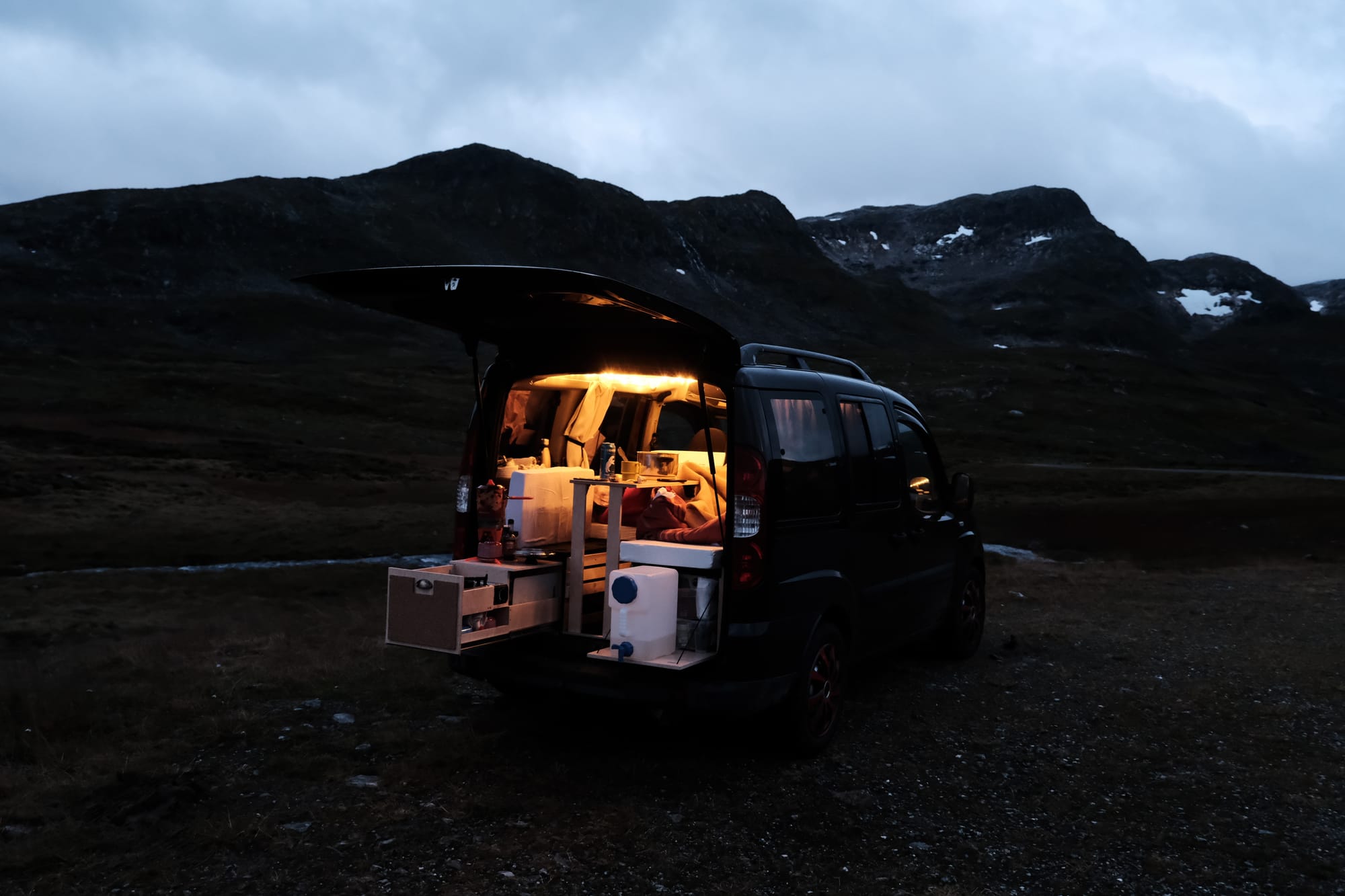
I also noticed that whenever people do approach you, a microcamper also changes how people perceive you.
During our time in Norway, we noticed something interesting:
The country (sadly but understandably) is basically flooded by campers in peak season, and once again, being small made things easier.
While big campers sometimes felt like part of the seasonal invasion, our small car sparked curiosity instead of annoyance. Locals smiled, talked to us, or gave us a wave or a thumbs-up when they saw us parked somewhere with "Lotte".
I think to them, it felt less “luxury traveler” and more “two people on an adventure.” Maybe that’s subjective. But it felt like people were a lot more welcoming towards us and our microcamper.
It also has some novelty factor, as it is not the usual camper/just another camper. People think it's cute/cool, maybe less "snobby" or just practical - and we had a lot of great conversations with interested people who liked what we were doing!
A Low-Risk Experiment
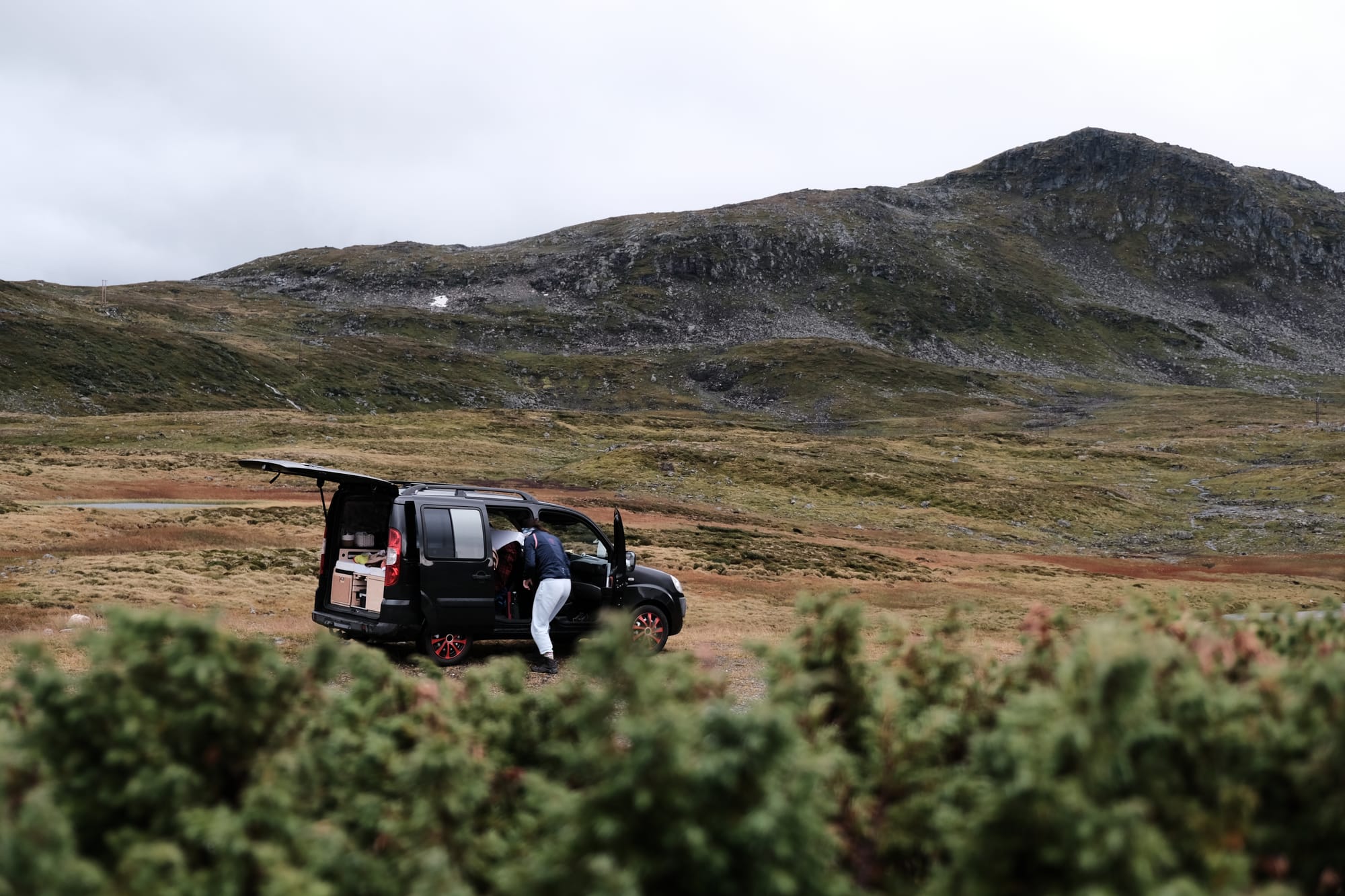
I already briefly mentioned this in the affordability section, but I think this deserves its own chapter. A microcamper is a great, low-risk way to test:
- Do you actually enjoy this style of travel?
- How much comfort do you really need?
- What features matter most?
- Do you enjoy DIYing your build?
It’s much easier (and cheaper) to experiment when you’re not committing 60,000 € (or more) upfront. I would advise everyone to test things with a cheap microcamper (using the car you already own) first, before even thinking about spending a fortune - you can always upgrade later, with more knowledge based on your actual experiences.
Better than a Tent
Compared to tent camping, a microcamper offers:
- Faster setup (especially nice during a storm or downpour)
- Lockable storage
- Better protection from bad weather
- Can withstand pretty rough conditions (strong winds/storms) easily
- Possibility to heat
- More organized storage
- No need to pack a wet tent after a rainy night (huge for me)
It’s not “better” in every way (see the section about the advantages of a tent further down), but in many practical situations, it does feel like an upgrade.
Especially regarding the handling of storms/strong winds and also the Stealth-Factor a microcamper (where you sleep in the car) also beats the popular roof tent.
After one stormy night at scotland we heard from a couple of roof tent campers that they had to spend an uncomfortable night on the seats of their cars because they could not use their roof tent in those strong winds. Meanwhile we were rocked to sleep by the wind (the whole car was shaking, but it was somehow cozy).
The Trade-Offs
The biggest strength of microcamper - the small size - is also the biggest downside.
The limited space does result in some disadvantages when compared to the bigger alternatives. As always, everything is a tradeoff, and you need to decide for yourself what bothers you and what doesn't.
Most micro campers include space for sleeping, basic food storage or preparation, and organized storage for travel gear. They typically do not include full bathrooms or large kitchens, which helps keep the vehicle lighter, easier to drive, and more economical to own.
Limited Indoor Space
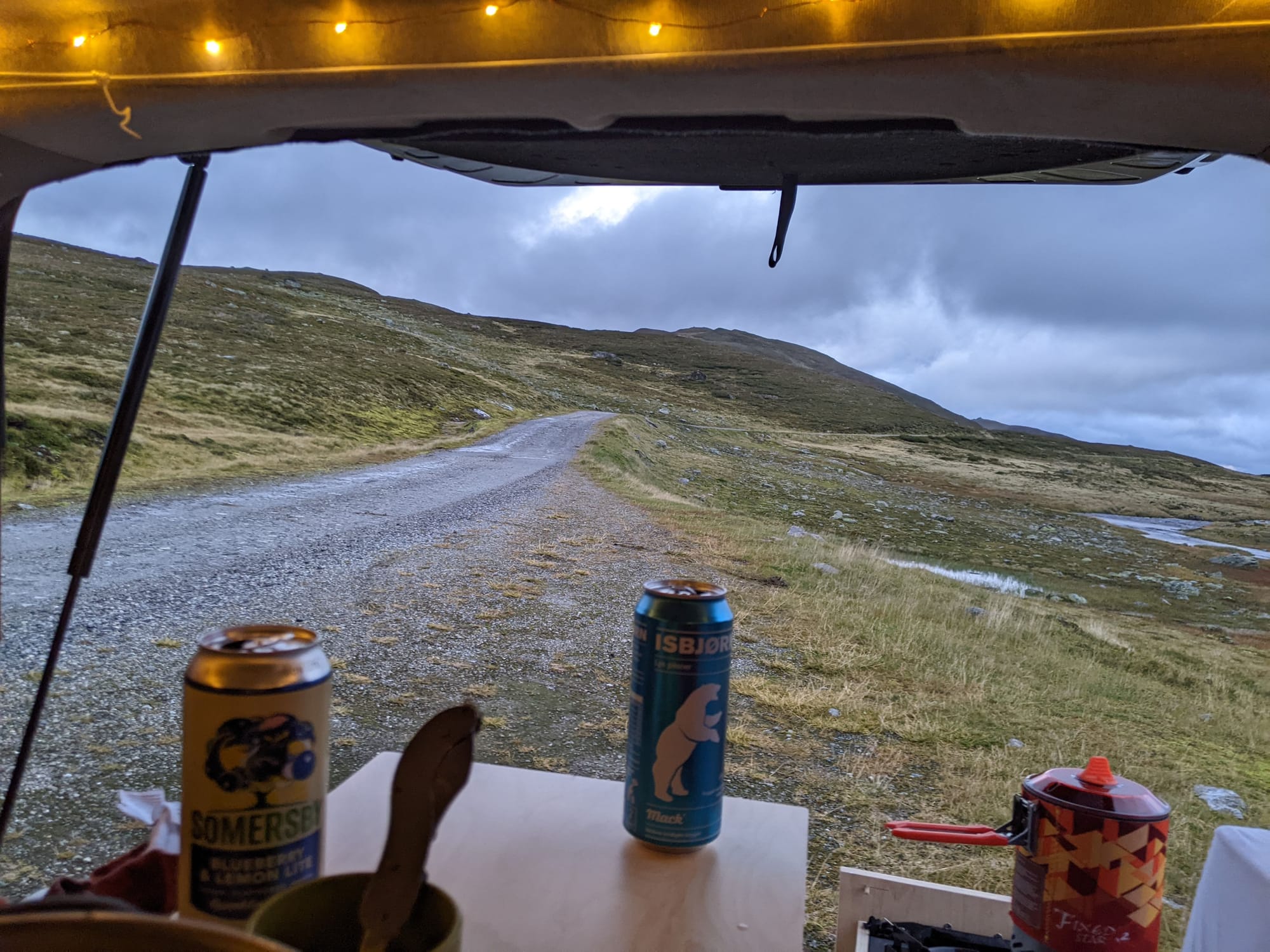
No standing height. No luxurious kitchen. No bathroom. No separate rooms (obviously).
If you need a spacious indoor living area, a microcamper will feel restrictive. There is no denying it, you definitely give up some comfort when travelling with a small camper, which can also be a pro as it forces you to spend more time outside (it's always a matter of perspective).
No Bathroom/Appliances
As mentioned above, you probably won't have space for a bathroom in your microcamper. I personally do not mind and have never really missed it, but some places require fully self-contained setups - that can be limiting (if all else fails, you can use plastic bags... if it works for dogs, it works for us too, right?).
On the other hand, no toilet means no toilet cassette to empty. Small victories.
We just use public restrooms most of the time, while occasionally booking a campsite for a proper shower.
Less Storage-Space
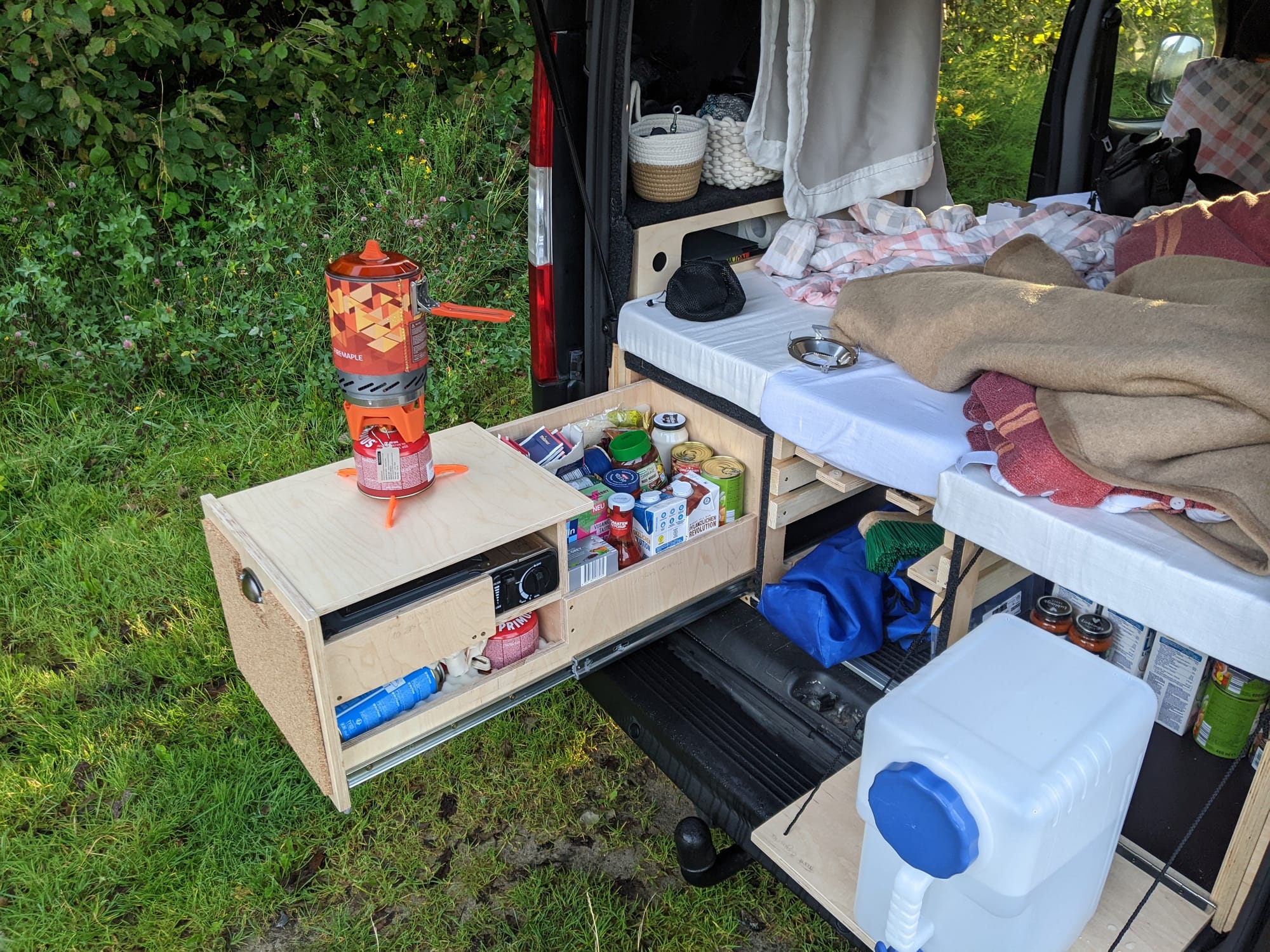
Because of the smaller size, you cannot bring everything, and things get messy really quickly. Organization becomes critical.
Ideally, everything has its place, and over time, you find routines that work for you, but you will need some discipline and organizational system to keep things clean and tidy.
Limited Passenger Capacity
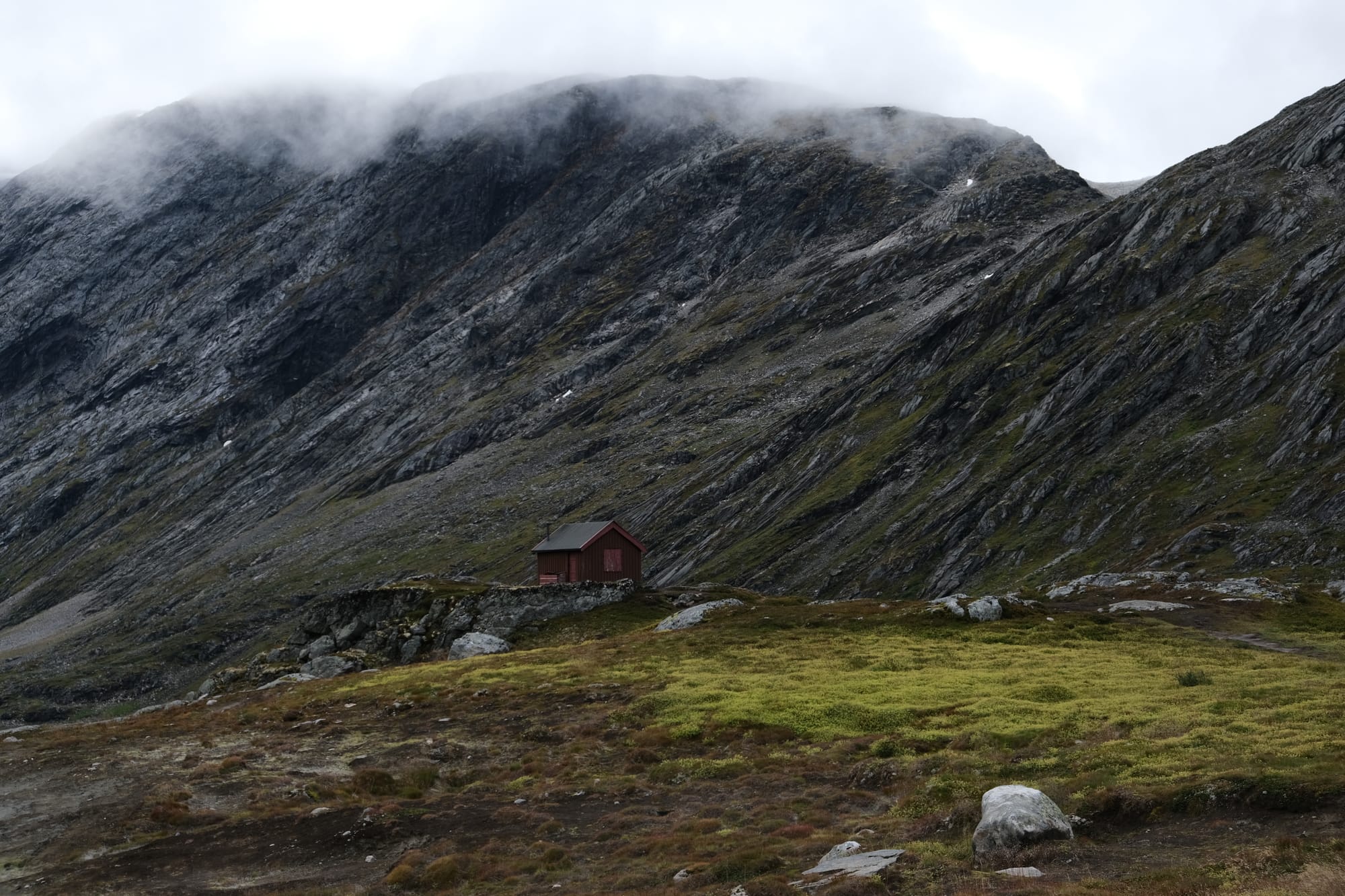
Usually, microcampers can only drive/sleep two persons comfortably at max and are therefore not really suitable for bigger families... unless you bring a tent/roof tent as well, which, again, defeats some of the advantages (like stealth and ease of setup).
In general, I would say that a microcamper works best for solo travellers, adventurous couples, plus maybe a dog (depending on the size of both ^^).
Bad Weather
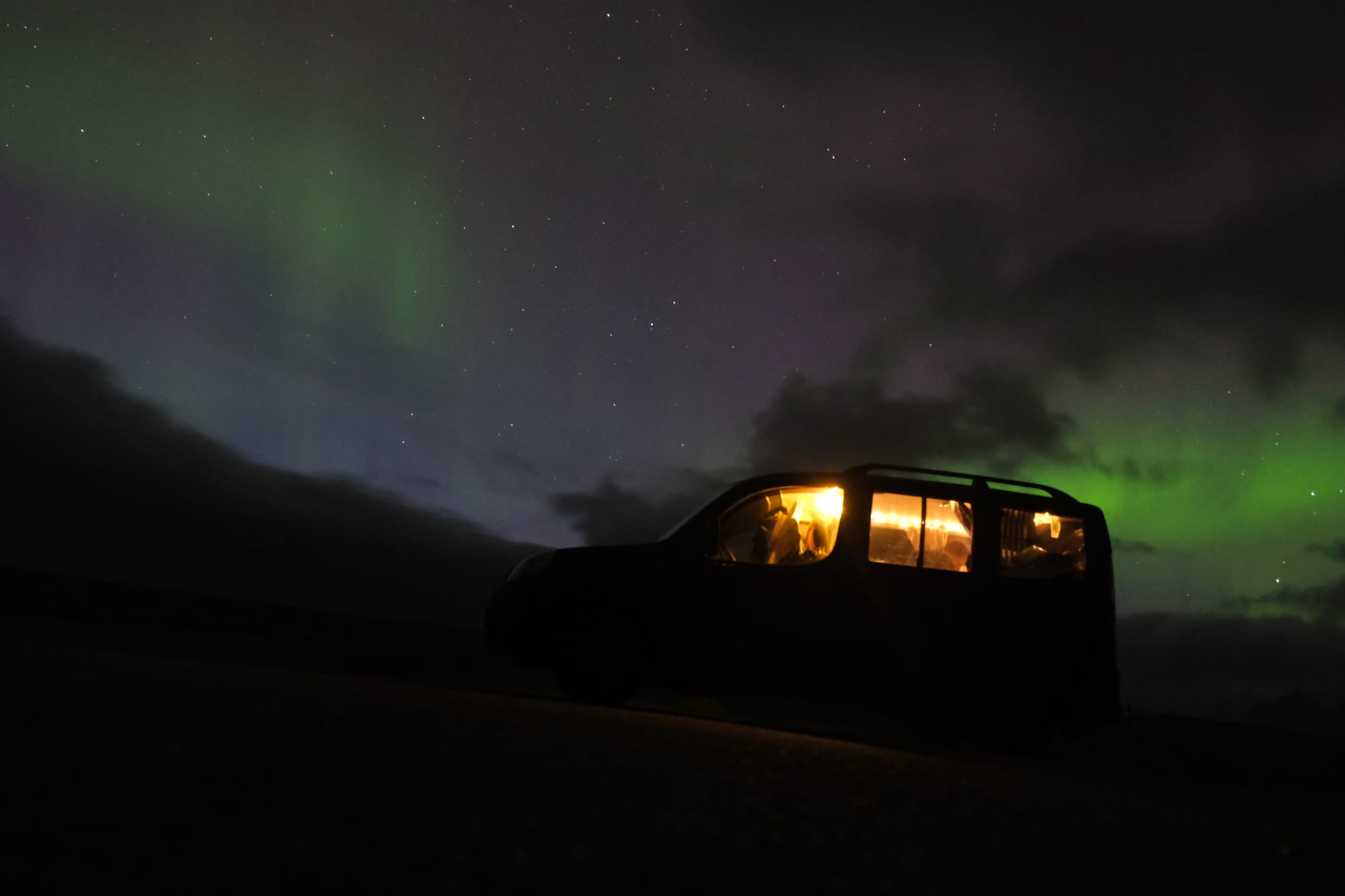
Extended rain can be challenging in a microcamper. There’s:
- Less space to dry clothes
- Less comfort for spending entire days inside (to play games/read, etc.)
- Often no (comfortable) indoor cooking
On top of that, it can also get tricky to keep the camper clean when you come in with really dirty/muddy clothes and don't have a lot of space to change.
In a larger camper, you can “live inside” more easily. In a microcamper, you wait for the weather to improve.
If it stays bad for too long, you can always organize a Hostel for a couple of days to dry your clothes and warm up.
Daily Effort (More work)
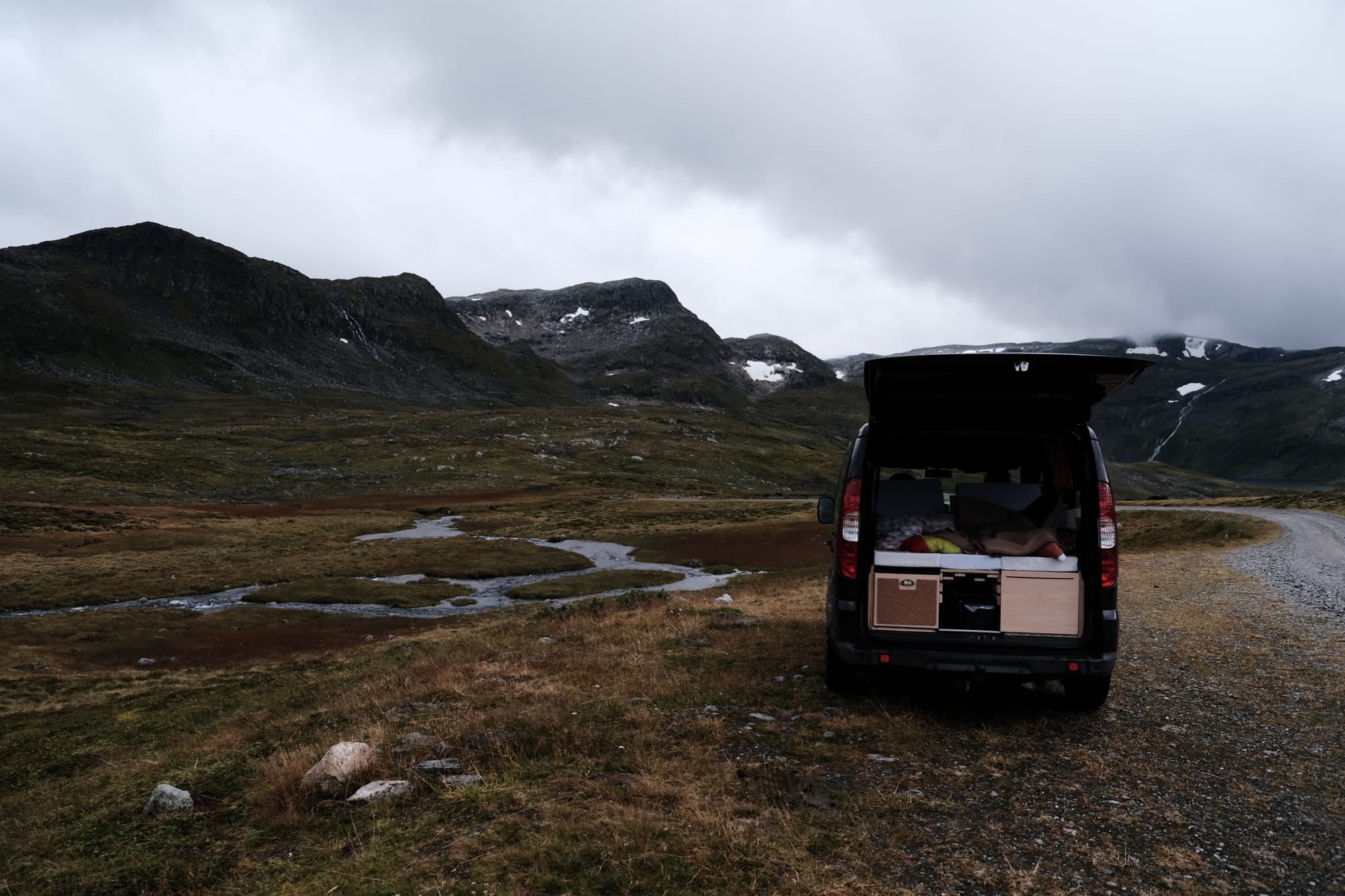
Daily life takes a bit more effort compared to fixed furniture in larger vans. You usually:
- Convert from driving mode to sleeping mode
- Move things around
- Set up cooking space
- Reorganize frequently
Every day life can be a bit more cumbersome. Simple tasks like making a meal, doing the dishes, going to the bathroom, or going to bed take longer or involve extra steps compared to larger vehicles with fixed furniture/appliances. But to be fair, the same applies to tent camping.
Uncertainty
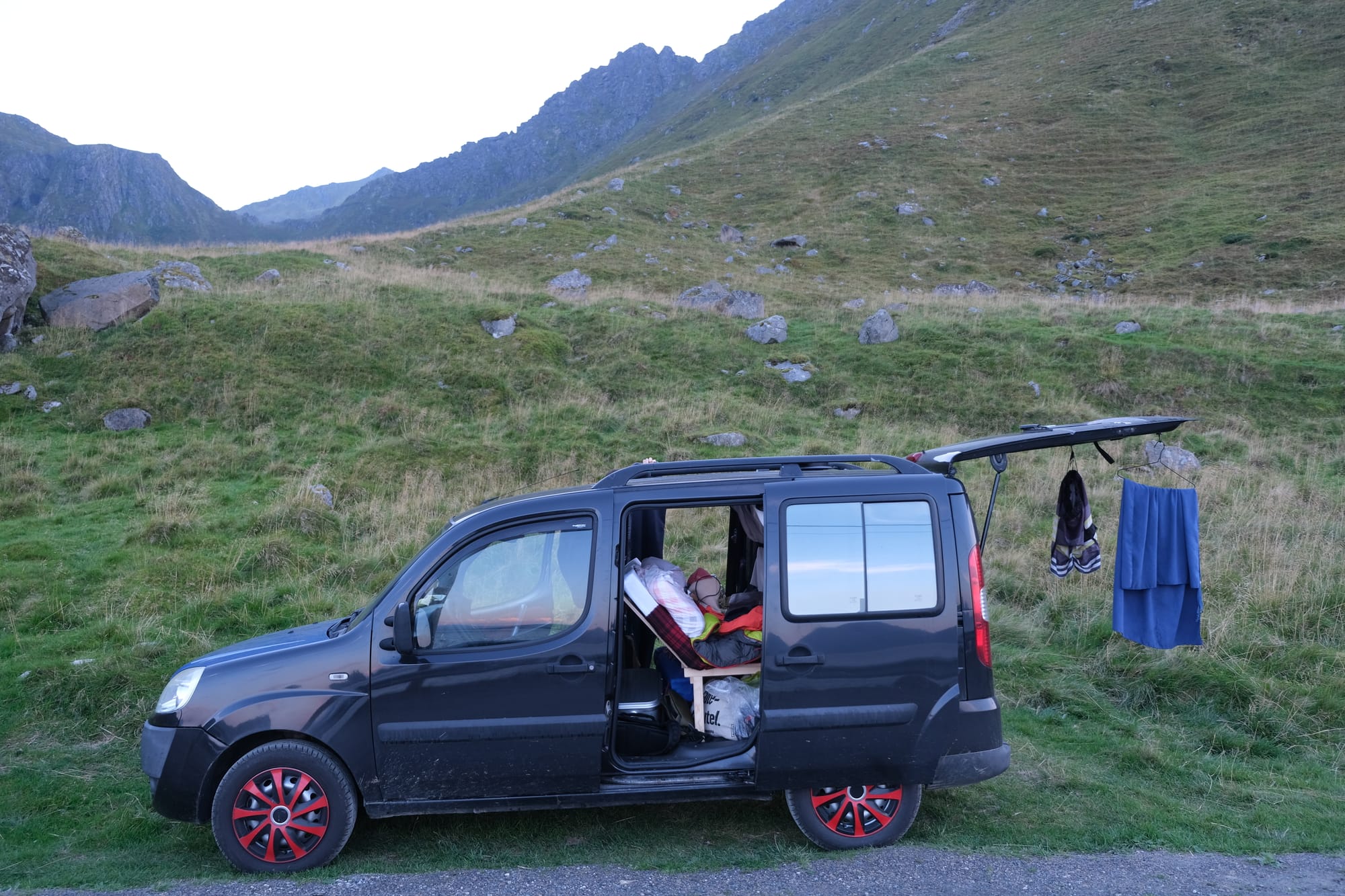
The freedom from itineraries that makes microcamper travel so appealing has a flipside: you often don't know where you'll sleep tonight. In the late afternoon, that romantic spontaneity can start to feel like mild anxiety as you scroll the map looking for a flat patch of ground (ideally with a nice view) that won't annoy anyone.
It gets easier with experience. You develop instincts for potential spots. But it's worth knowing upfront: flexibility requires tolerance for uncertainty. Some days, the perfect spot appears immediately. Other days, you're driving in circles at 9 PM, tired and hungry, quietly questioning your life choices.
That's part of the experience, too. With freedom comes uncertainty. And of course, if all else fails, you can always fall back on a regular campsite and take the bonus of a hot shower (something our microcamper does not offer yet).
Worse than a Tent
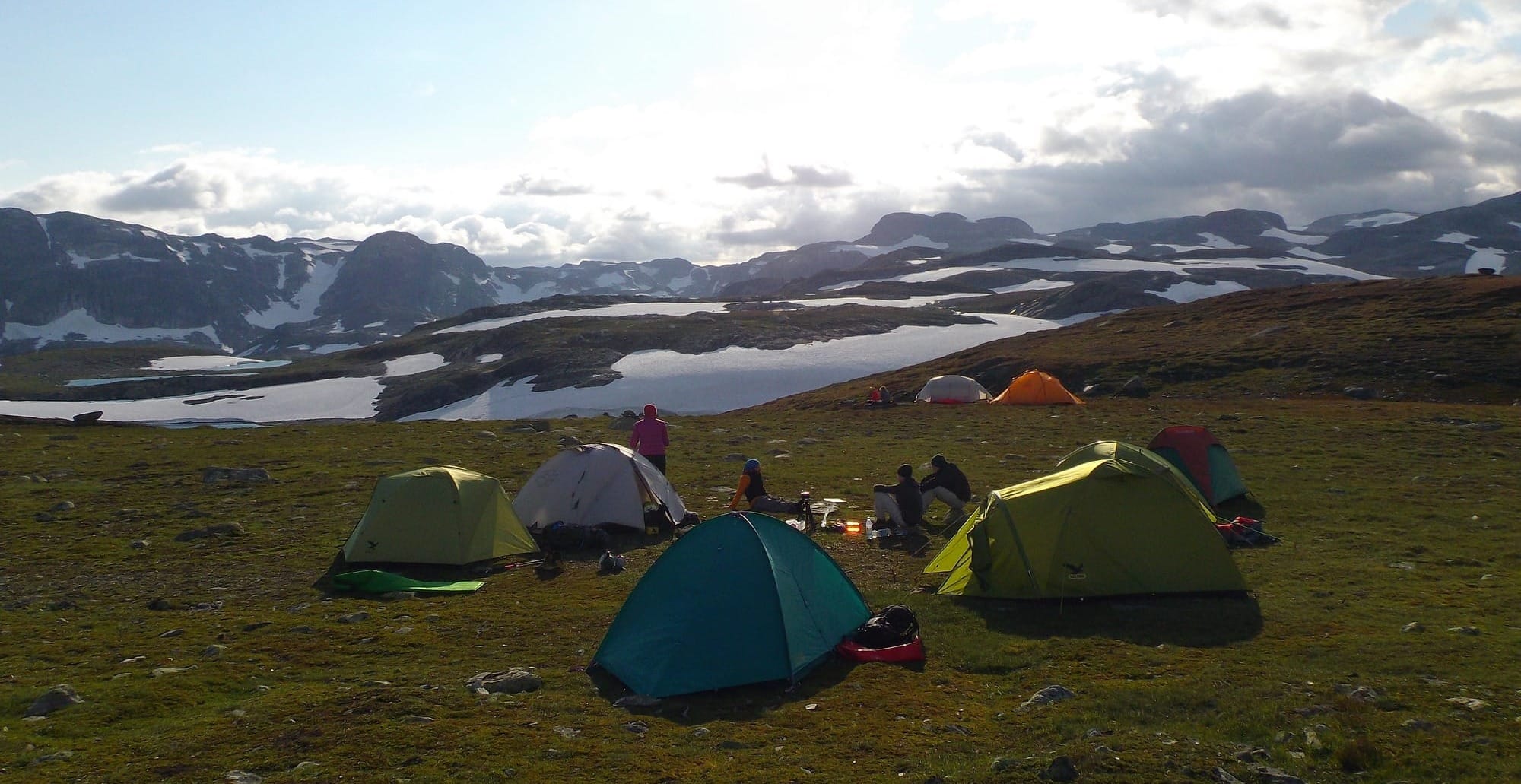
The microcamper is not the answer to everything. Of course, there are areas where a simple tent still wins.
A tent is more flexible. Full stop. You can carry it to places no road reaches - up a cliff, over a fence, down to a shoreline, to that perfect wild spot you spotted from the car that is just fifty meters from the road, but might as well be on another planet for a vehicle. Sometimes we'd pass a spot, and I'd think: that would be perfect - for a tent. For Lotte, it simply wasn't an option.
It's also easier to "hide" (away from your car) with a tent when you are out wild camping :)
There's also the legal dimension. Norway is famously generous with wild camping rights -but even there, we occasionally encountered areas where sleeping in a vehicle was explicitly prohibited, while a tent was fine. If peace of mind matters to you (it does to me), that's a real constraint worth knowing about before you commit to (only) car-based travel.
The microcamper sits between a tent and a full campervan on almost every axis -and that middle position comes with the trade-offs you'd expect. It's less free than a tent. Less comfortable than a big van. What it offers instead is its own particular combination of the two: more shelter and convenience than a tent, more access and simplicity than a van.
Whether that trade-off works for you depends entirely on what you're optimizing for.
Meet Our Microcampers
We converted our first microcamper in 2023. Since then, all our major trips have been with our tiny home on four wheels. While I won't go into details here, I do want to quickly introduce you to our own microcampers to provide some inspiration about how this could look and work.
Artax (First Experiment)
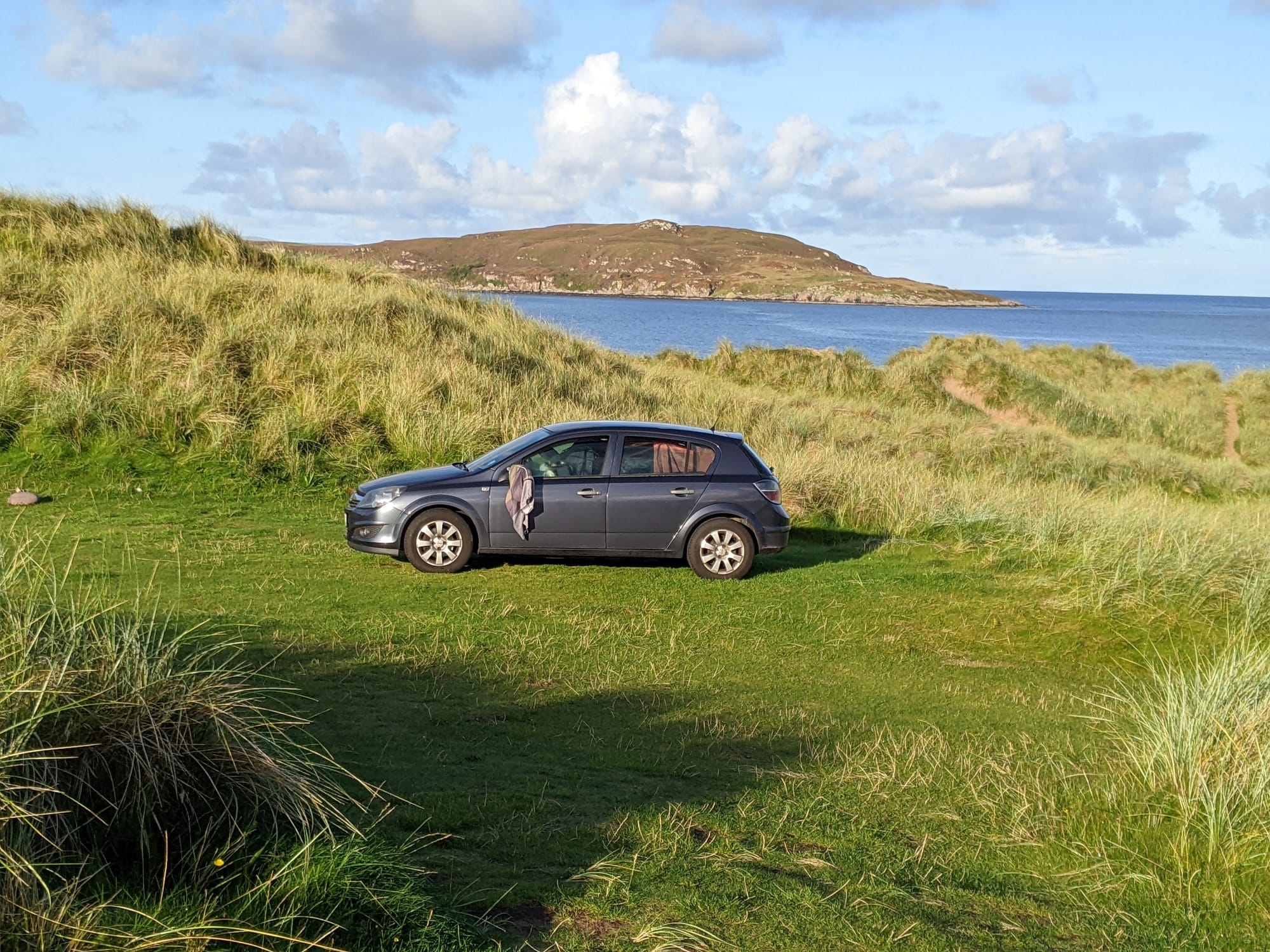
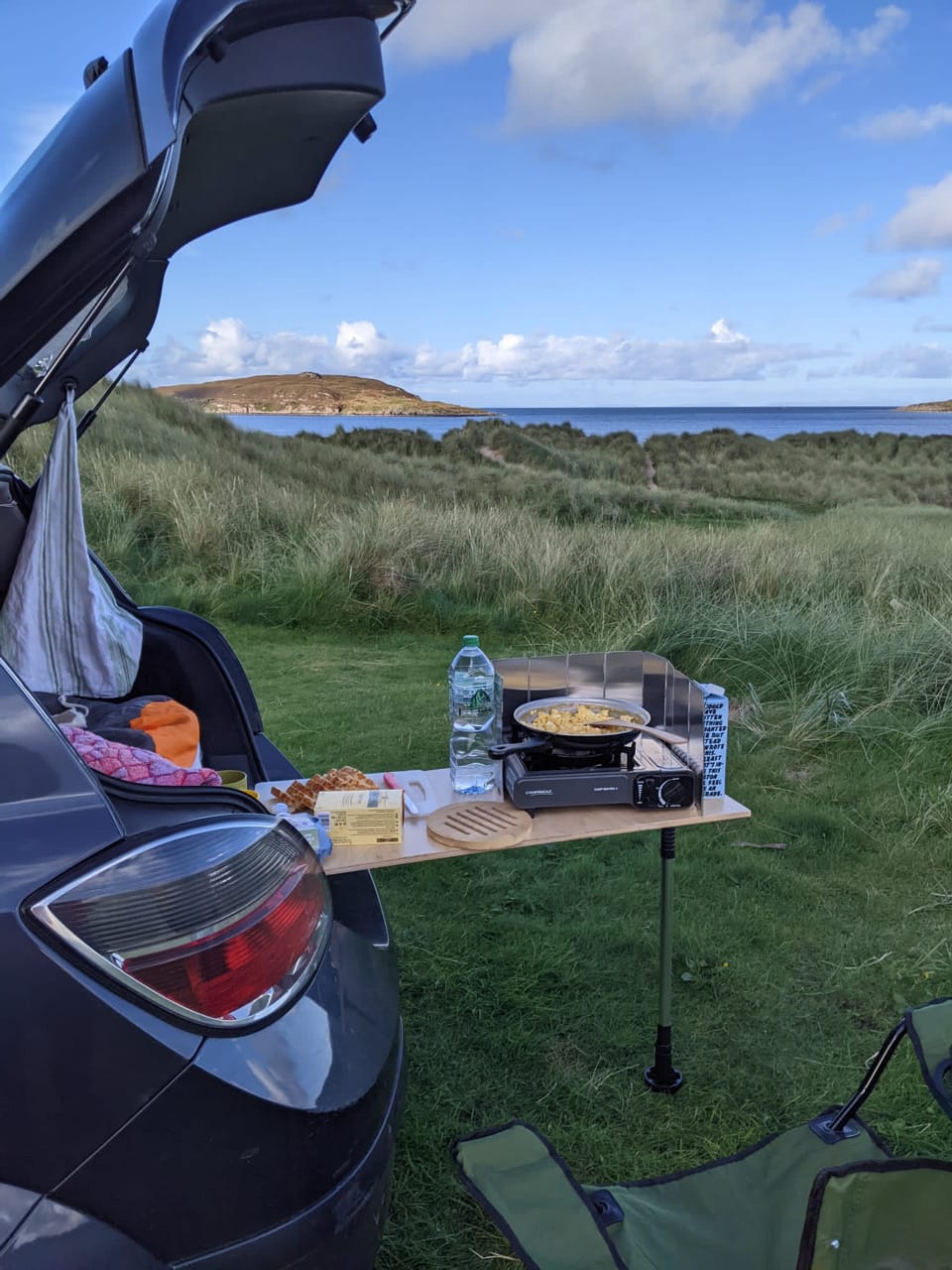
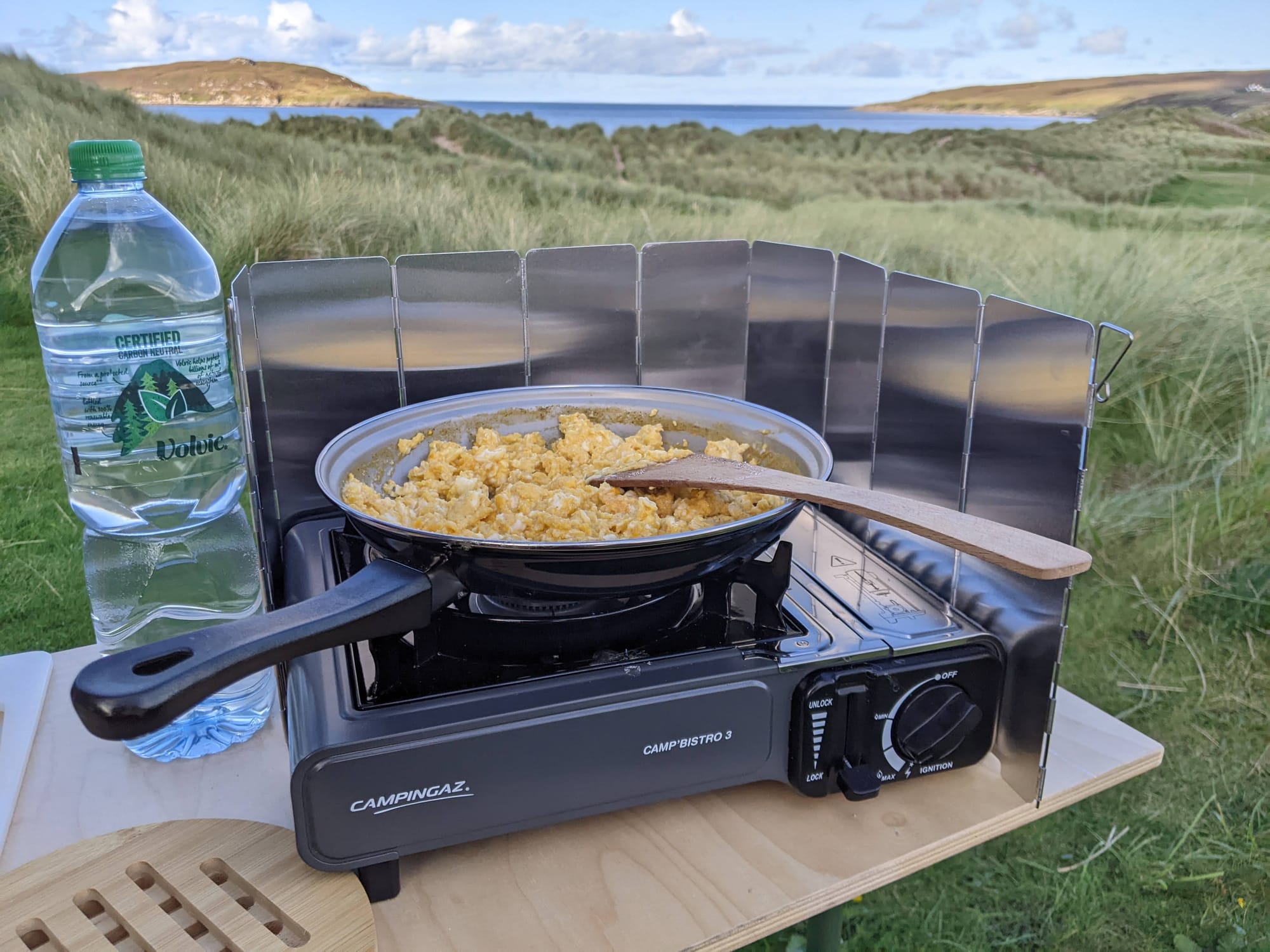
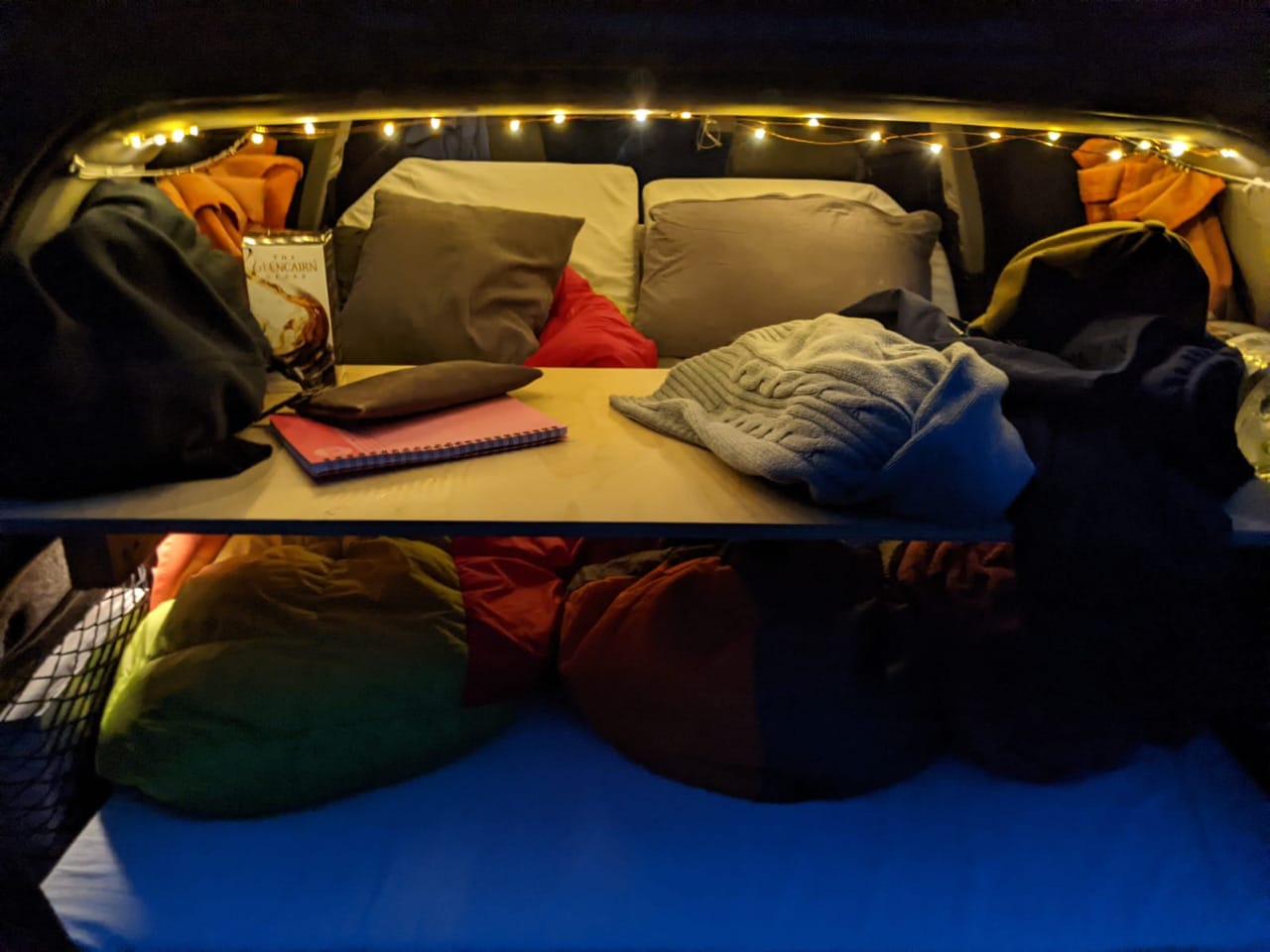
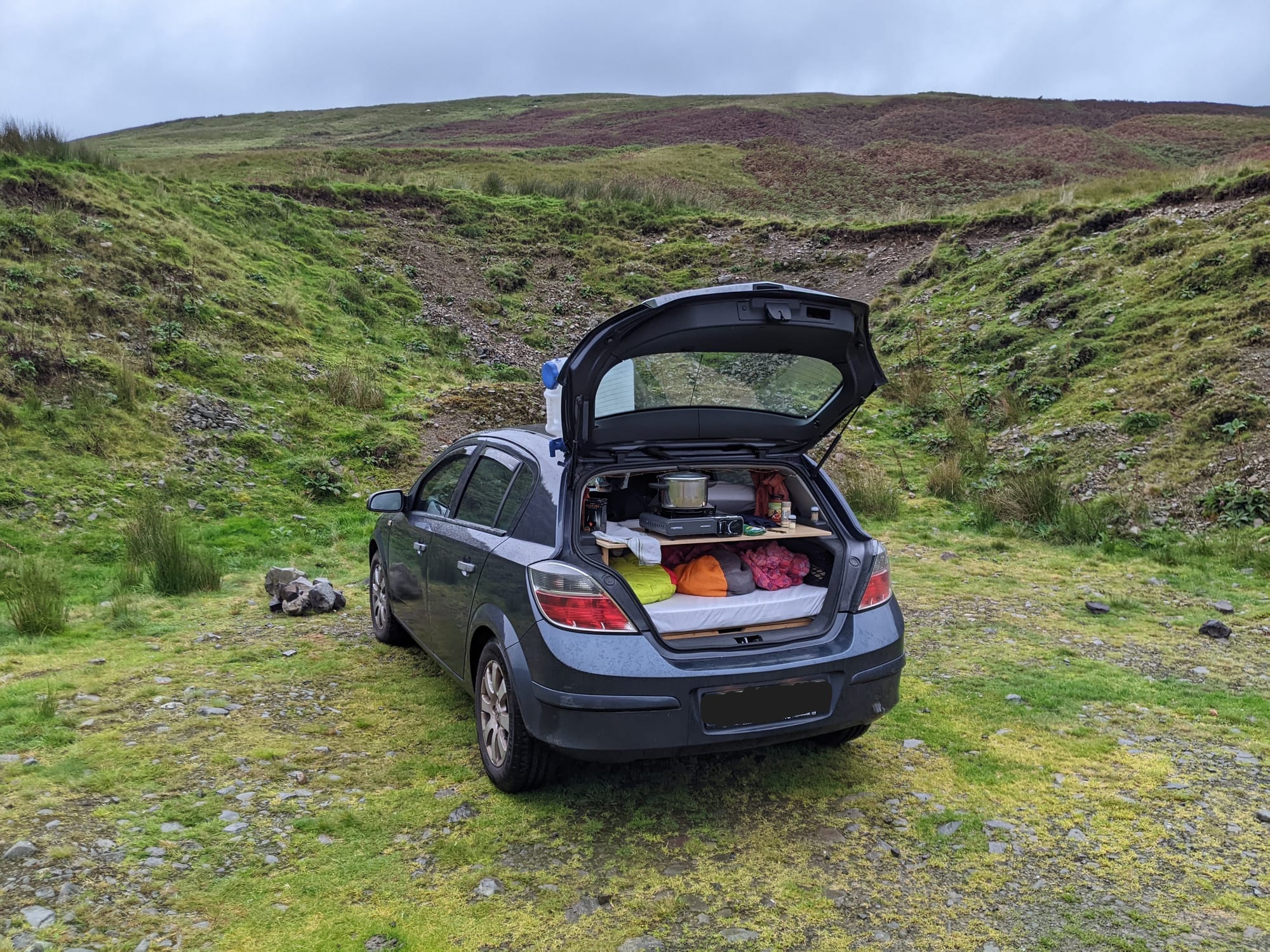
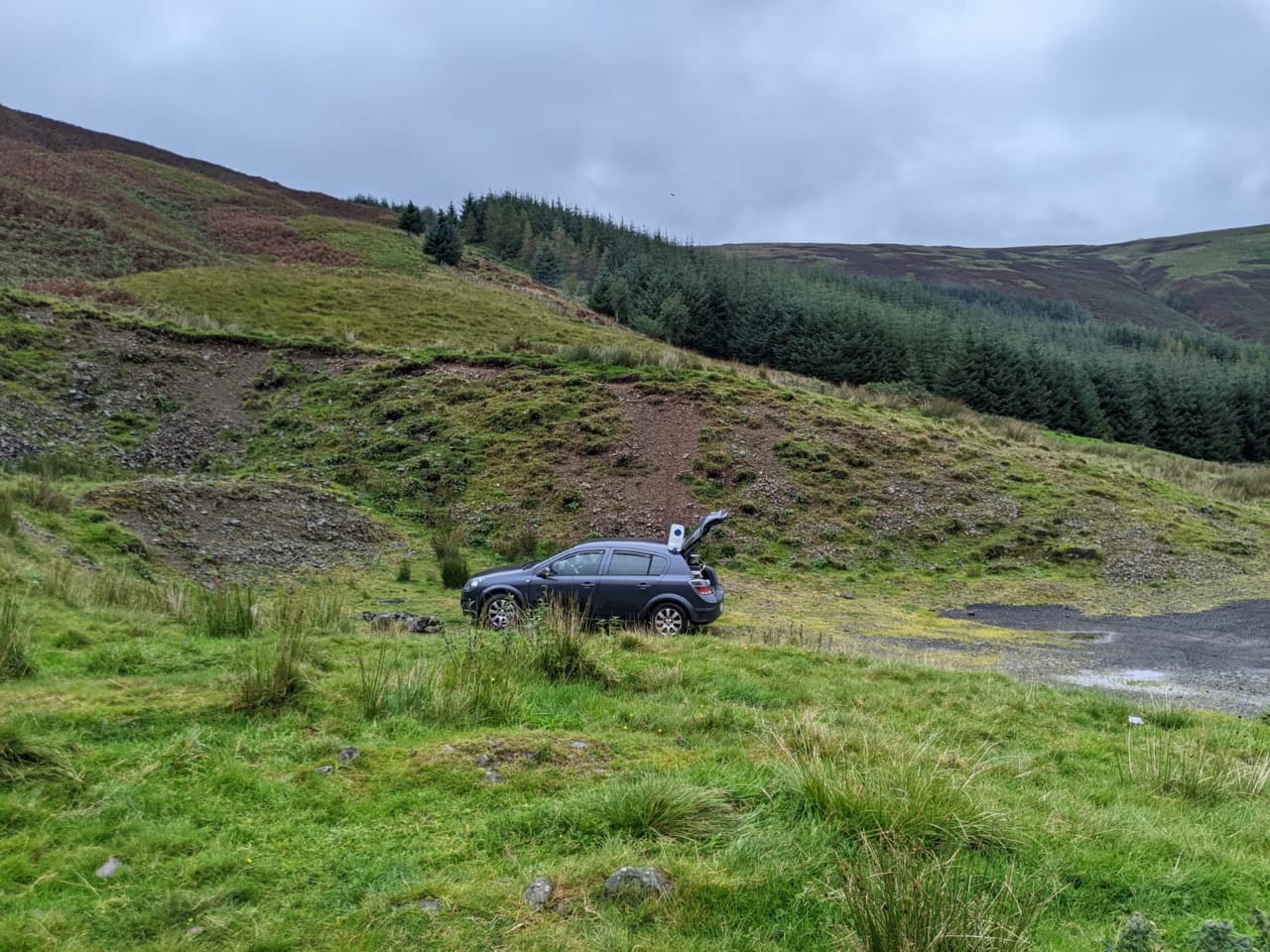
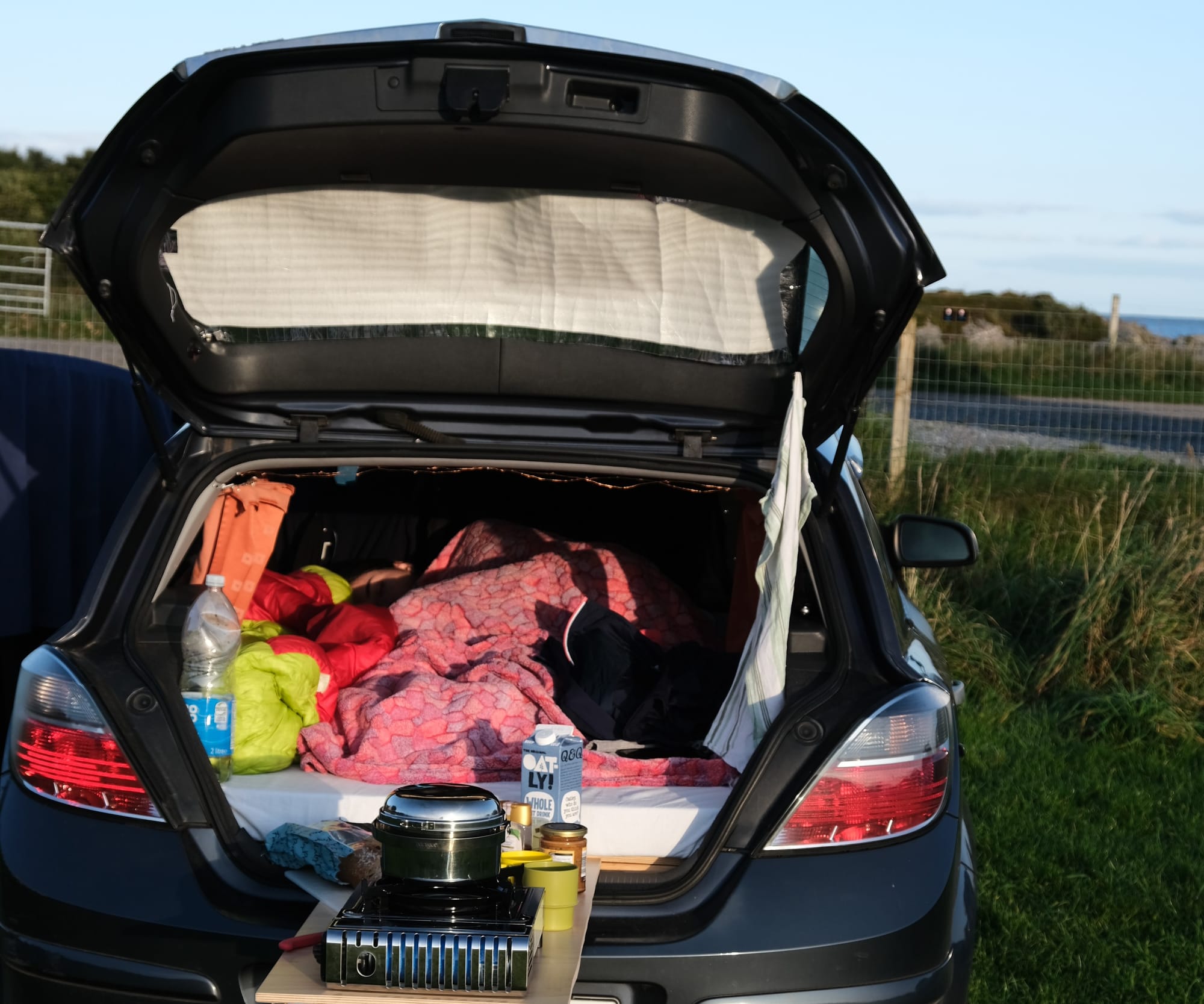
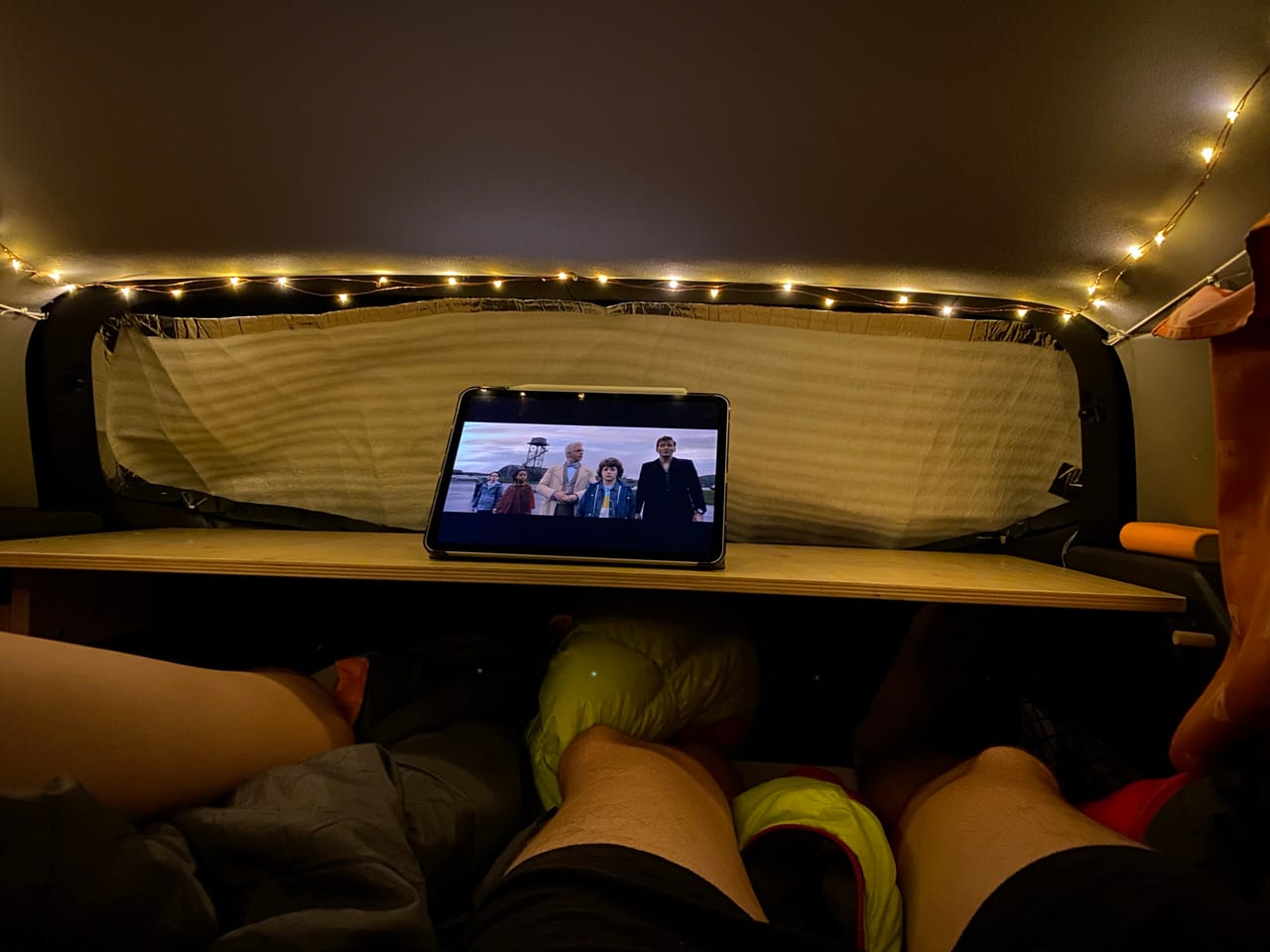
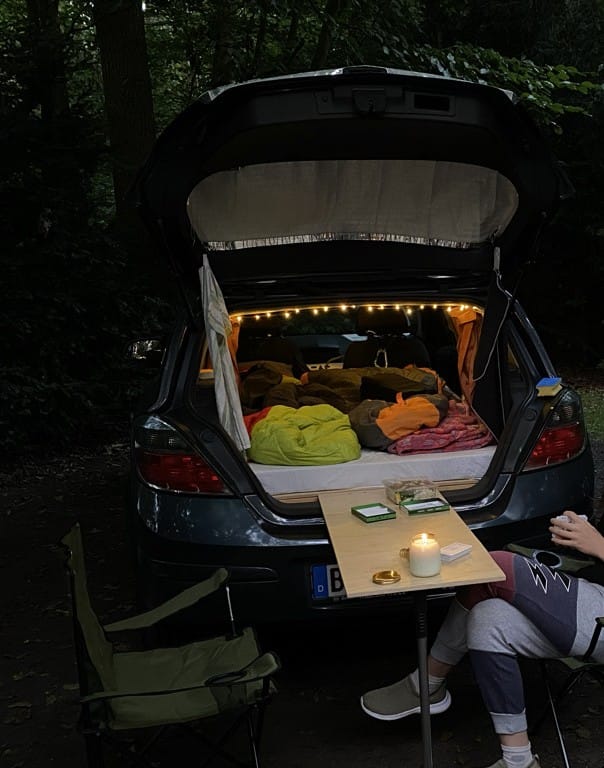
Some impressions of "Artax" our first microcamper based on an Opel Astra which took us on a 3 week trip through Scotland
Our first attempt, "Artax", was even smaller than "Lotte" and started as an experiment:
We wanted to finally go on our first big holiday trip together. Quickly, we decided on Scotland as the destination, and I started planning a route to all the places I wanted to visit. I soon realized that our (limited) budget would not work for a flight, a rental car, accommodation, etc.
So we started dabbling with the idea of camping. I'd been daydreaming about a camper van conversion for years, watching YouTube builds I couldn't afford, but that also didn't fit our budget.
That's when I encountered the idea of microcampers and carefully introduced it to my girlfriend (fully expecting her to reject it). But, to my surprise, she was down to try it. We then ran down to my car (an Opel Astra at the time) and started measuring if we could somehow lie flat in it for sleeping, and it turns out we barely fit...
So we decided to actually try this microcamper-experiment on our three-week trip through Scotland.
It taught us a lot. What worked. And what didn't.
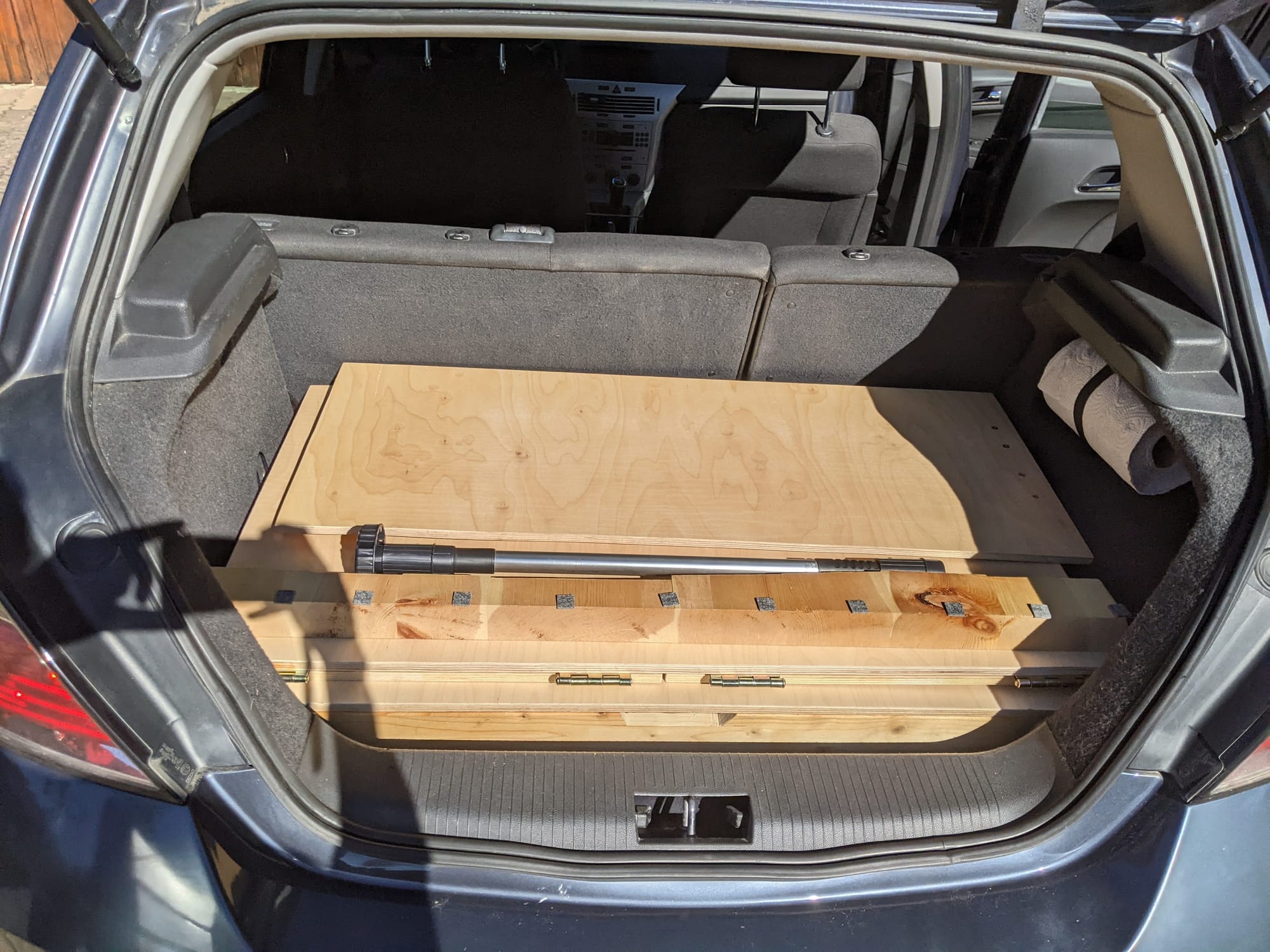
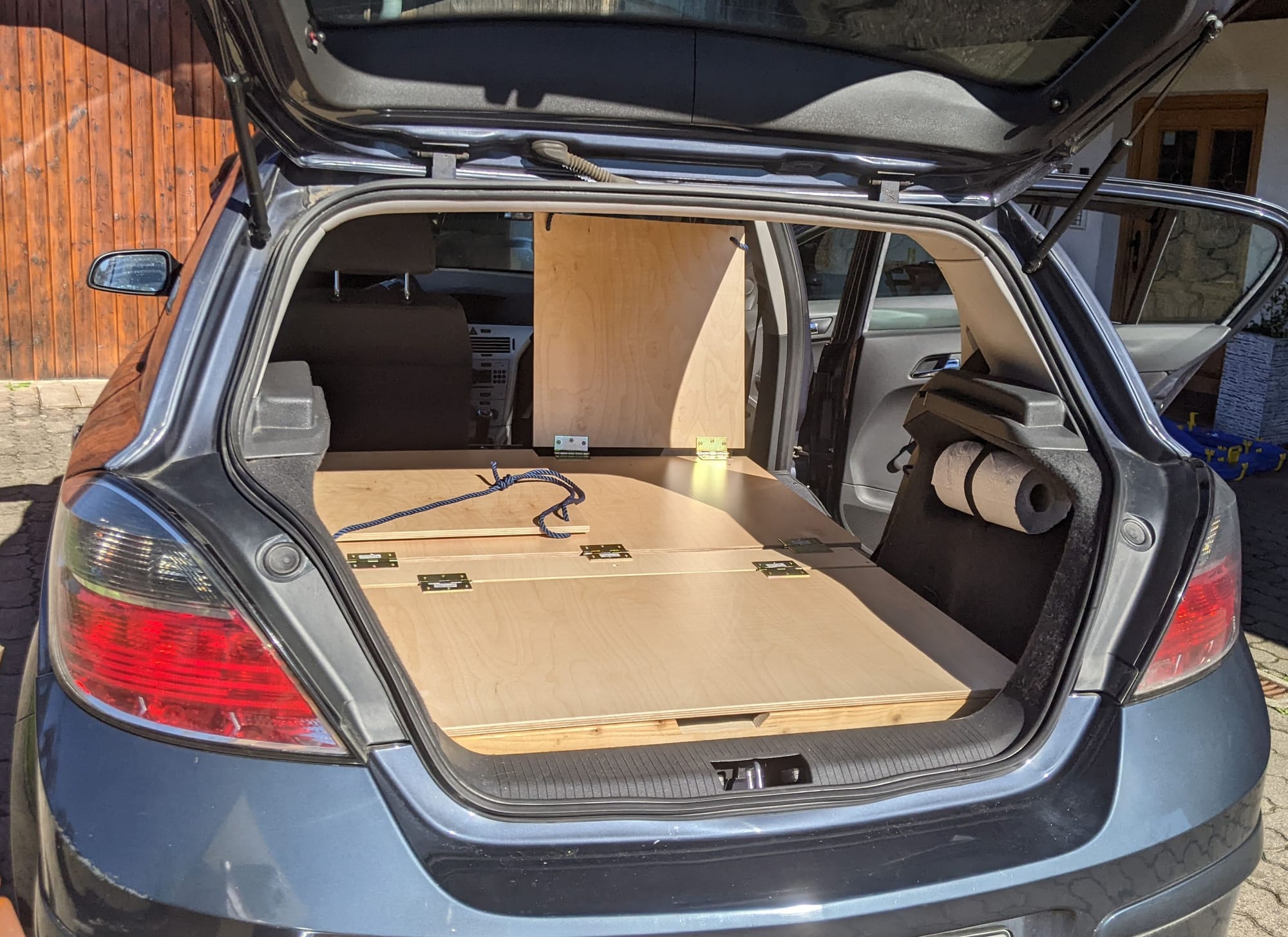
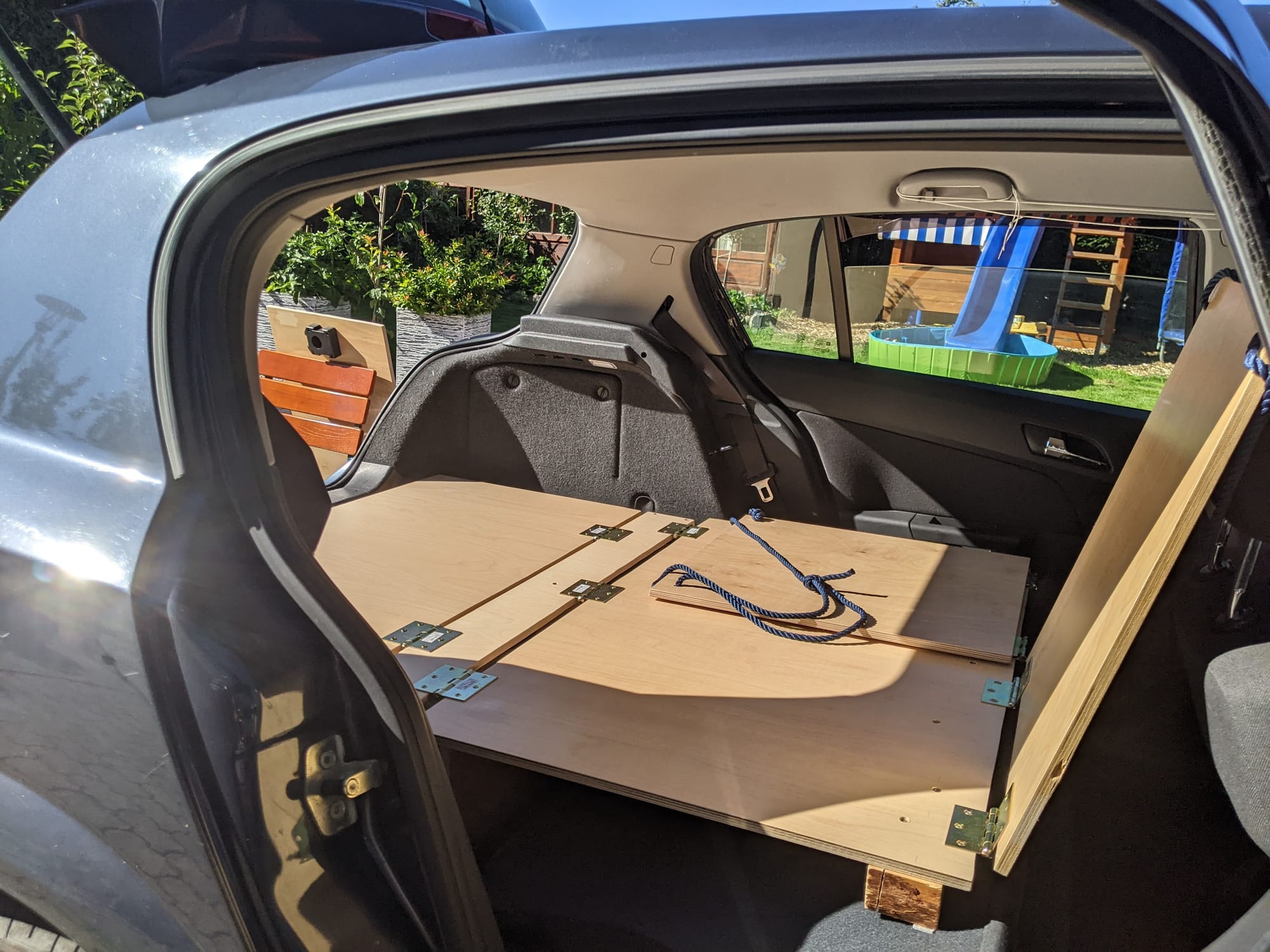
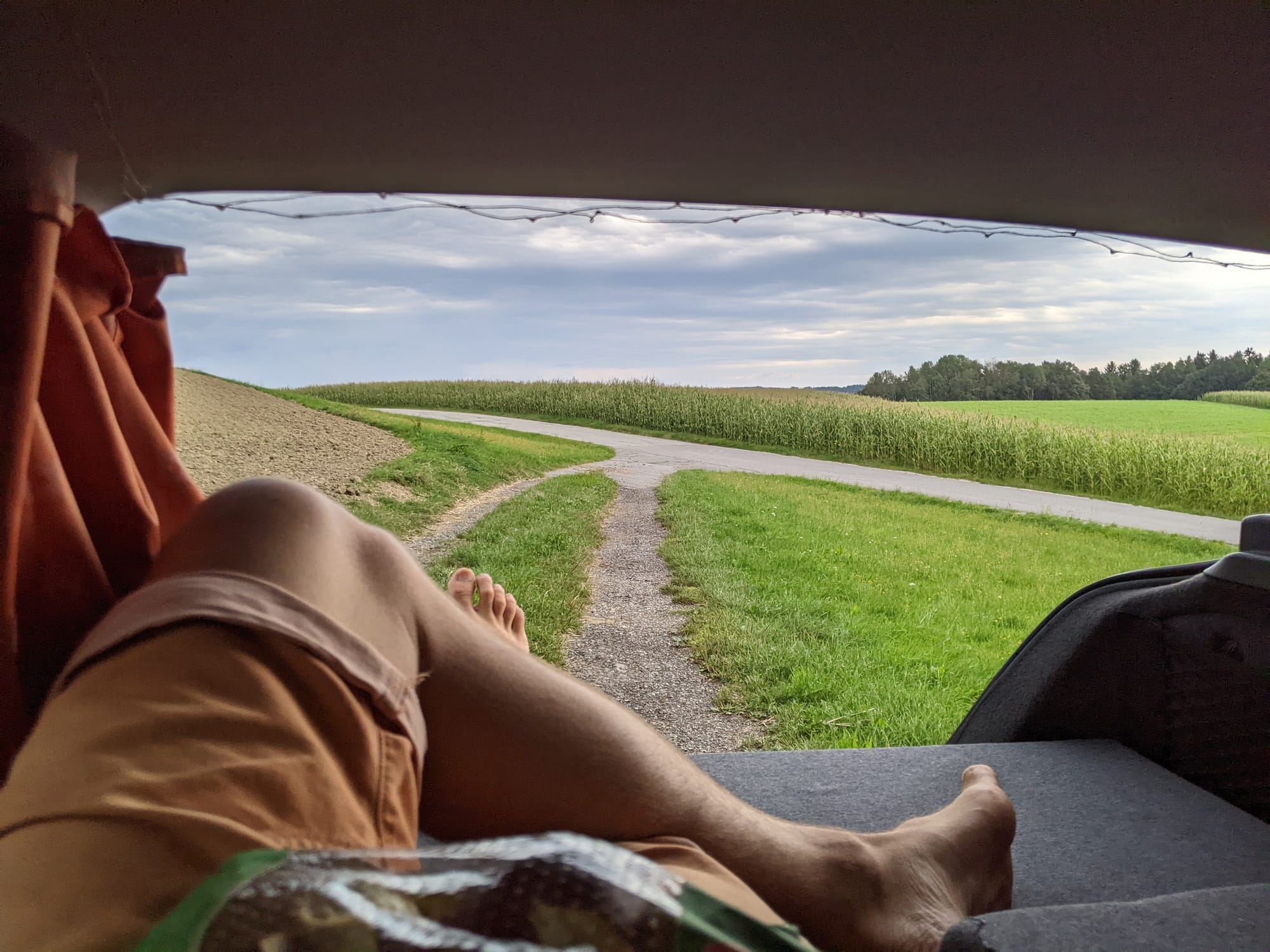
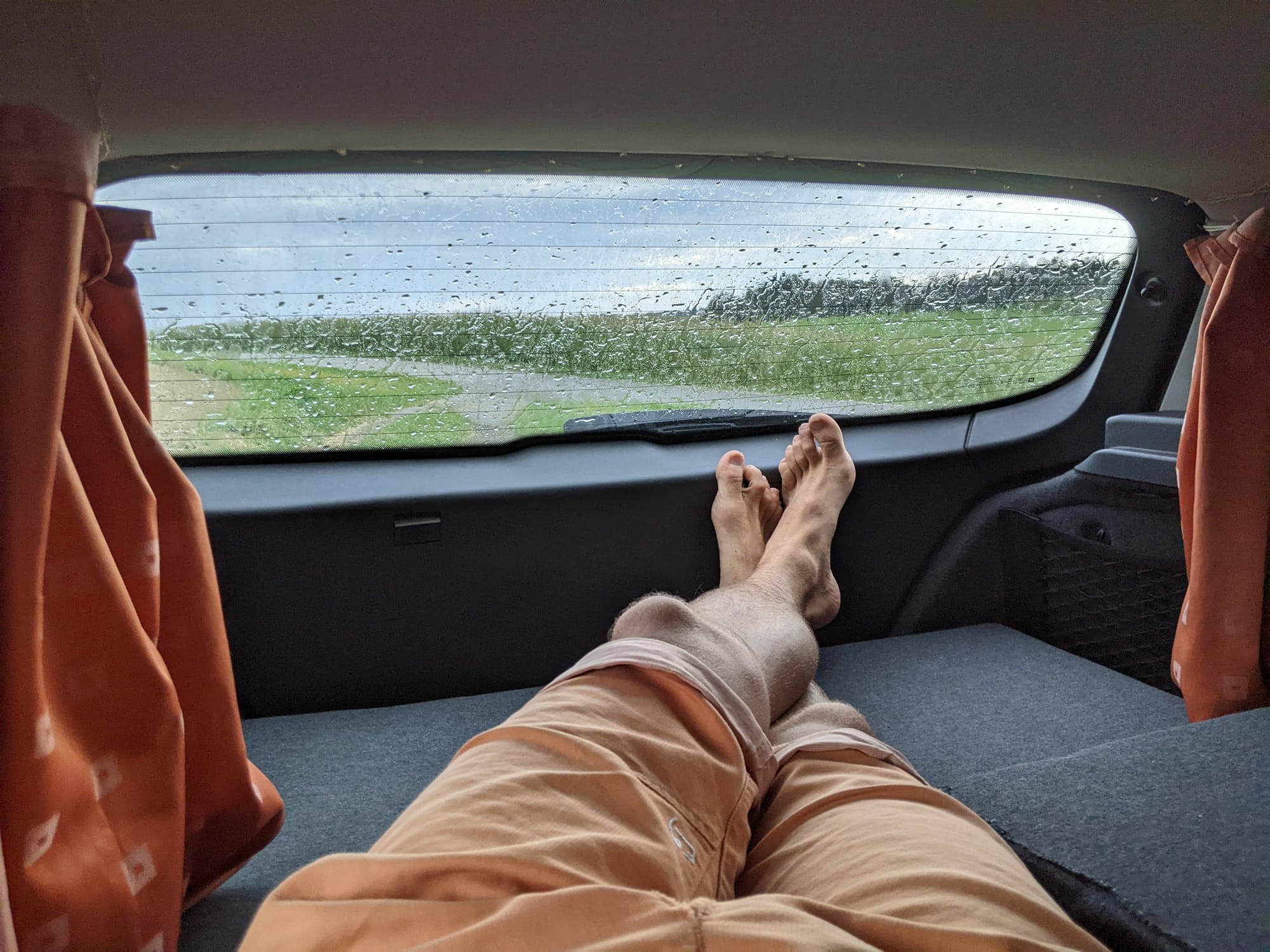
Impression from our very simple camper-build in Artax - not much, but enough for a first experiment!
I won't go into too much detail here, but here are some of the main things I loved about Artax:
The simplicity. We used the car we already had, the entire build fit in the boot, and it took one weekend to put together. Artax was also very small, stealthy, and versatile, since the entire build worked even with the rear seats in and usable (folded over for sleeping). The entire conversion cost us around 650€ total, including a mattress, water canisters, and a gas stove. This allowed us to only spend ~150€ on accommodation (campsites) over our three-week trip through Scotland.
What didn't work:
Headspace (or the lack of it), limited indoor use (either sitting in the front seats or lying in Bed), a fiddly cooking setup (unsuitable for bad weather) with only one stove, and a water system that technically worked but had me hauling around canisters every time we wanted a cup of tea.
All in all, Artax and our first microcamper trip through Scotland was a great and very fun experiment that has left us with a lot of fond memories!
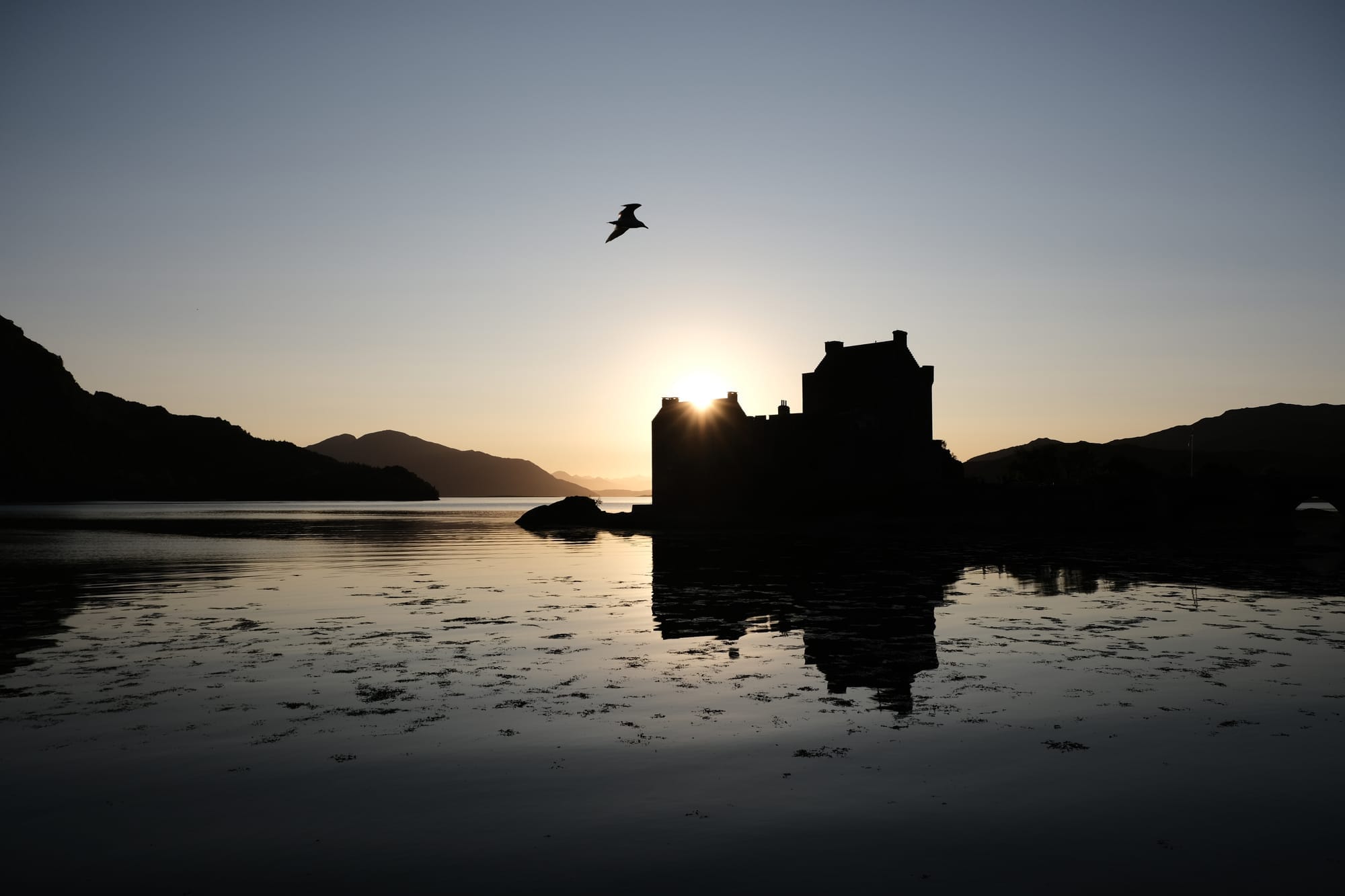
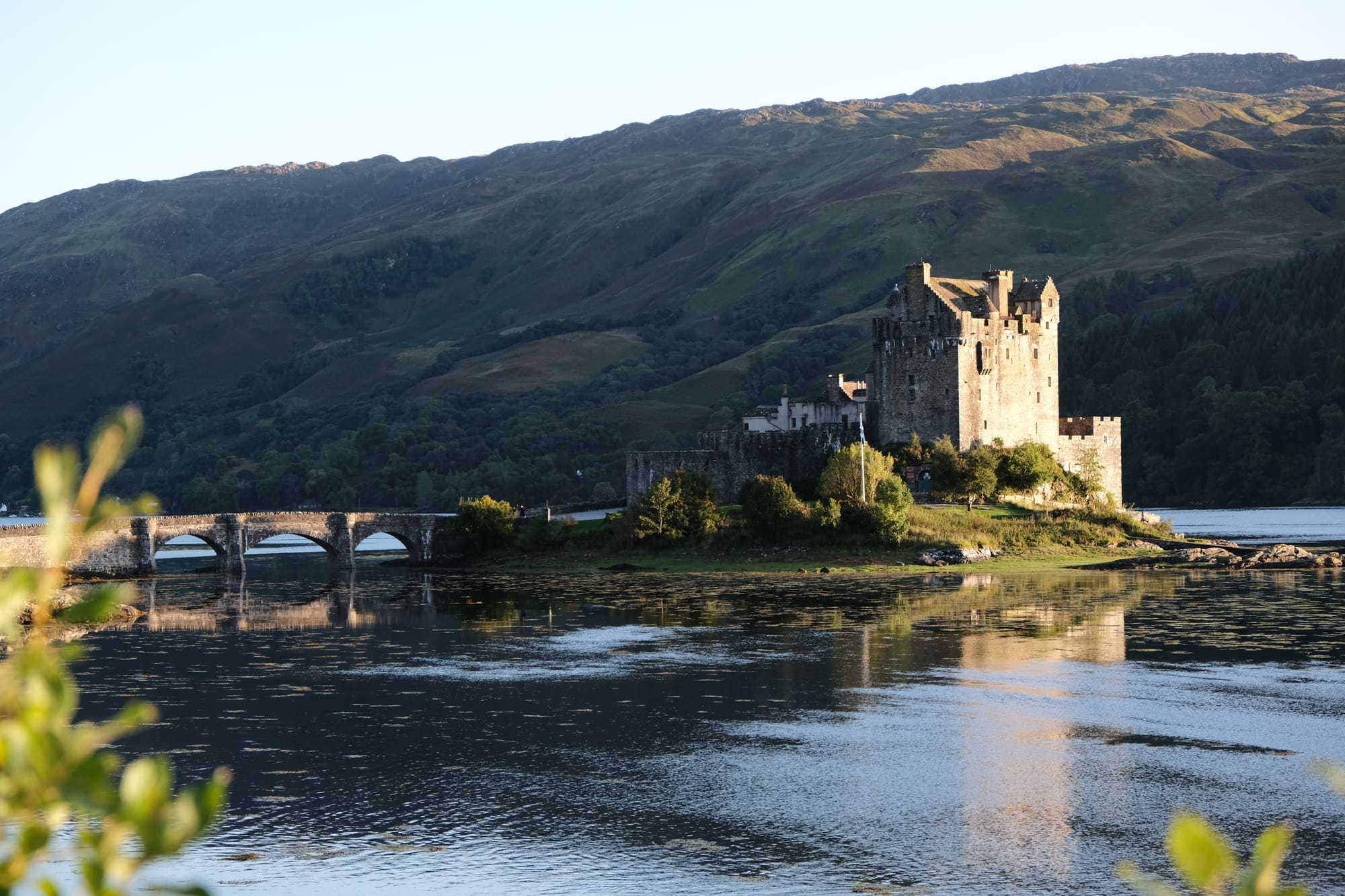

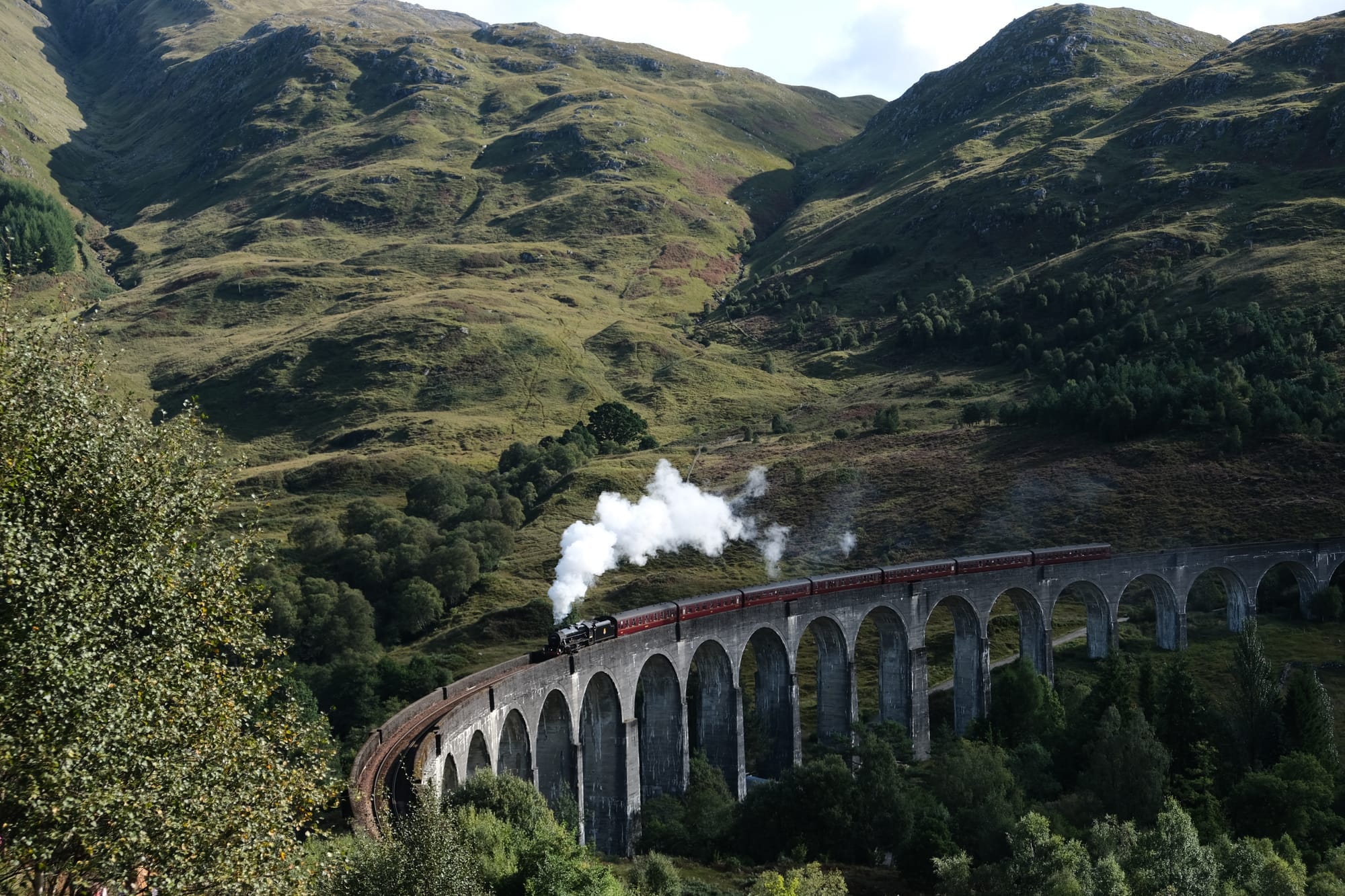
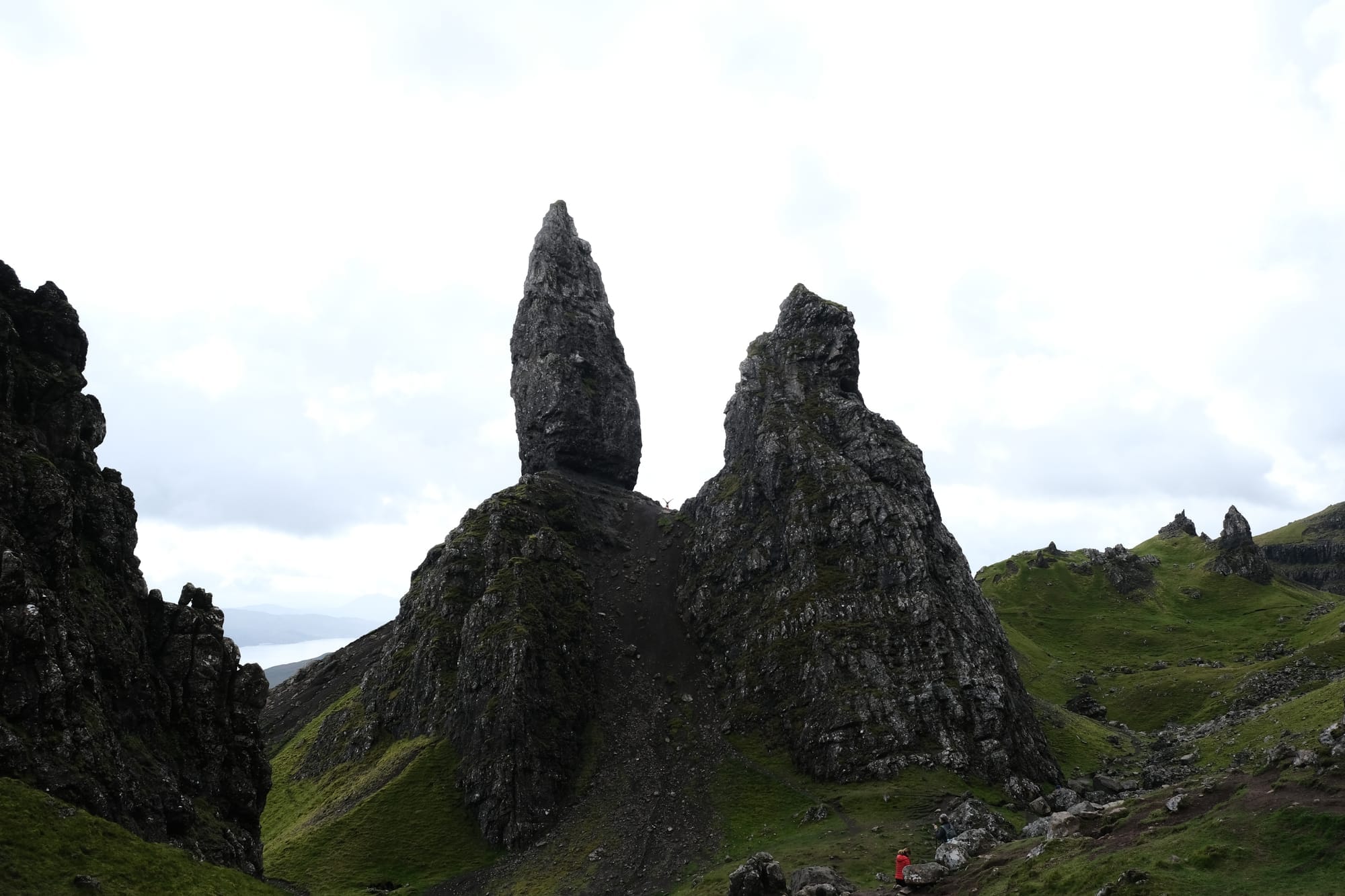
Some of the experiences from our first microcamper trip through scotland - well worth the experiment if you ask me!
Lotte (Current Camper)
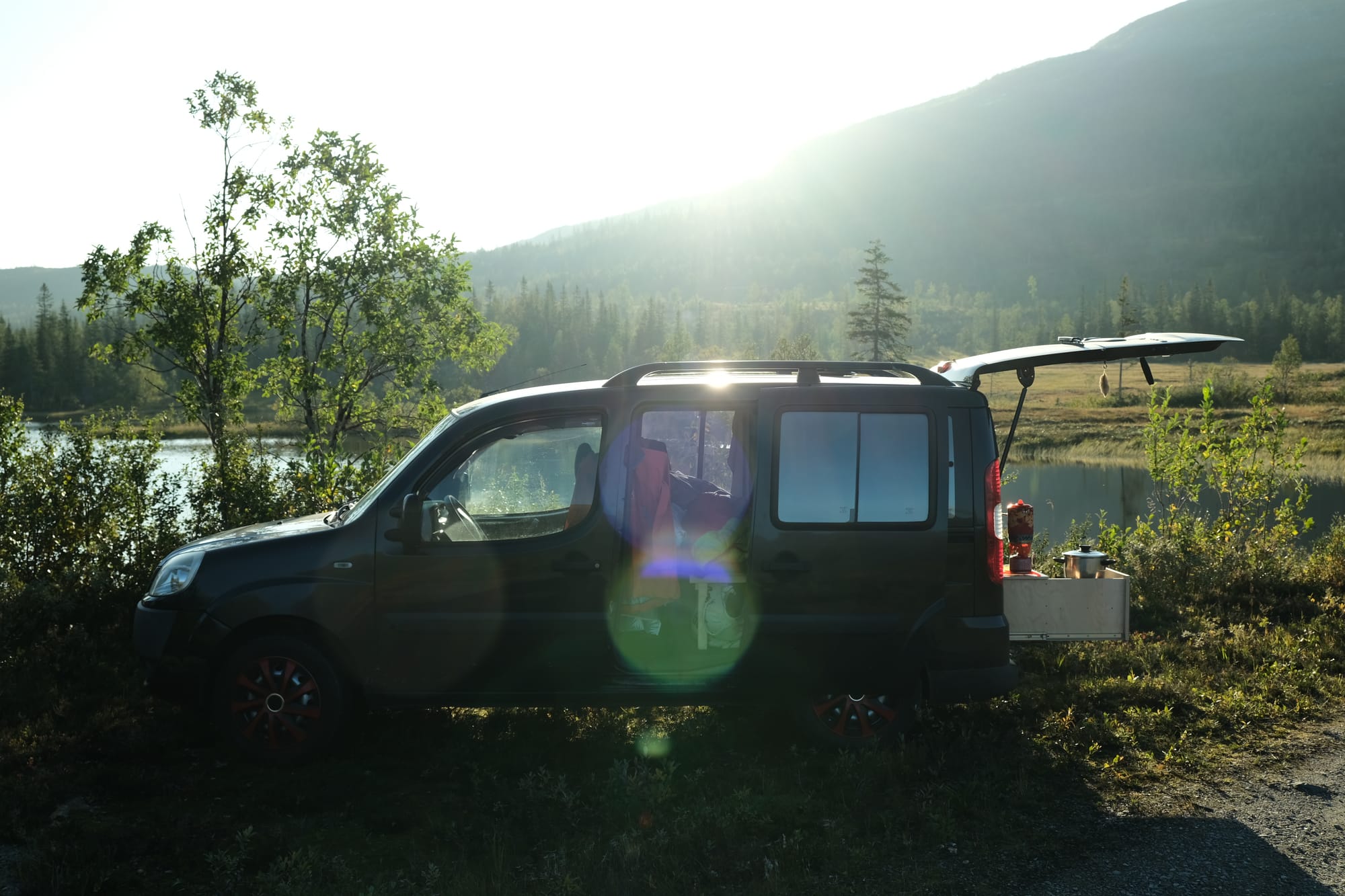
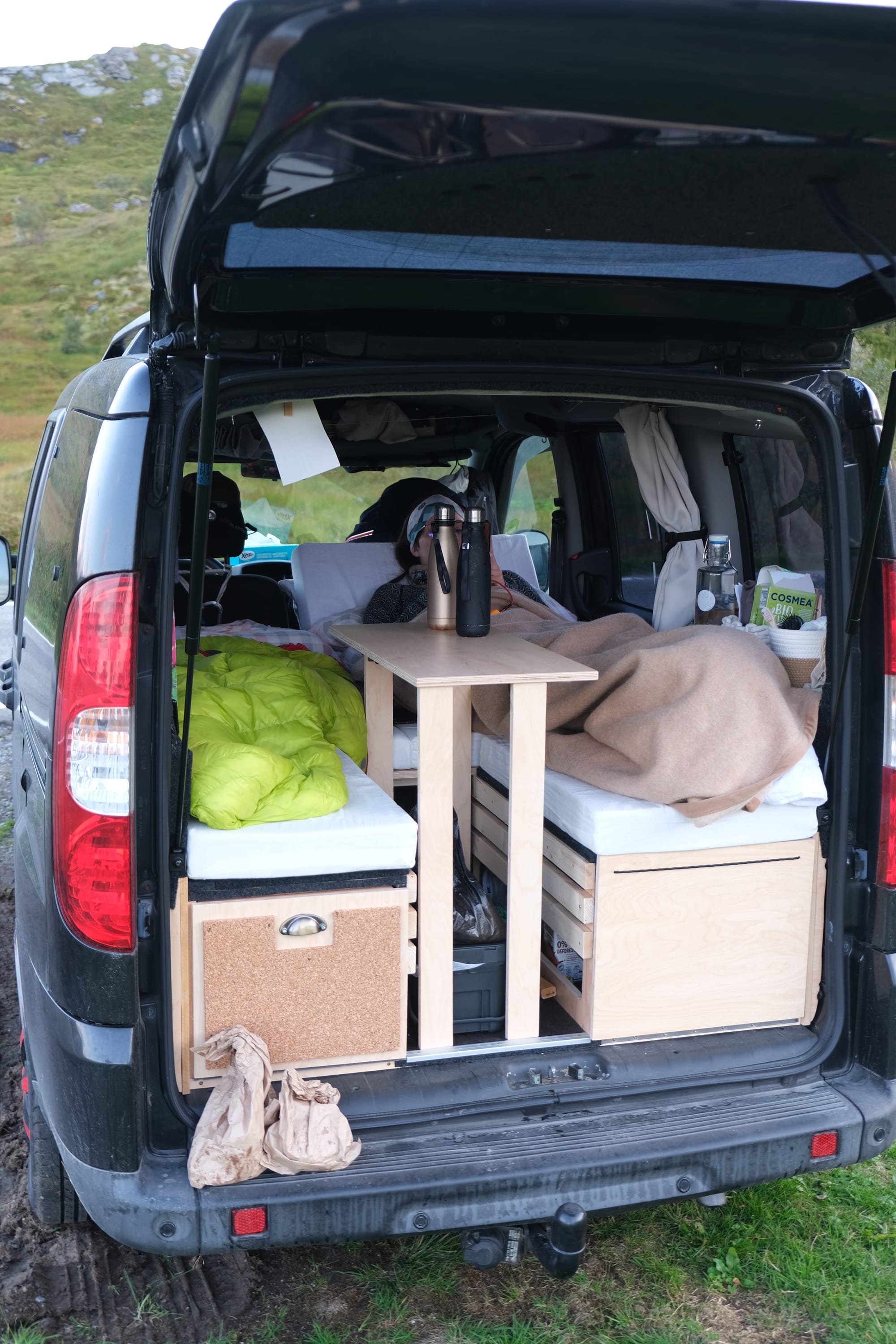
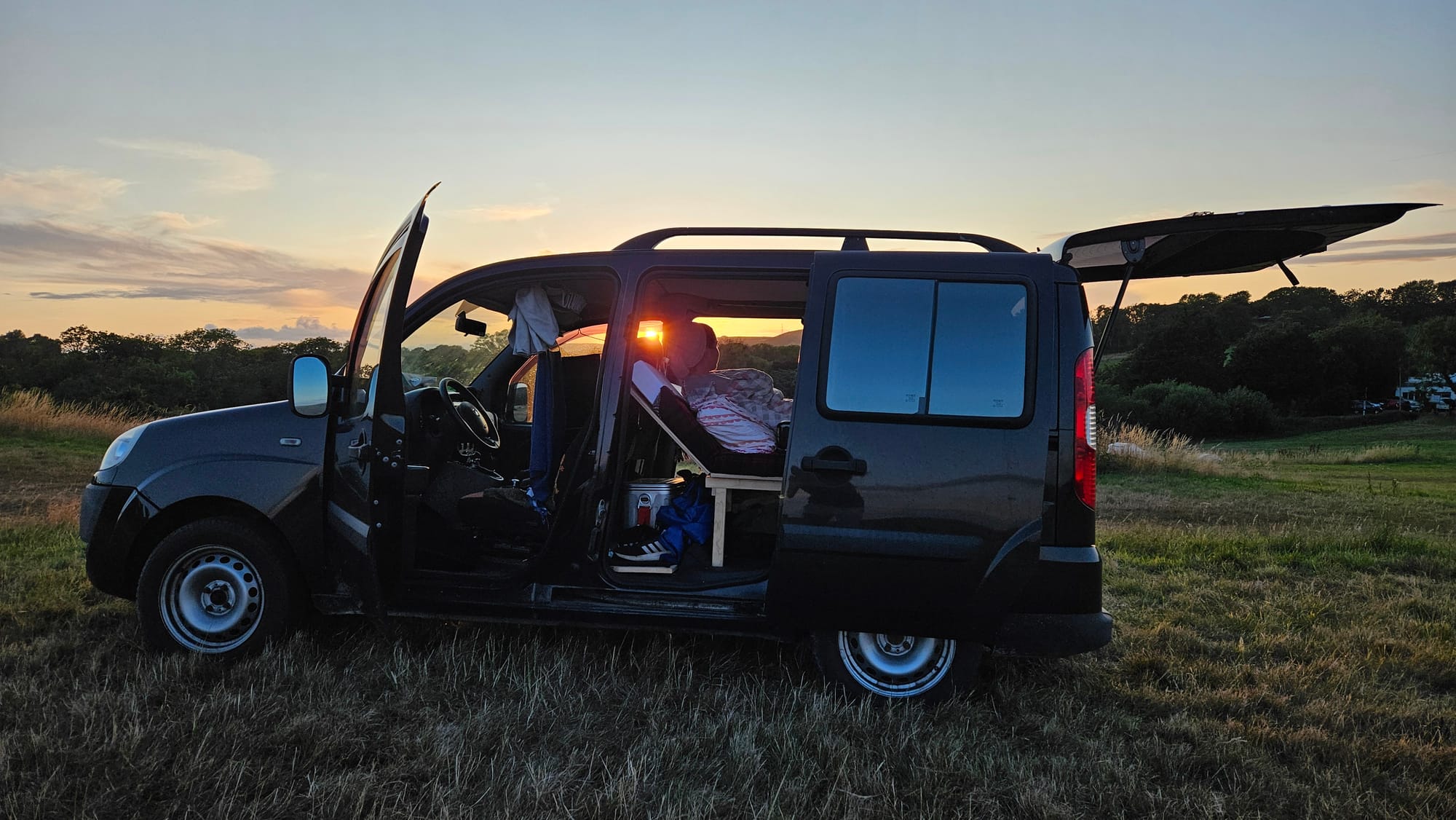
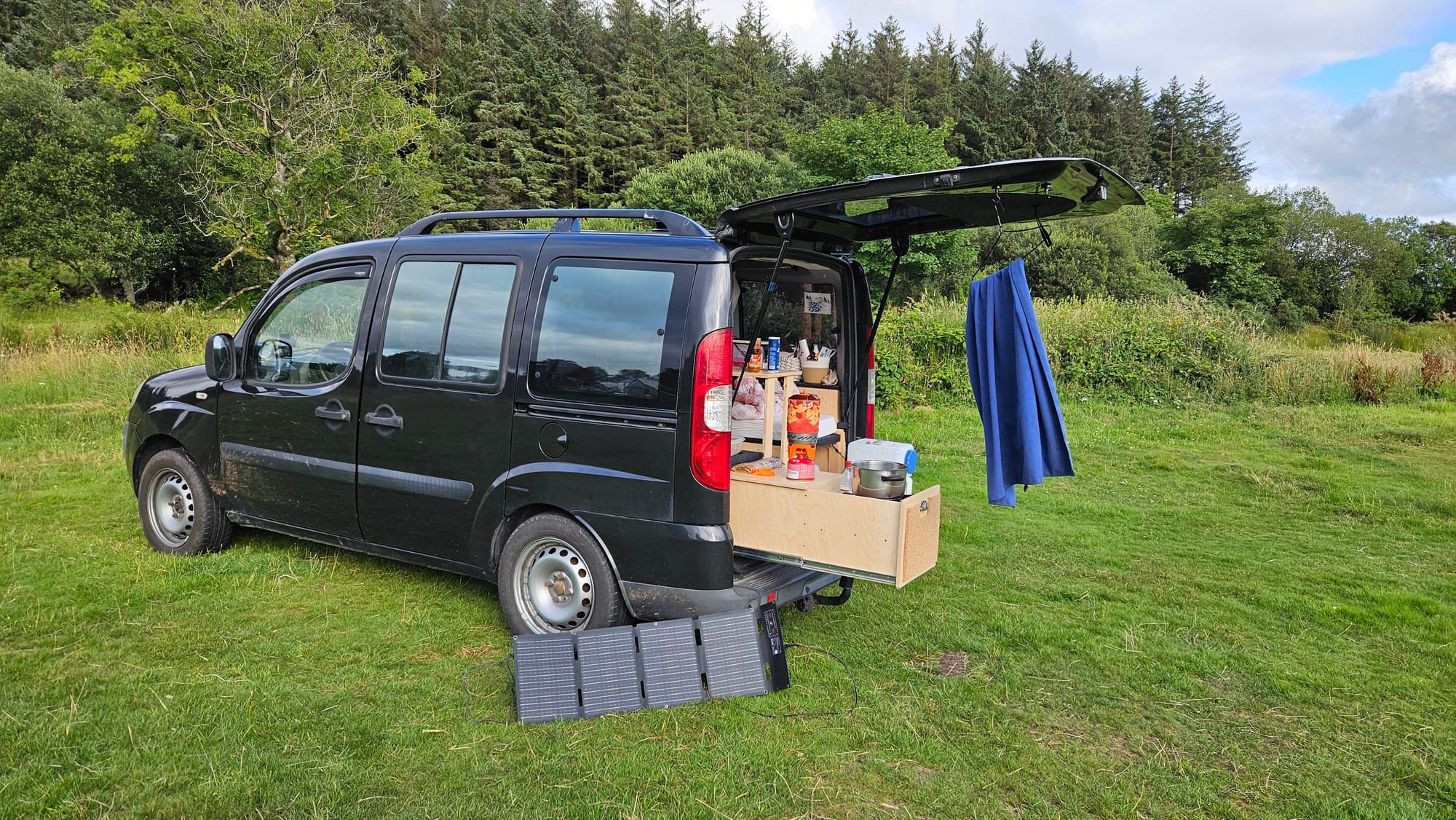
Pictures of Lotte in action - as you can see she feels right at home outside :)
After travelling with Artax for roughly two years and learning about our own personal needs through practical experience, we decided it was time for an upgrade.
We wanted something a little bit bigger and more thought-out based on our learnings from Artax - and that's what went into "Lotte". Here are the main changes/improvements that we implemented here, compared to Artax:
- More headspace (huge quality of life improvement)
- More storage and better organization (this really helps to keep things tidier)
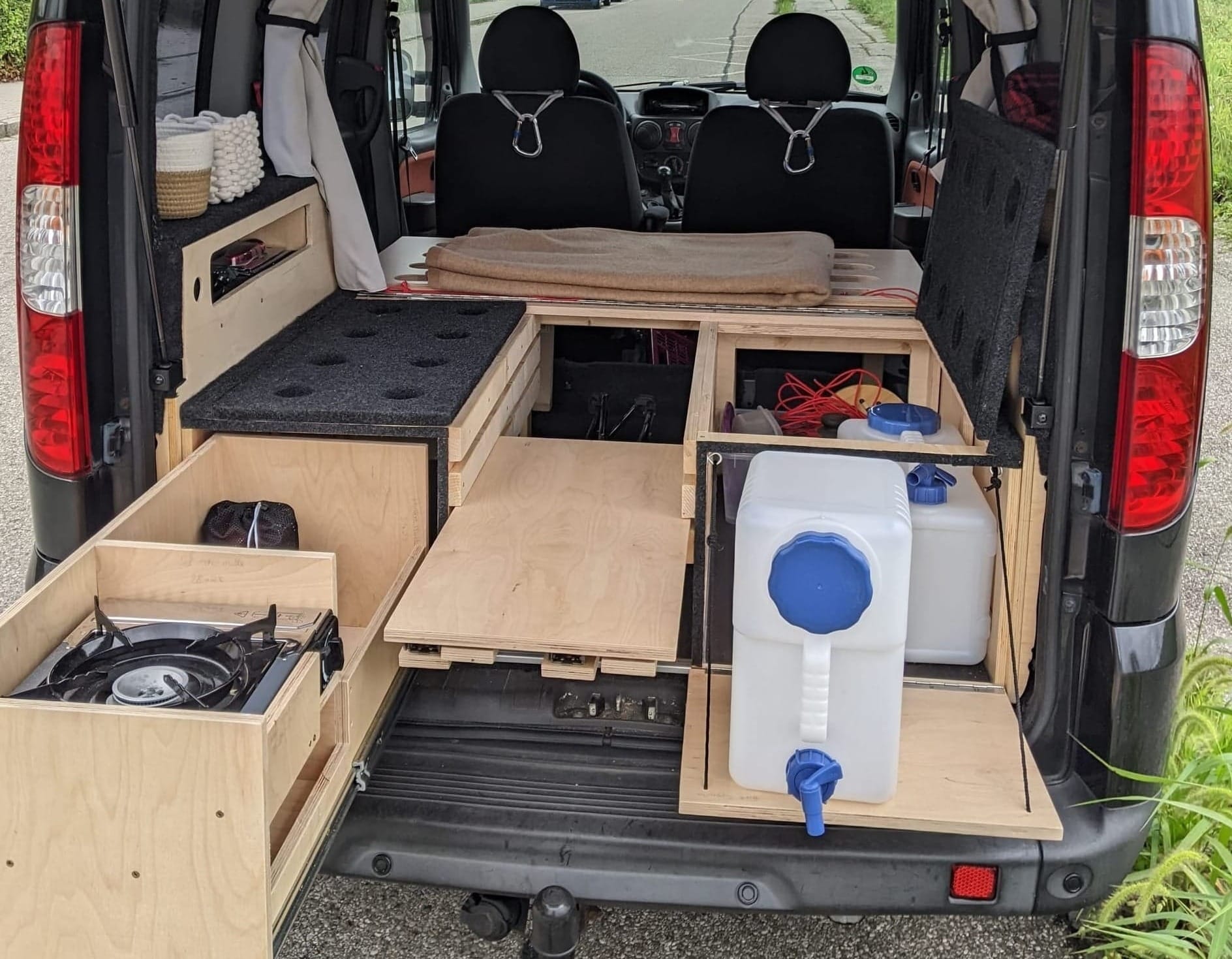
- Pull-out kitchen for quick setup and two stoves for better cooking
- Tailgate for sheltered cooking and changing clothes (we can stand under it)
- Sitting Area with an indoor table
- More water and an easier setup for washing/getting water (still very simple)
- Some luxuries: a passive coolbox and a power station with a small solar panel
- Still versatile. The conversion is easy to take out of the car completely and also works with the rear seats in (but has more storage with them out).
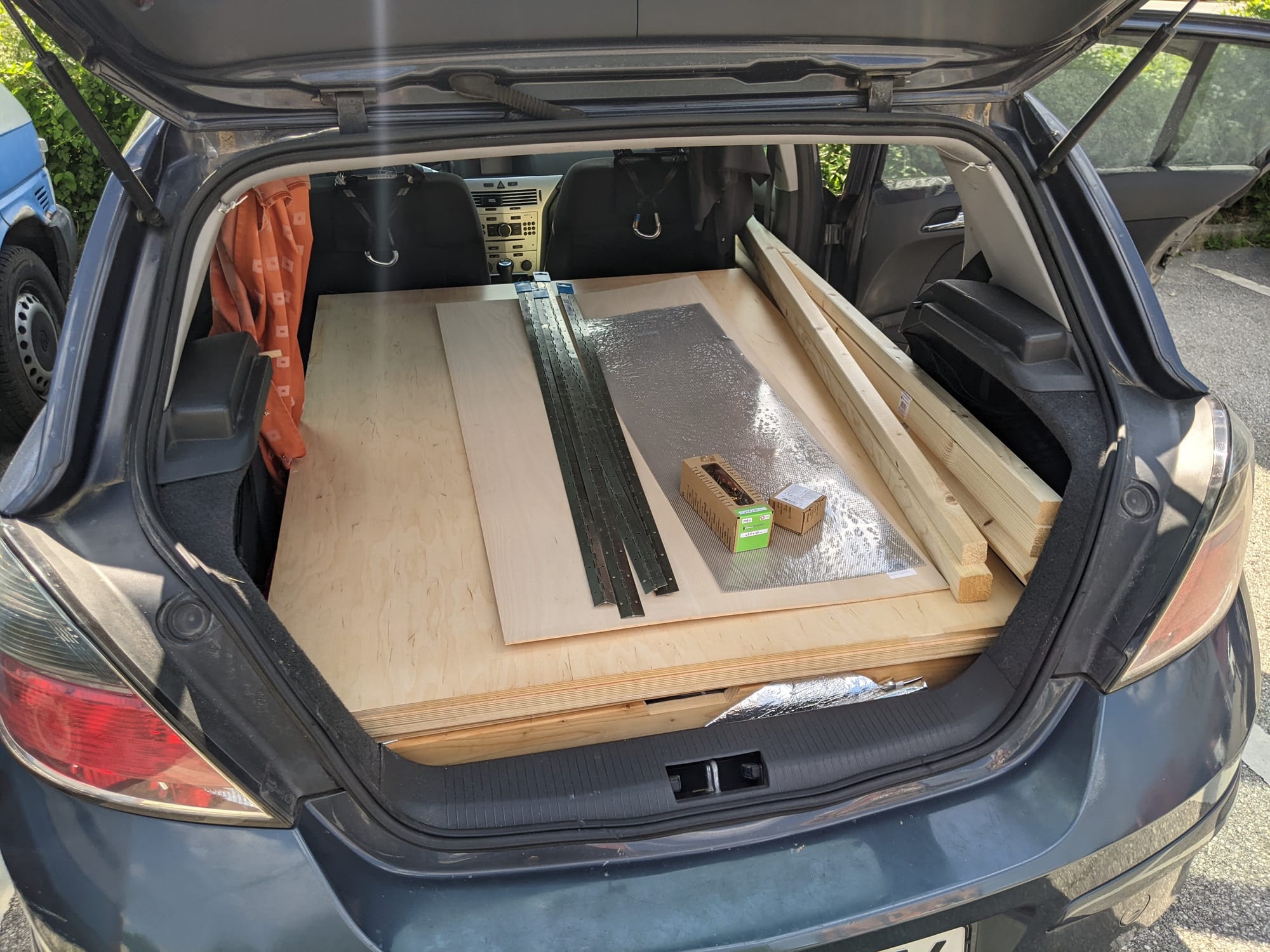
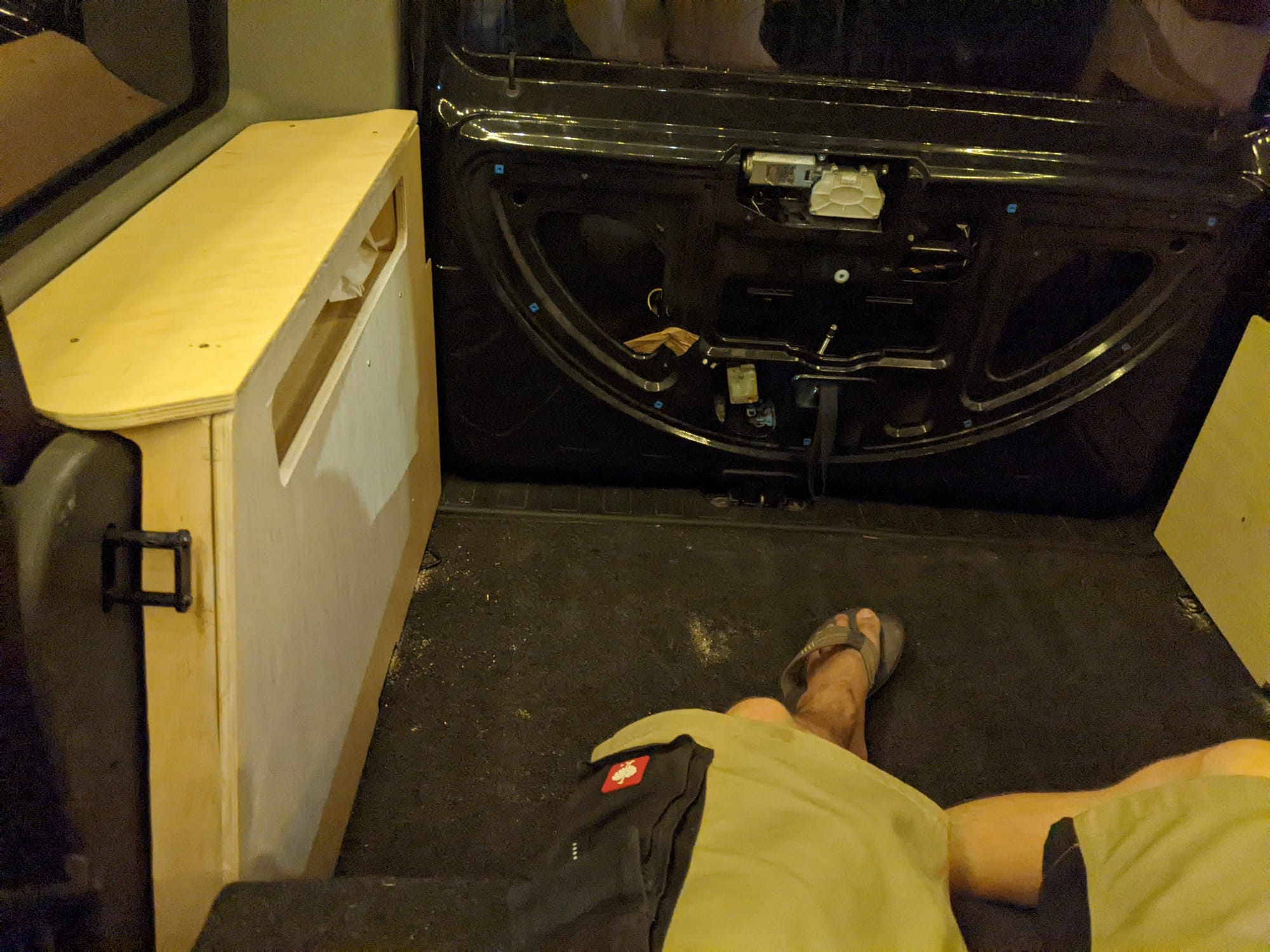
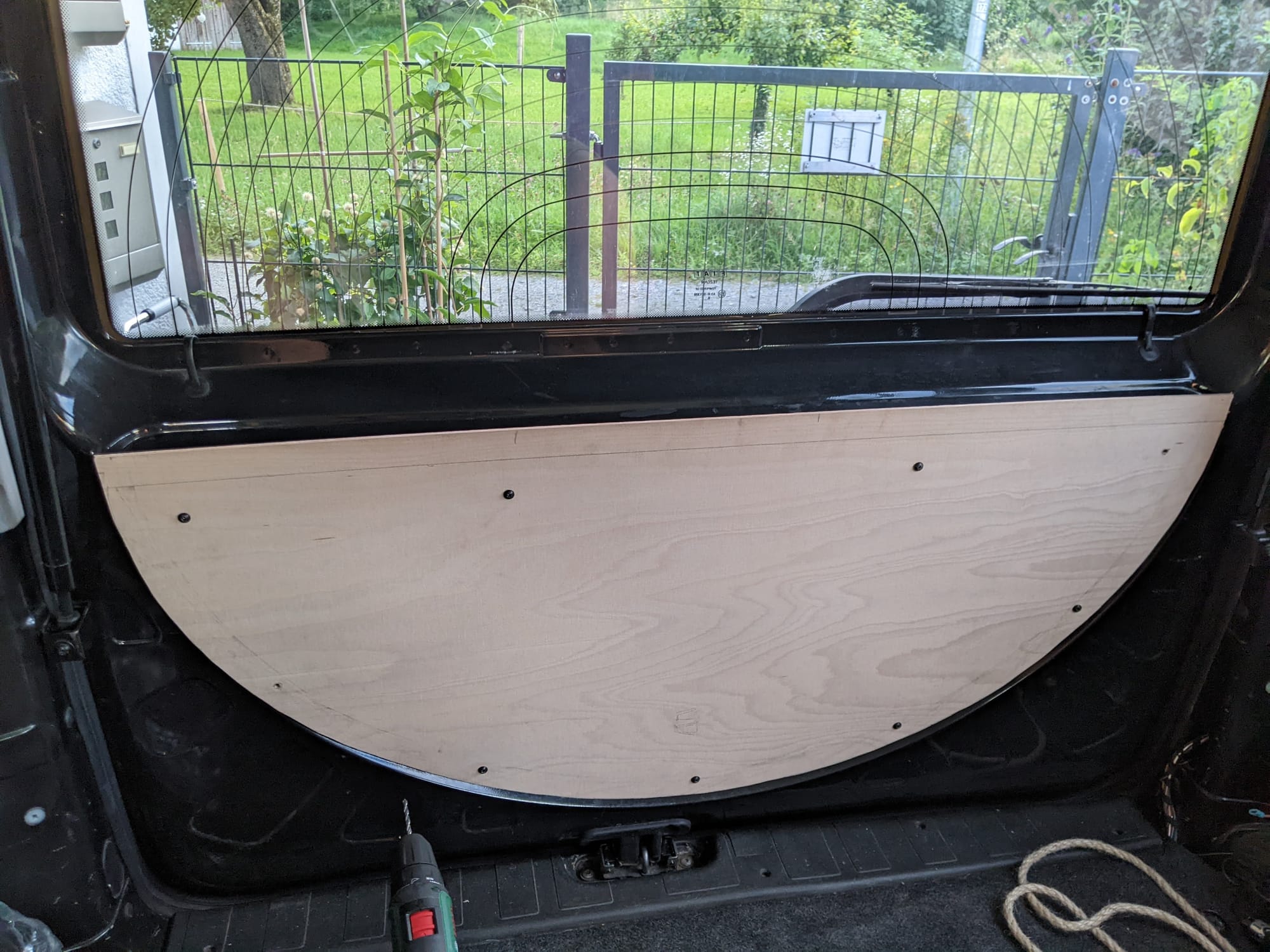
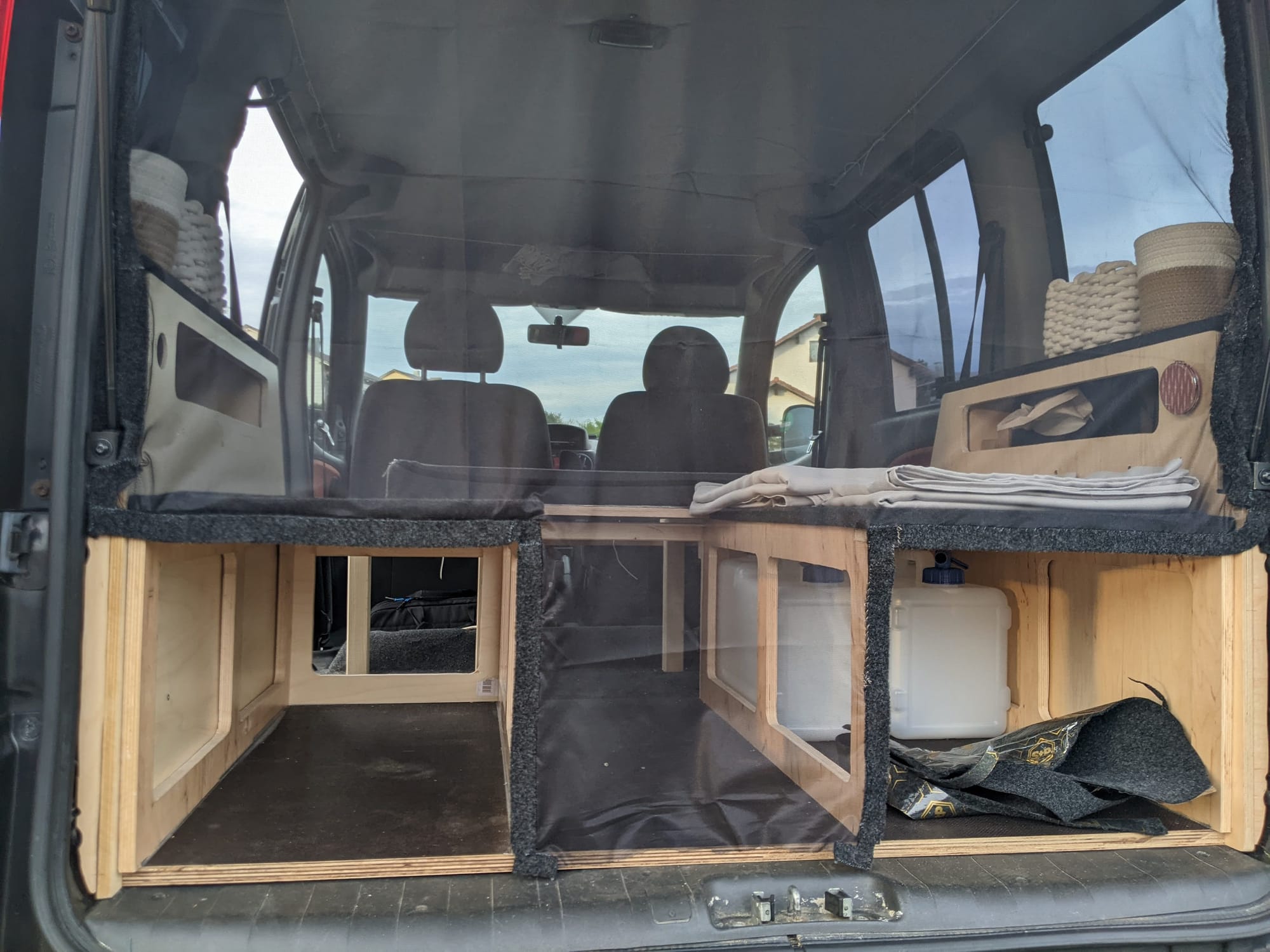
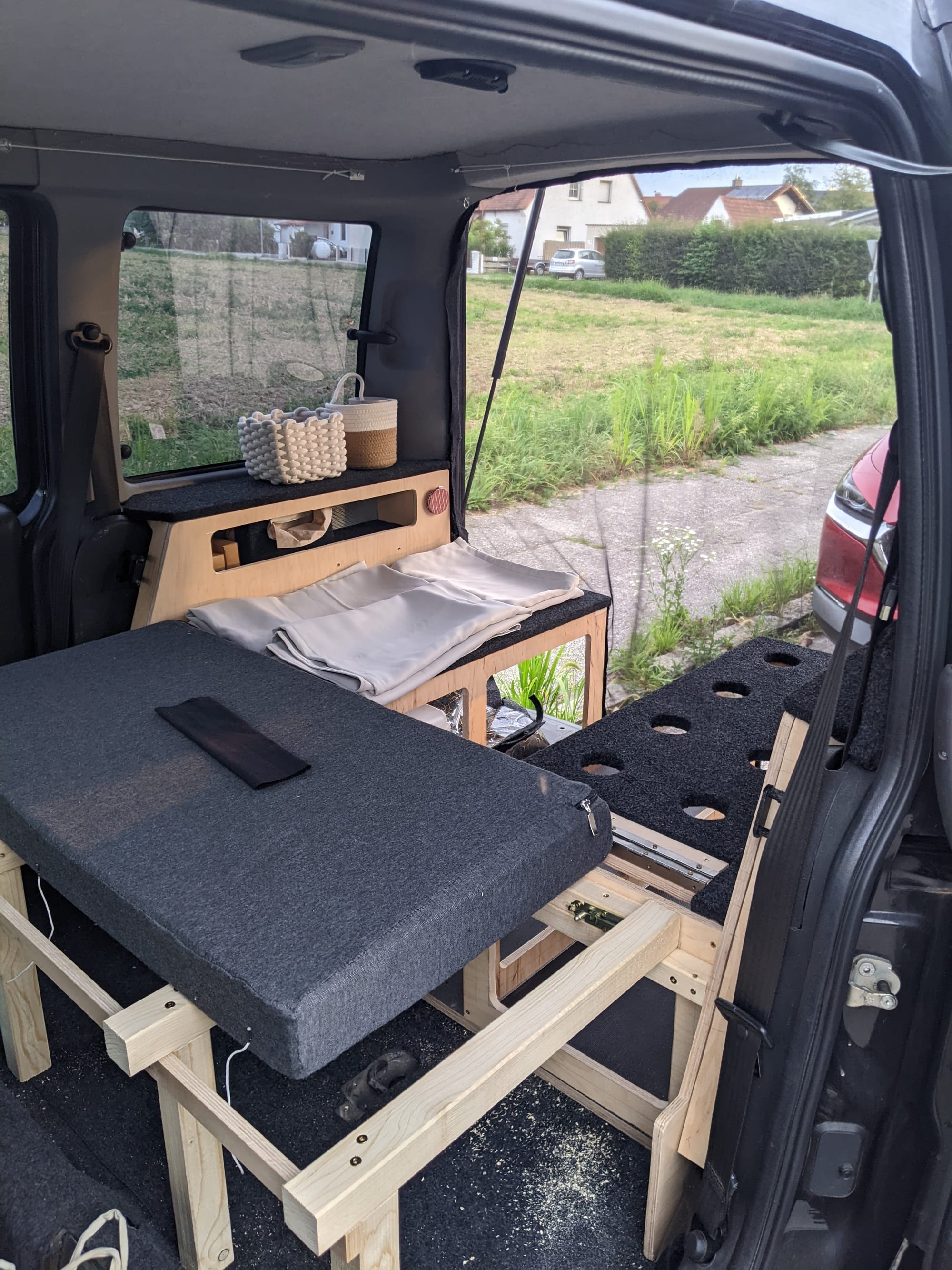
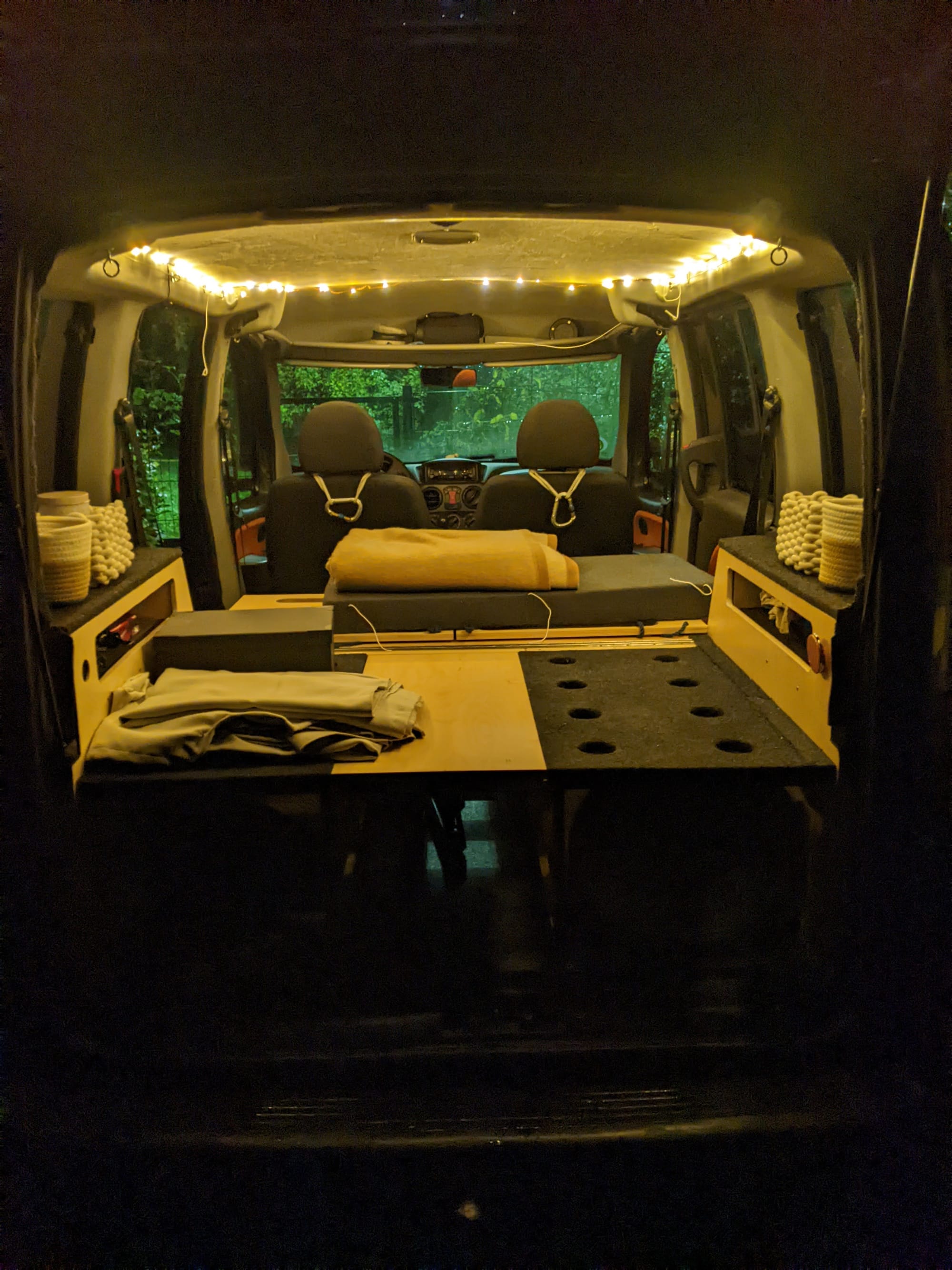
Impressions from our buiding process in Lotte - she's slowly becoming a camper!
The conversion cost was ~1370€ in total. We spent 51,40€ on paid accommodation across three weeks in Norway. At that rate, Lotte pays for herself rather quickly, in my opinion. I will cover the conversion in a future post where I'll walk through the planning and building process in more detail.
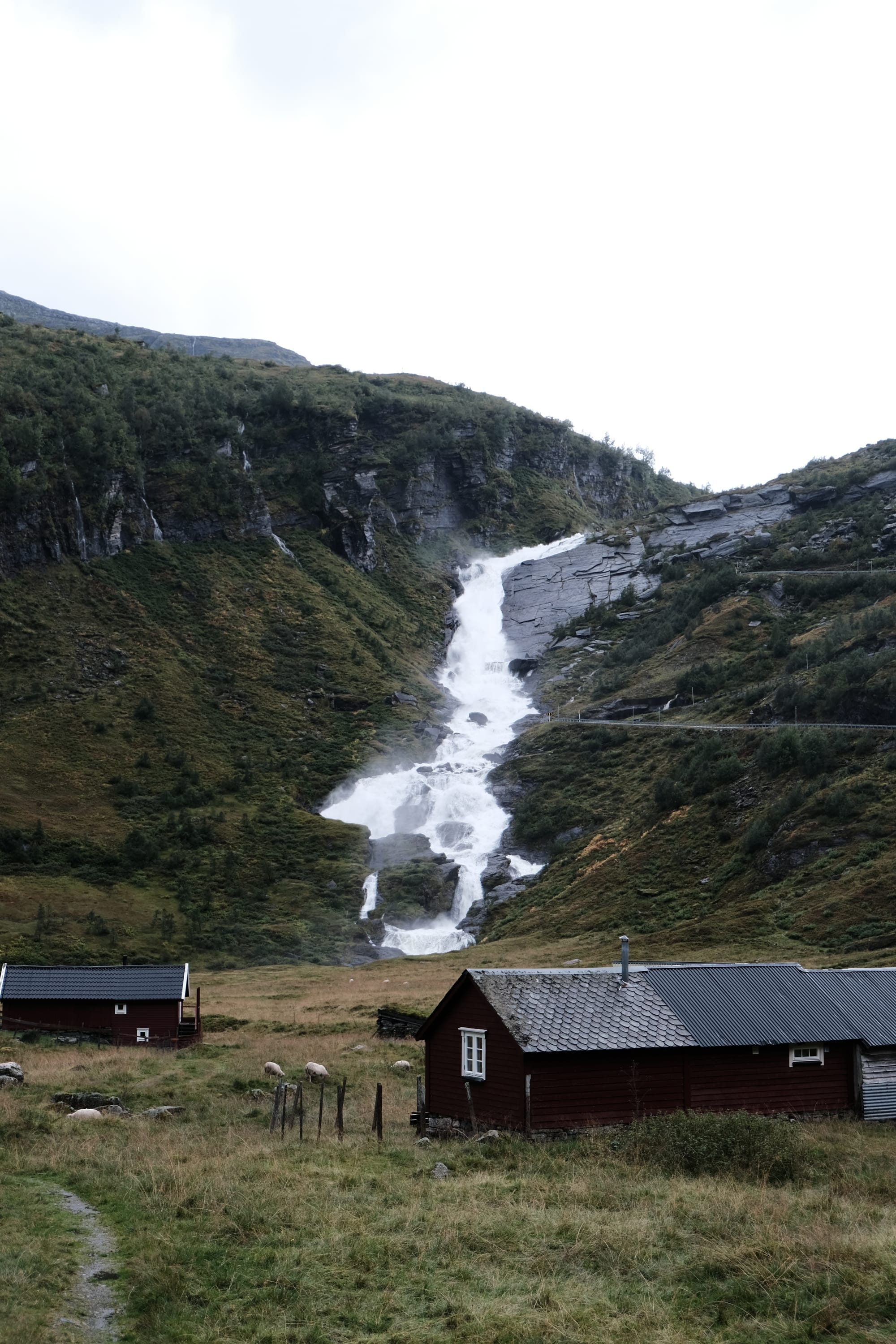
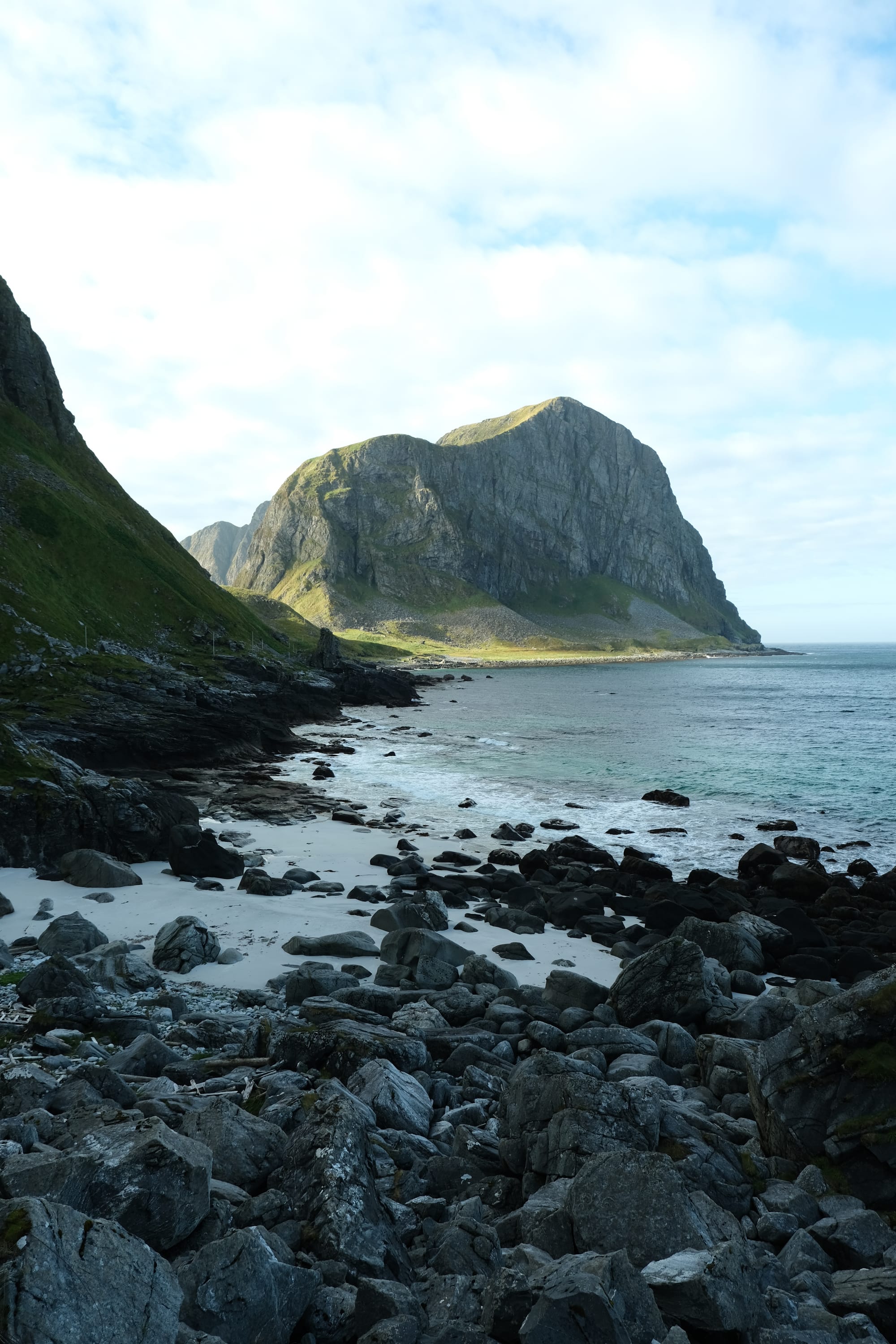
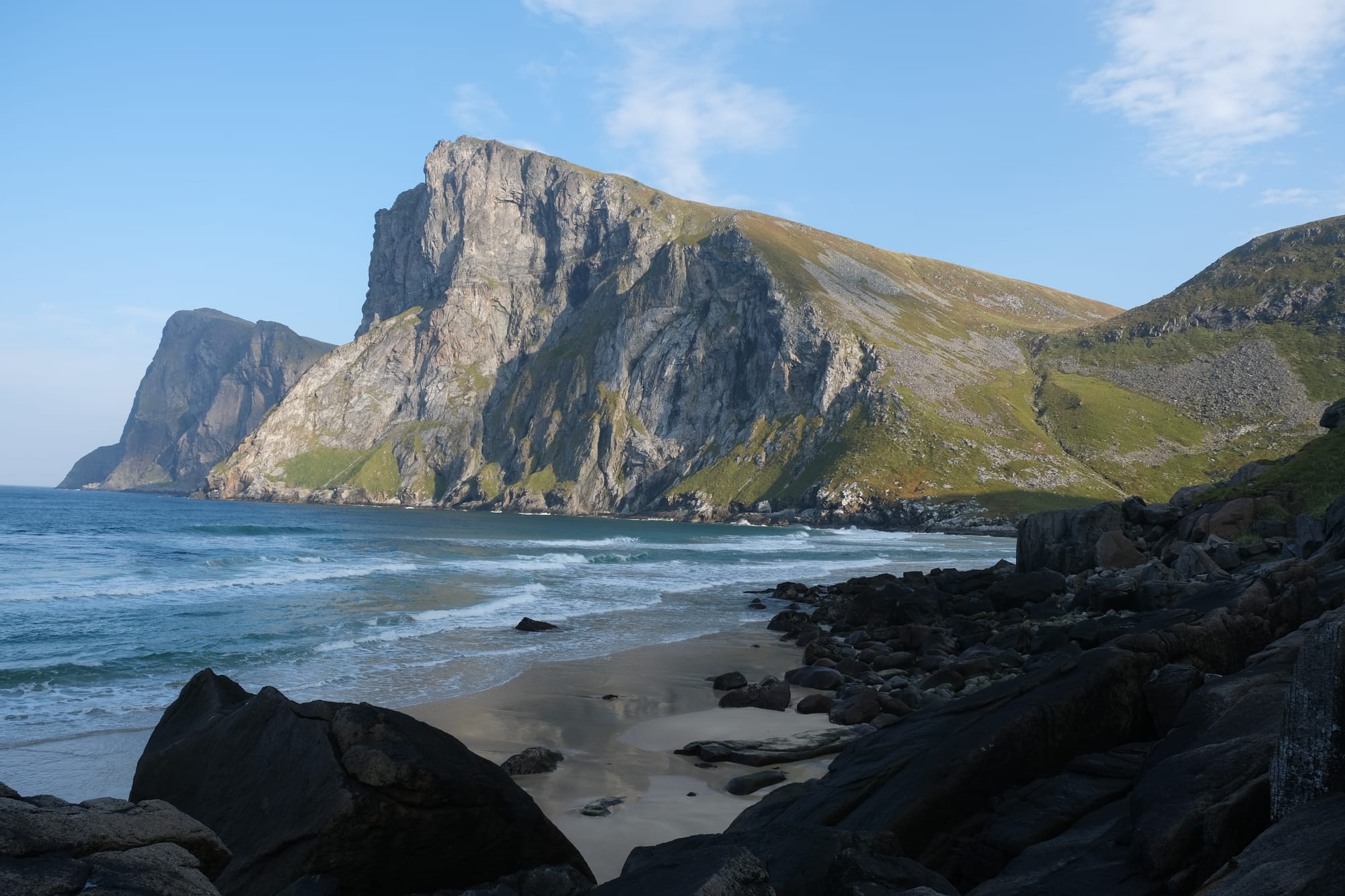
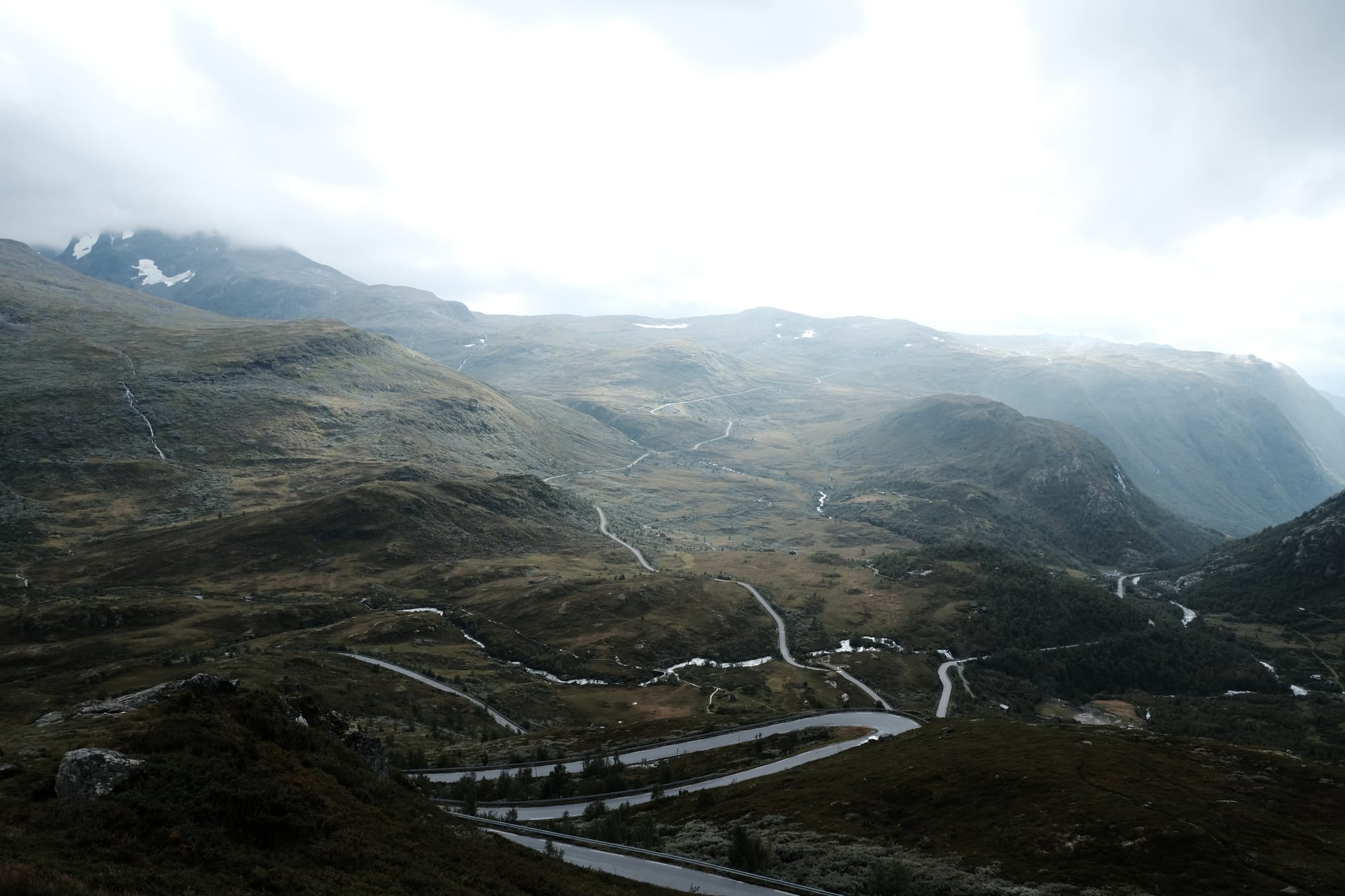
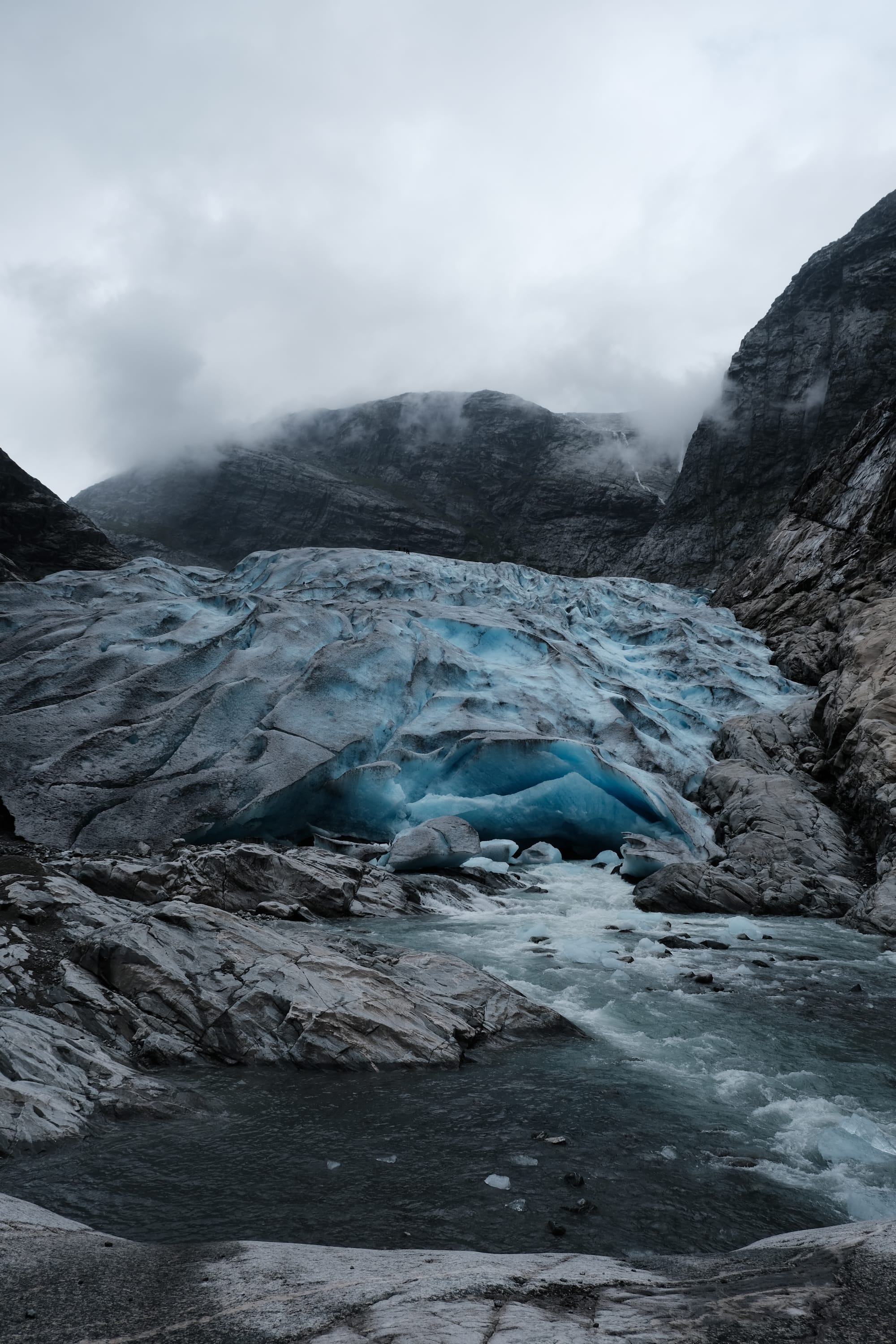
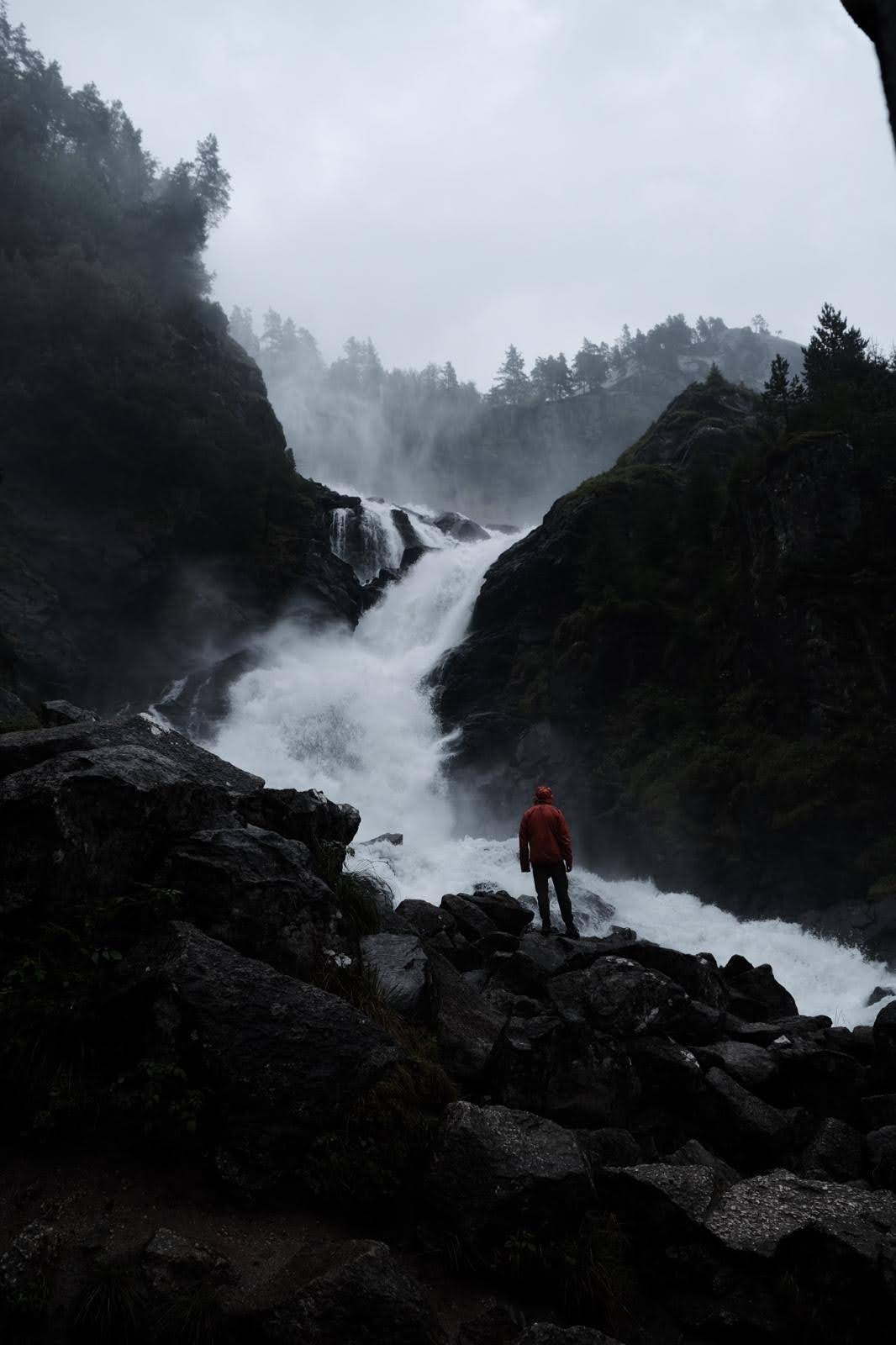
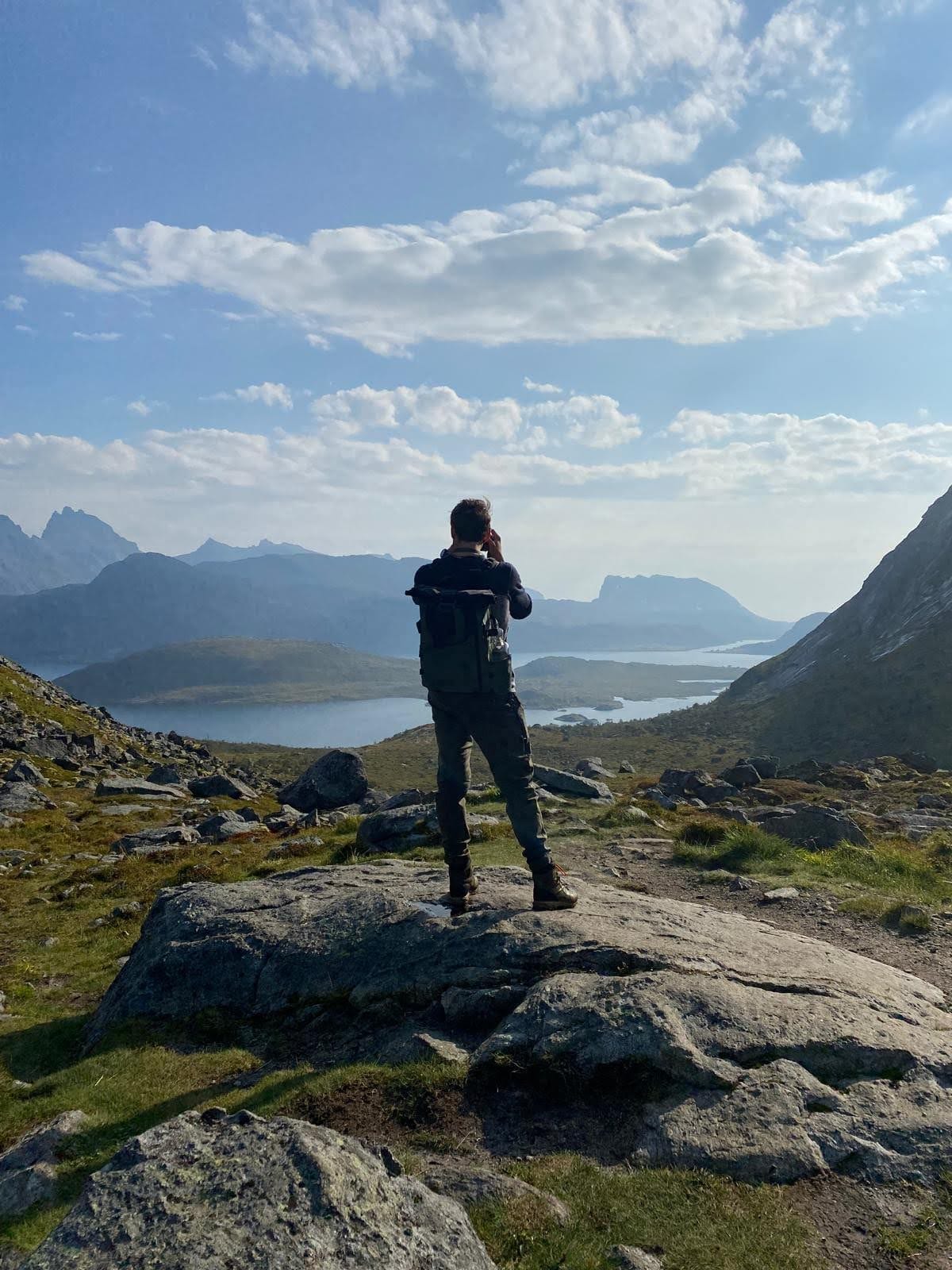
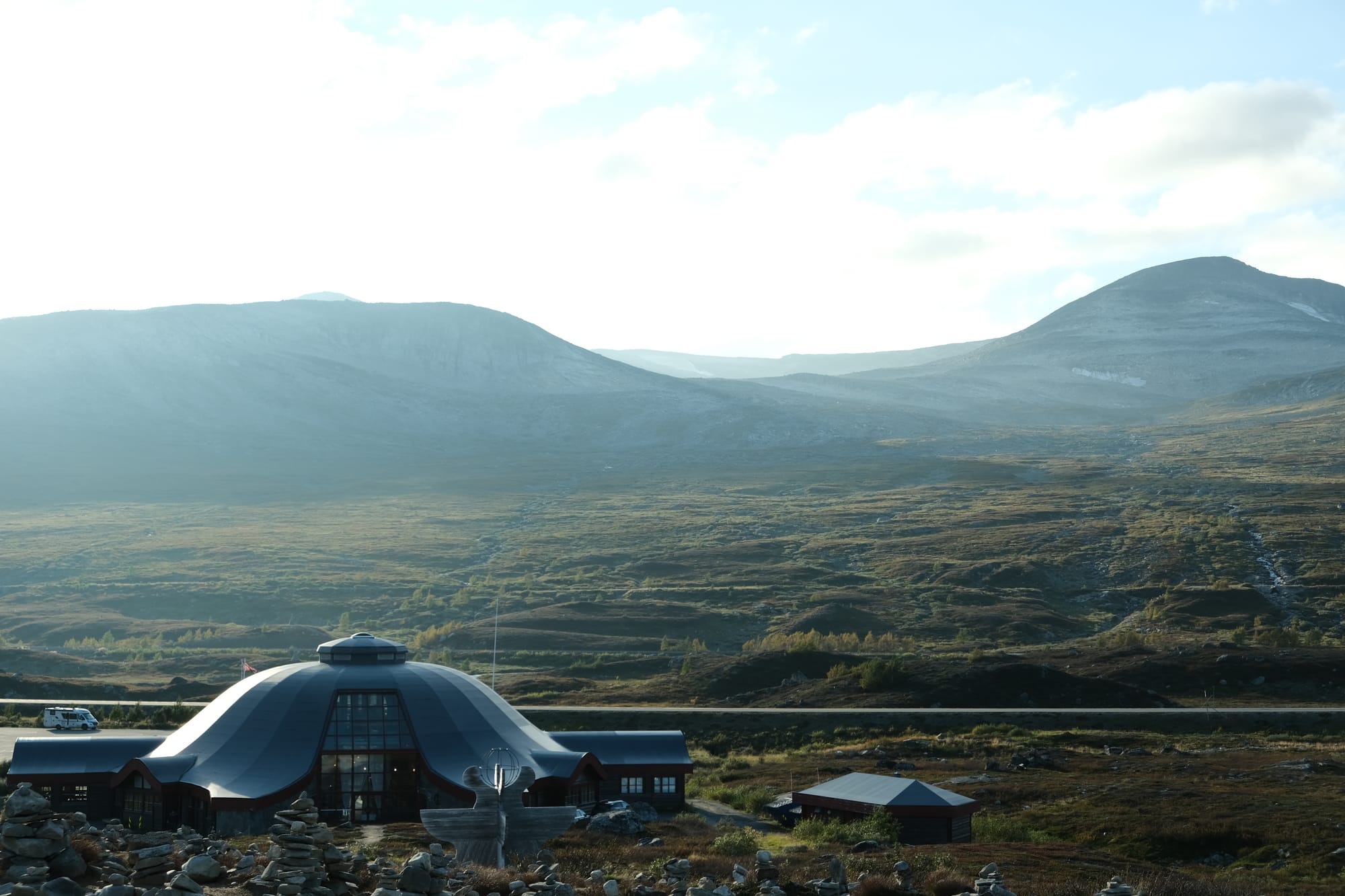
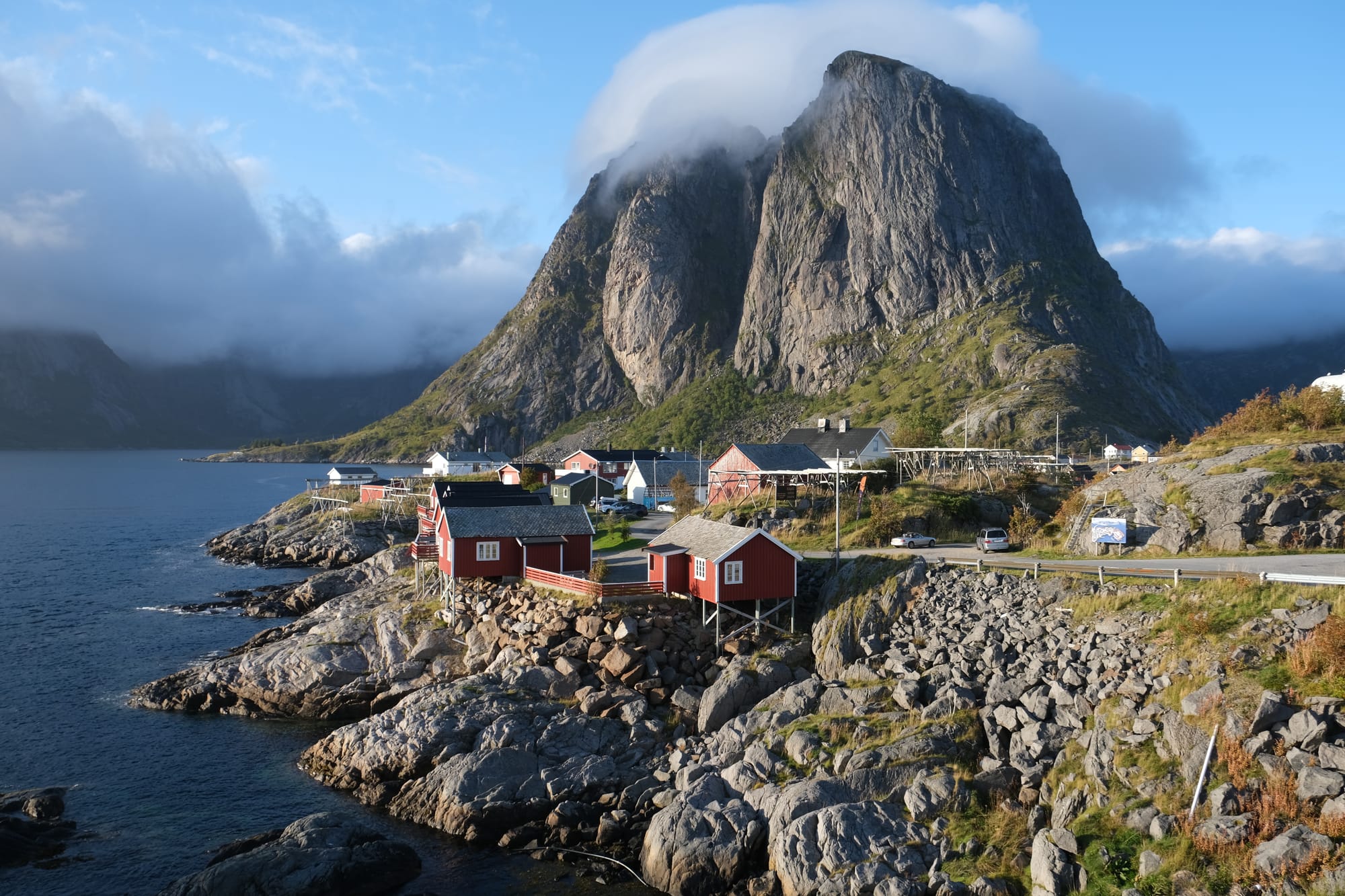
Impressions from our first trip with Lotte to beautiful Norway - you don't need a bigger van to enjoy this landscape
Our Experience with Microcamper-Travel
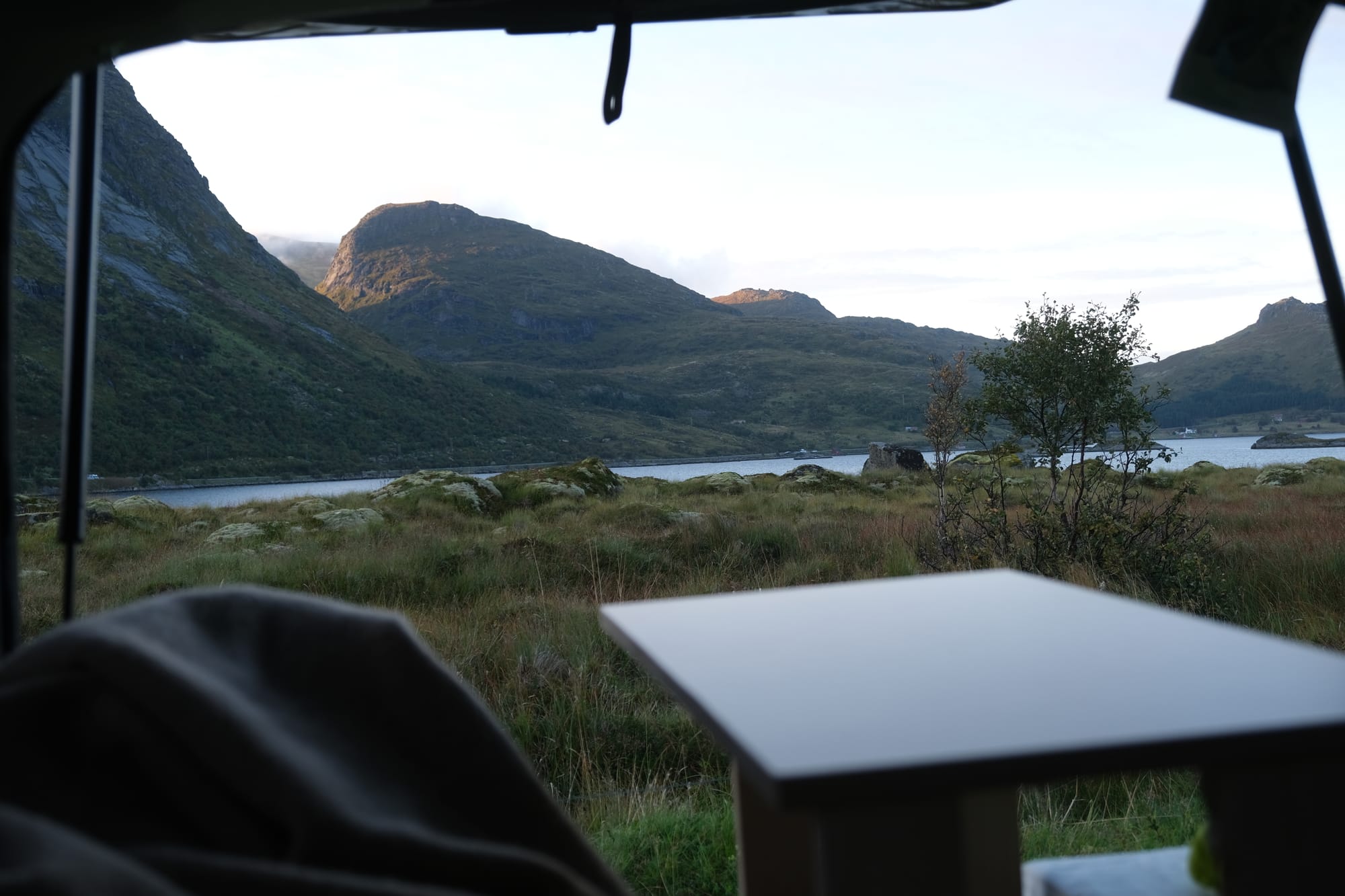
We've taken Lotte (and before her, Artax) through Scotland, Norway, South-East England, and the Outer Hebrides. Each trip deserves its own story - and I plan to tell it properly in dedicated travel log posts.
But the short version? Every single highlight from those trips - the wild camp spots, the mountain passes, the spontaneous detours, the nights with no one else around - happened because our microcamper was small, affordable, and fit our budget. It happened because we didn't wait. We didn't wait for the perfect van, the bigger budget, or the right moment. We went with what we had - and it turned out to be more than enough.
The main things we enjoy about traveling with a microcamper are the freedom, flexibility, and spontaneity it allows us. It enables us to explore a new country without a fixed schedule, so we are free to drift around and find the spots that truly speak to us.
Like the one I opened this (beast of a) post with:
Pulling off a lonely road in a Norwegian plateau, no plan, just a gut feeling about a gravel track. We followed it for two minutes and found a flat spot next to a lake. No one else. Just water, mountains, and the warm evening sun on an endless northern sky. We made tea and pasta under the tailgate and enjoyed the beautiful sunset in the stillness around us.
That's what microcamper travel feels like to us.
How much camper do you really need?
A microcamper won't be right for everyone. If you need a full bathroom, a proper kitchen, or room to stand up straight, you'll quickly feel the limitations. But if what you're really after is freedom, flexibility, and actually getting out there without spending a fortune first - it might be exactly enough.
And maybe "enough" (with the benefits outlined above) is the sweet spot.
For us, it was never about building the most impressive van on Instagram. It was about going. About not waiting for the perfect setup, the bigger budget, or the right moment.
I'd rather start now, with the car I already have. And so far? That's worked out pretty well.
The Microcamper-Series
This post is the introduction. I'll link the following articles here as they go live:
- Buying vs. Building - Should you buy a ready-made camping box or build your own?
- Planning your requirements - What do you actually need in a camper? Everything is a trade-off.
- Choosing your approach - Camping box, partial conversion, or full build
- Choosing the right base vehicle - Size, shape, and what actually matters
- Planning the build - SketchUp, cardboard mockups, materials
- Meet Lotte - Full breakdown of our build, costs, and lessons learned
- Microcamper with a Dog - Real experiences from travelling with our dog
- Our trips - Scotland, Norway, England, the Outer Hebrides, and beyond